
With Ethereum’s price holding steady at $3,881.61, the demand for privacy-preserving smart contracts is more urgent than ever. In a landscape where every transaction and contract state is publicly visible, enterprises and privacy-conscious users are seeking robust solutions that allow confidential computation on-chain without sacrificing composability. Enter FHEVM: Zama’s Fully Homomorphic Encryption Virtual Machine, which is redefining what’s possible for encrypted smart contracts on Ethereum and EVM-compatible chains.
Why Confidential Smart Contracts Matter on Ethereum
Public blockchains like Ethereum provide unparalleled transparency, but this comes at the cost of privacy. Every token transfer, auction bid, or governance vote is visible to all, making it impossible to keep sensitive business logic or user data secret. For sectors such as finance, gaming, and identity management, this lack of confidentiality is a dealbreaker.
FHEVM addresses this by enabling smart contracts to handle encrypted data natively. With fully homomorphic encryption (FHE), computations can be performed directly on ciphertexts, ensuring that data remains private throughout its lifecycle. This approach protects user balances, bids, votes, and credentials from being exposed on-chain, while still allowing the rich programmability of Solidity and the EVM.
Inside the FHEVM Architecture: Hybrid Privacy for the EVM
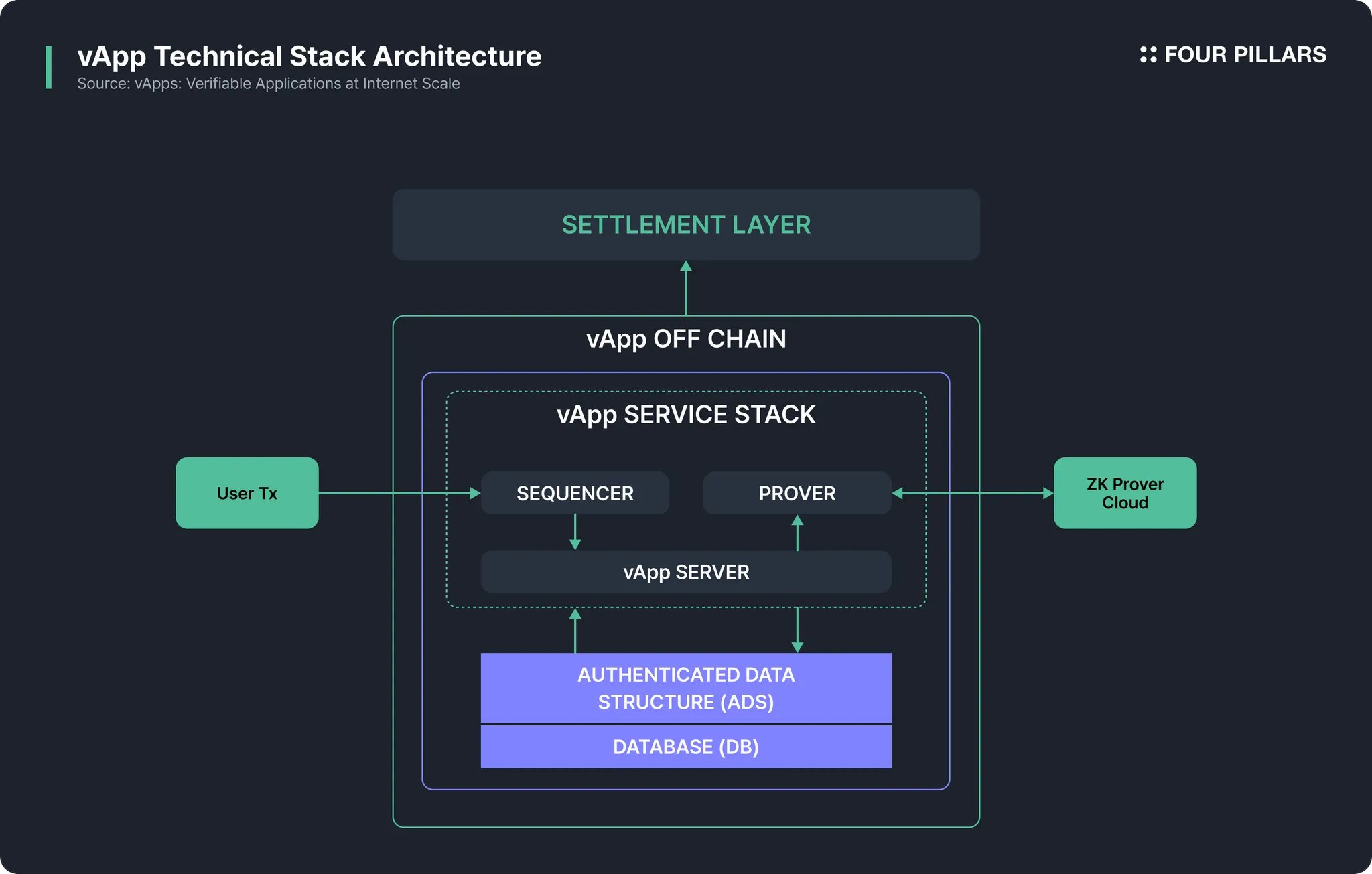
The architecture of FHEVM is a hybrid model, carefully engineered to balance privacy, performance, and composability:
- On-Chain Smart Contracts: These manage encrypted state variables and enforce access controls using FHE-native data types. Rather than storing plaintext values, contracts work with encrypted integers and logic.
- Off-Chain Coprocessors: FHE computations are resource-intensive. To avoid overburdening the Ethereum network, heavy-duty cryptographic operations are delegated to off-chain coprocessors, which process encrypted data and return results to the chain.
- Gateway: This orchestrator coordinates requests between the blockchain, coprocessors, and the key management system, ensuring that encrypted data flows securely and efficiently.
- Key Management System (KMS): The backbone of confidentiality. KMS handles cryptographic key storage, distribution, and proof validation, making sure only authorized parties can decrypt sensitive outputs.
This layered approach ensures that at no point is private data exposed on-chain or off-chain. Even as computations occur, only encrypted values are visible to validators and network participants. For a deeper dive into FHEVM’s cryptographic underpinnings and how it integrates with Solidity, see our in-depth guide: How Fully Homomorphic Encryption Enables Confidential Smart Contracts on Ethereum.
Real-World Use Cases: Where FHEVM Confidential Smart Contracts Shine
By enabling encrypted smart contracts on Ethereum, FHEVM unlocks a new wave of privacy-first dApps across industries:
- Confidential Transfers: Send tokens privately, balances and amounts are encrypted so only authorized parties know the details.
- Blind Auctions: Participants submit encrypted bids; the contract determines the winner without revealing any bid amounts until settlement.
- Private Voting: Votes are cast and tallied in encrypted form, ensuring both voter anonymity and verifiable results.
- On-Chain Gaming: Game state (like hands in a card game) remains secret until revealed by game logic, preventing cheating or front-running.
- Encrypted Identity Verification: Credentials are validated on-chain without ever exposing underlying personal information.
These applications are now possible using Solidity and well-documented encrypted types such as euint8 through euint256. For developers ready to experiment with privacy preserving smart contracts, FHEVM offers an open-source Solidity library and a growing ecosystem of pre-built contract templates.
Developer Quickstart: Building Privacy Preserving Smart Contracts with FHEVM
Getting started with FHEVM is refreshingly accessible for Solidity developers. The process involves:
- Environment Setup: Add the FHEVM Solidity library to your workflow to access encrypted types and FHE-compatible operations.
- Writing Contracts: Use encrypted variables (e. g. ,
euint256) instead of standard types. Arithmetic and logical operations are performed via specialized FHE functions. - Access Control: Implement programmable rules to define who can decrypt which data, critical for applications like auctions or identity verification.
- Deployment and Testing: Deploy your contract on any EVM-compatible chain supported by FHEVM coprocessors. Test using provided templates to ensure confidentiality is preserved end-to-end.
For hands-on tutorials and pre-tested examples, Zama’s documentation and the fhevm-contracts repository are excellent starting points. By leveraging these resources, developers can build dApps that meet stringent privacy requirements without reinventing the wheel. Learn more about practical integration in our developer-focused guide: How Fully Homomorphic Encryption Enables Confidential Smart Contracts in Solidity with FHEVM.
As privacy becomes a central concern for both enterprises and individuals, the unique capabilities of FHEVM confidential smart contracts are shifting the paradigm for what’s possible on public blockchains. With the current Ethereum price at $3,881.61, the stakes for safeguarding sensitive data in decentralized finance, gaming, and digital identity are higher than ever. FHEVM’s architecture not only provides robust privacy but also preserves the composability and interoperability that developers expect from the EVM ecosystem.
Top 5 Benefits of Encrypted Smart Contracts with FHEVM
- End-to-End Data Confidentiality: FHEVM enables smart contracts to process encrypted data directly, ensuring that sensitive information remains private throughout its lifecycle on Ethereum. This addresses the inherent transparency of blockchains, where all on-chain data is typically public.

- Programmable Privacy Controls: Developers can implement granular access logic in smart contracts, allowing only authorized parties to decrypt or view specific data. This supports use cases like private voting and encrypted identity verification.
- New Privacy-Preserving Use Cases: FHEVM unlocks applications such as confidential transfers, blind auctions, and on-chain gaming with hidden states, all while maintaining the composability and functionality of EVM-compatible dApps.

- Seamless Integration with Existing Tools: The FHEVM framework provides encrypted data types and Solidity libraries, allowing developers to build confidential smart contracts using familiar workflows and deploy them on any EVM-compatible chain.

- Enhanced Security Against On-Chain Data Leaks: By keeping computations and states encrypted, FHEVM reduces the risk of data exposure from smart contract vulnerabilities or malicious actors, strengthening overall blockchain security.

Key Considerations and Best Practices for Developers
While FHEVM dramatically lowers the barrier to building privacy preserving smart contracts, developers should keep several critical factors in mind:
- Performance Trade-offs: FHE computations are inherently more resource-intensive than standard EVM operations. Off-chain coprocessors help, but developers should profile contract logic to optimize for efficiency.
- Access Management: Clearly define decryption rights and ensure key management logic is airtight. Poorly designed access controls can undermine confidentiality guarantees.
- Testing and Auditing: Leverage the
fhevm-contractslibrary and open-source test suites to validate both privacy and correctness. Symbolic execution tools for blockchain, adapted for FHE, can further strengthen contract security. - Interoperability: FHEVM is cross-chain by design, but developers should be aware of compatibility nuances across different EVM-compatible networks and Layer 2s.
- Community Support: The FHEVM ecosystem is rapidly evolving. Engage with community forums and open-source repositories to stay updated on best practices and new features.
For those exploring advanced use cases or integrating with existing DeFi protocols, it’s worth reviewing how Fully Homomorphic Encryption enables confidential smart contracts on EVM chains for deeper architectural insights.
For developers, the journey toward robust privacy is just beginning. By embracing FHEVM, you’re not only protecting your users but also expanding the design space for decentralized applications. The next wave of innovation will be built on contracts that are both programmable and confidential, ushering in an era where privacy is the default, not the exception.




No comments yet. Be the first to share your thoughts!