The quantum threat to blockchain keys
NIST has finalized three core cryptographic standards—FIPS 203, FIPS 204, and FIPS 205—that define the post-quantum cryptography (PQC) landscape for the coming decade. These documents replace legacy algorithms like RSA and ECC with lattice-based cryptography, specifically ML-KEM (formerly Kyber) and ML-DSA (formerly Dilithium), to secure data against quantum computing threats. For financial infrastructure, this is not a theoretical exercise but an immediate compliance requirement.
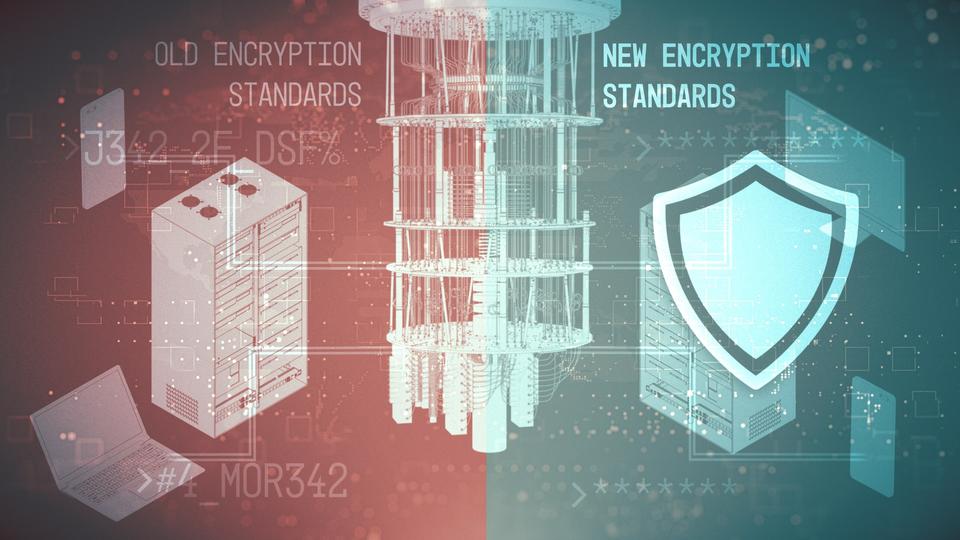
FIPS 203 (ML-KEM) handles key encapsulation, ensuring that symmetric encryption keys remain secure during transmission. FIPS 204 (ML-DSA) provides digital signatures for authentication and integrity, while FIPS 205 (SLH-DSA) offers a hash-based signature scheme for long-term archival security. Together, these standards form the backbone of quantum-resistant security for crypto wallets and banking systems. Wallet providers must integrate these algorithms to prevent "harvest now, decrypt later" attacks, where adversaries steal encrypted data today to decrypt it once quantum computers become viable.
The 2026 migration window is critical because financial institutions are bound by strict regulatory timelines. NIST’s transition plan requires federal agencies to begin migrating to PQC standards by 2026, with a full transition mandated by 2030. Private financial entities, including crypto wallet providers, are expected to align with these timelines to maintain audit compliance and operational continuity. Delaying migration exposes institutions to significant regulatory and reputational risk, as current encryption methods will become obsolete.
To understand the current market context and volatility in the crypto sector that these security upgrades aim to protect, consider the following technical chart of market performance:
The integration of FIPS 203, 204, and 205 is not optional. Wallet providers must update their cryptographic libraries, update user interfaces to reflect new security protocols, and ensure backward compatibility during the transition. This migration is a high-stakes endeavor that defines the trustworthiness of digital asset infrastructure in the quantum era.
Wallet migration challenges
Upgrading a crypto wallet is not a simple software patch; it is a fundamental restructuring of how keys are stored and verified. The primary hurdle is the sheer size of post-quantum signatures. Current wallets rely on ECDSA, which produces compact signatures of about 64 bytes. The new NIST-standardized ML-DSA (Module-Lattice-based Digital Signature Algorithm) signatures are significantly larger, often exceeding 2,000 to 4,000 bytes depending on the security level.
This size increase creates immediate friction for users. Every transaction requires broadcasting this larger data to the network, increasing bandwidth costs and confirmation times. For hardware wallets with limited storage, fitting these larger public keys and signatures into secure elements requires new chip designs or complex key derivation strategies that are still being standardized.
| Feature | Current ECDSA | NIST ML-DSA (PQC) |
|---|---|---|
| Signature Size | ~64 bytes | ~2,000–4,000 bytes |
| Storage Impact | Minimal | High (requires more memory) |
| Network Bandwidth | Low | Higher per transaction |
Backward compatibility adds another layer of complexity. Wallets must support hybrid signatures—using both ECDSA and ML-DSA simultaneously during a transition period—to ensure users can still interact with older systems while securing assets against quantum threats. This dual-signature approach doubles the computational load on mobile devices and increases the risk of implementation errors. Developers must carefully manage these transitions to prevent users from losing access to their funds due to format incompatibilities.
The migration timeline is tight. As quantum computing capabilities advance, the "harvest now, decrypt later" threat becomes more real for high-value assets. Wallet providers that delay upgrading their signature schemes risk obsolescence or, worse, security breaches once quantum computers become sufficiently powerful to break ECDSA. The technical debt of ignoring this shift is far greater than the cost of early adaptation.
Protecting assets before quantum era
The transition to post-quantum cryptography is not a distant theoretical concern; it is an immediate operational requirement for anyone holding digital assets. Quantum computers capable of breaking current elliptic curve cryptography are advancing faster than many estimates suggest. If a wallet still relies on legacy algorithms, those funds are vulnerable to "harvest now, decrypt later" attacks, where adversaries steal encrypted data today to unlock it once quantum capabilities mature.
Preparation begins with identifying which components of your wallet infrastructure are quantum-resistant. This means verifying that the cryptographic libraries used for key generation and signing have been updated to meet National Institute of Standards and Technology (NIST) standards. The NIST has finalized the first set of post-quantum cryptographic standards, including CRYSTALS-Kyber for key encapsulation and CRYSTALS-Dilithium for digital signatures. Wallet providers must implement these algorithms to ensure that private keys remain secure against quantum decryption.
For users, the first step is to audit your current holdings. If your wallet provider has not announced a migration path to post-quantum standards, consider moving assets to a new, quantum-resistant wallet immediately. Do not wait for a forced migration, as these processes often involve complex key transfers that can introduce human error. Additionally, enable hardware security modules (HSMs) where possible, as they can be updated with new cryptographic modules without replacing the entire device.
Developers must prioritize backward compatibility while integrating new algorithms. Hybrid schemes, which combine classical and post-quantum algorithms, offer a safety net during the transition period. This approach ensures that even if one algorithm is compromised, the other remains secure. Regular security audits and penetration testing are essential to verify that the implementation does not introduce new vulnerabilities.
The market for post-quantum solutions is consolidating around major players like NXP, Thales, AWS, Palo Alto Networks, and IDEMIA. These companies are leading the charge in developing and deploying quantum-resistant technologies. Staying informed about their advancements can help you make informed decisions about your wallet infrastructure.
Key Actions for Wallet Owners
- Audit Your Wallet: Check if your current wallet provider supports post-quantum cryptography. If not, migrate to a quantum-resistant alternative.
- Enable Hardware Security: Use hardware wallets that support post-quantum algorithms to add an extra layer of security.
- Monitor Updates: Stay informed about NIST standards and wallet provider updates regarding post-quantum transitions.
- Consider Hybrid Schemes: If your wallet supports hybrid cryptographic schemes, enable them for added security during the transition.
- Regular Security Audits: Conduct regular security audits to ensure your wallet infrastructure remains secure against emerging threats.
By taking these steps, you can protect your assets from the looming threat of quantum computing and ensure a smooth transition to the post-quantum era.
Who leads the post-quantum cryptography market?
The post-quantum cryptography (PQC) market is highly consolidated, with five major players—NXP, Thales, AWS, Palo Alto Networks, and IDEMIA—collectively accounting for approximately 59-70% of the total market share. This concentration means that most financial institutions will likely rely on a small set of vendors to secure their transition away from vulnerable elliptic-curve algorithms.
AWS and Thales are currently driving enterprise adoption by integrating NIST-approved standards like CRYSTALS-Kyber directly into their cloud infrastructure and hardware security modules. NXP and IDEMIA focus on the edge, embedding PQC capabilities into smart cards and IoT devices where wallet keys are often stored. Palo Alto Networks addresses the network perimeter, offering software-defined solutions that detect and block quantum-aware threats before they reach the core database.
For wallet providers, this landscape simplifies the decision: you don't need to build cryptography from scratch. Instead, the priority is integrating these established providers' APIs and hardware tokens. The market leaders are already compliant with the latest NIST standards, reducing the regulatory risk associated with early adoption.
No comments yet. Be the first to share your thoughts!