The 2026 quantum migration deadline
The window to secure crypto wallets against quantum computing threats is closing faster than most users realize. NIST’s finalization of post-quantum cryptography (PQC) standards in 2024 established the first official algorithms for quantum-resistant encryption. These standards, including CRYSTALS-Kyber and CRYSTALS-Dilithium, replace the elliptic curve cryptography (ECC) that currently protects most digital assets. The shift is not optional; it is a technical necessity driven by the looming capability of quantum computers to break existing public-key systems.
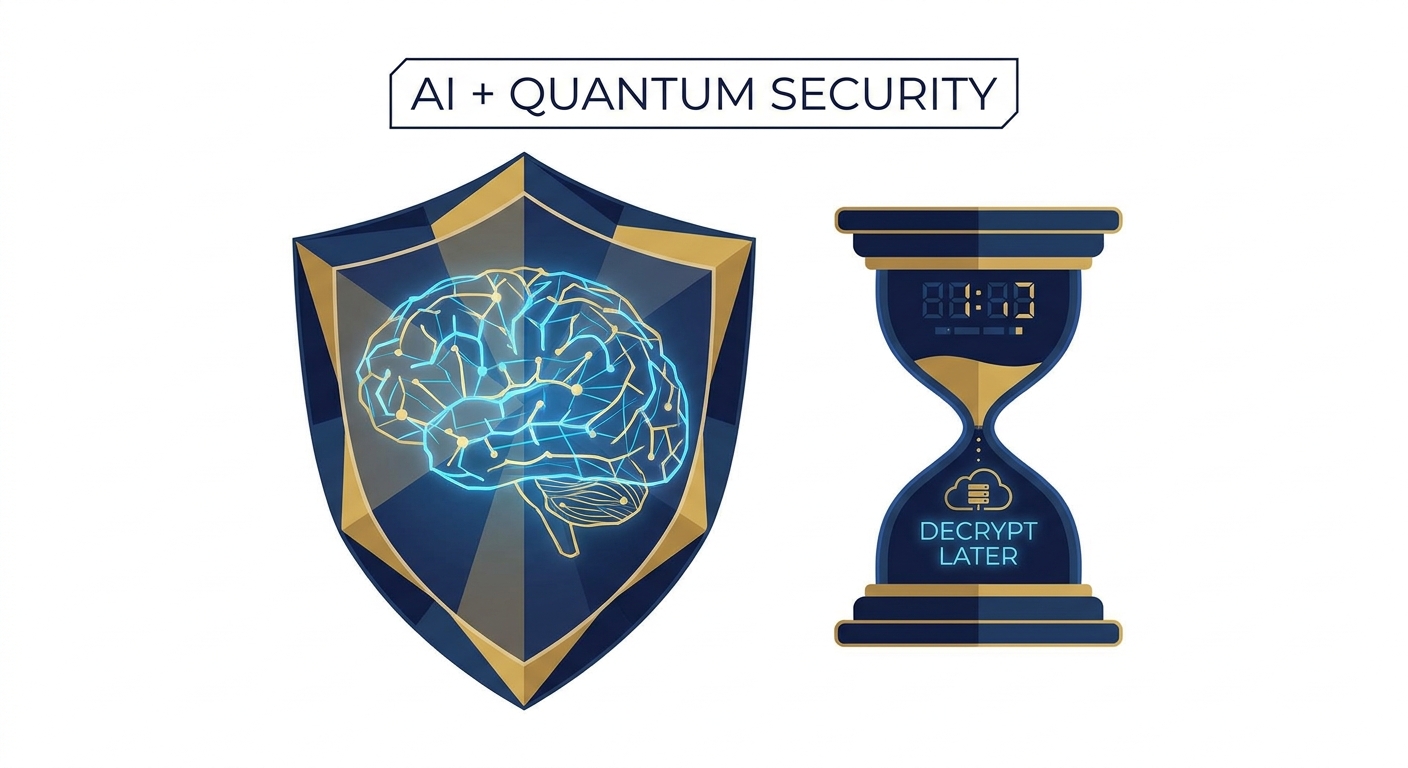
The urgency stems from a specific threat vector known as "harvest now, decrypt later." Adversaries are already collecting encrypted blockchain transactions and wallet data today, storing them until quantum computers are powerful enough to reverse the encryption. Once that happens, all historical data encrypted with classical algorithms becomes vulnerable. This creates a hard deadline for migration: wallets must adopt quantum-resistant signatures before large-scale quantum computers become operational. Estimates for this threshold vary, but the risk is immediate for long-term holdings.
NIST’s standards provide the blueprint for this migration. The agency selected algorithms based on mathematical problems that quantum computers cannot solve efficiently, such as lattice-based cryptography. These systems offer a robust defense against both classical and quantum attacks. However, implementing these standards requires significant updates to wallet infrastructure, from key generation to transaction signing. Users and developers must act now to ensure their assets remain secure in a post-quantum world.
The financial stakes are high. As quantum computing advances, the value of unsecured digital assets could plummet overnight if trust in current encryption collapses. Migrating to quantum-resistant standards is not just a technical upgrade; it is a critical step in preserving the integrity of the crypto ecosystem. Delaying this transition risks exposing billions of dollars in assets to unprecedented vulnerabilities.
How quantum computers break current wallets
Your crypto wallet relies on elliptic curve cryptography (ECC) to generate public and private key pairs. This mathematical framework powers the ECDSA and EdDSA signatures that authorize every transaction. For decades, this system has been considered secure because classical computers cannot solve the underlying elliptic curve discrete logarithm problem efficiently.
Shor’s algorithm changes this dynamic entirely. Developed by mathematician Peter Shor in 1994, this quantum algorithm can factor large integers and solve discrete logarithm problems in polynomial time. While a classical supercomputer might take thousands of years to derive a private key from a public one, a sufficiently powerful quantum computer could do it in hours or minutes. This isn't a theoretical edge case; it is a fundamental mathematical advantage that renders current asymmetric encryption obsolete.
The vulnerability lies in the public key itself. When you broadcast a transaction, your public key is revealed to the network. In a classical environment, this exposure is safe because reversing the math is computationally infeasible. Under a quantum attack, however, that exposed public key becomes a target. An attacker running Shor’s algorithm on your transaction data could reverse-engineer your private key before the network confirms the block, allowing them to steal the funds or double-spend them.
This threat is not limited to a single blockchain. Bitcoin, Ethereum, and most other major networks currently use ECDSA or EdDSA for signature verification. The transition to post-quantum cryptography (PQC) is not just about upgrading software; it is about replacing the foundational math that secures your assets. Until quantum computers reach the stability and qubit count required to run Shor’s algorithm at scale, the risk remains latent but real. The 2026 deadline reflects the urgency of migrating to quantum-resistant standards before this capability becomes a practical weapon.
NIST’s post-quantum cryptography standards
The National Institute of Standards and Technology (NIST) has finalized the algorithms that will replace current blockchain encryption methods. This transition is critical because quantum computers will eventually break the elliptic curve cryptography (ECC) and RSA schemes protecting today’s wallets. NIST selected three primary algorithms to handle different security needs: ML-KEM for encryption, and ML-DSA and SLH-DSA for digital signatures.
ML-KEM (Module-Lattice-Based Key-Encapsulation Mechanism) replaces traditional key exchange protocols. It ensures that even if a quantum adversary intercepts communication, they cannot derive the shared secret. For digital signatures, which verify wallet ownership and transaction authenticity, NIST chose ML-DSA (Module-Lattice-Based Digital Signature Algorithm). ML-DSA offers a balance of performance and security, making it suitable for most general-purpose applications. SLH-DSA (Stateless Hash-Based Digital Signature Algorithm) provides an alternative based on hash functions, offering a different security assumption for high-assurance environments.
The shift from ECDSA to these new standards introduces significant changes in key and signature sizes. Traditional ECDSA keys are small, but post-quantum alternatives are much larger. This impacts storage requirements and transaction fees on blockchains. The table below compares the security levels and key sizes of the legacy standard against NIST’s selected post-quantum algorithms.
| Algorithm | Type | NIST Level | Public Key Size |
|---|---|---|---|
| ECDSA (P-256) | Signature | Level 1 | 32 bytes |
| ML-DSA-44 | Signature | Level 1 | 1,995 bytes |
| ML-DSA-65 | Signature | Level 3 | 3,300 bytes |
| ML-KEM-512 | Encryption | Level 1 | 768 bytes |
NIST’s selection is based on rigorous cryptographic analysis and community feedback. The standards are published in FIPS 203 (ML-KEM), FIPS 204 (ML-DSA), and FIPS 205 (SLH-DSA). Wallet developers must begin integrating these algorithms now to ensure compatibility before quantum threats become imminent. The transition will require updates to wallet software, blockchain protocols, and user interfaces to handle the larger data payloads. For more details on the announcement, see the NIST press release.
Migrating wallets to quantum-safe protocols
The 2026 deadline for quantum-resistant encryption is not a distant theoretical horizon; it is a concrete technical requirement for wallet security. Migrating to these protocols requires a structured approach that prioritizes key integrity and protocol compatibility. Users and developers must audit current cryptographic implementations and replace vulnerable algorithms with those standardized by NIST.

Begin by identifying all instances of Elliptic Curve Cryptography (ECC) and RSA in your wallet infrastructure. These are the primary targets for Shor’s algorithm. Use static analysis tools to map every key exchange and signature verification point that needs replacement.
Adopt algorithms from the NIST Post-Quantum Cryptography standardization project, such as CRYSTALS-Kyber for key encapsulation and CRYSTALS-Dilithium for signatures. These have undergone rigorous peer review and are the industry baseline for quantum-safe security.

Do not rely on a single new algorithm immediately. Implement hybrid schemes that combine classical ECC with the new PQC algorithms. This ensures security remains intact even if the new quantum-resistant standards are later found to have vulnerabilities.

Integrate open-source libraries like liboqs (Open Quantum Safe) into your development environment. Run comprehensive unit tests to verify that key generation, encryption, and decryption functions work correctly under the new protocols.
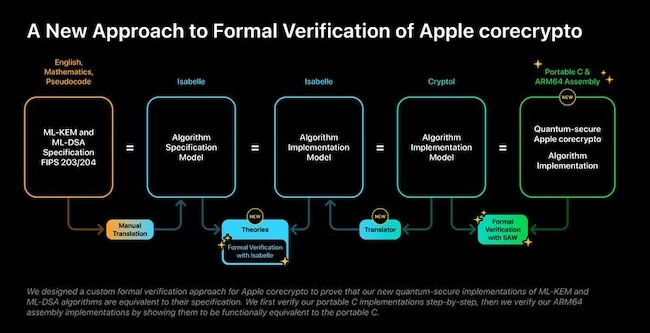
Deploy the updated cryptographic modules to all wallet firmware and client applications. Ensure that the update mechanism itself is secure, preventing man-in-the-middle attacks during the migration process.
| Algorithm | Type | Status |
|---|---|---|
| CRYSTALS-Kyber | Key Encapsulation | NIST Standard |
| CRYSTALS-Dilithium | Digital Signature | NIST Standard |
| FALCON | Digital Signature | NIST Standard |
| SPHINCS+ | Stateless Hash | NIST Standard |
Migrating to quantum-safe protocols is a critical step in securing digital assets. By following this workflow, you can ensure your wallet remains secure against future quantum threats.
AES-256 and QKD in crypto security
Symmetric encryption remains the bedrock of wallet security. While quantum computers threaten asymmetric algorithms like ECC, AES-256 holds up significantly better against quantum attacks. Grover’s algorithm offers a quadratic speedup, effectively halving the key strength. This reduces AES-256’s security level to the equivalent of AES-128, which remains computationally infeasible to break with foreseeable technology. Industry standards, including ETSI GR QSC 006, consider AES-256 quantum-resistant at least until 2050.
Quantum Key Distribution (QKD) offers a different approach by using quantum mechanics to secure key exchange. It generates truly random keys with high entropy, making brute-force attempts physically impossible. However, QKD requires dedicated infrastructure and specialized hardware, making it less practical for most consumer wallets. The NSA views post-quantum cryptography as a more cost-effective and easily maintained solution than QKD for widespread deployment.
No comments yet. Be the first to share your thoughts!