

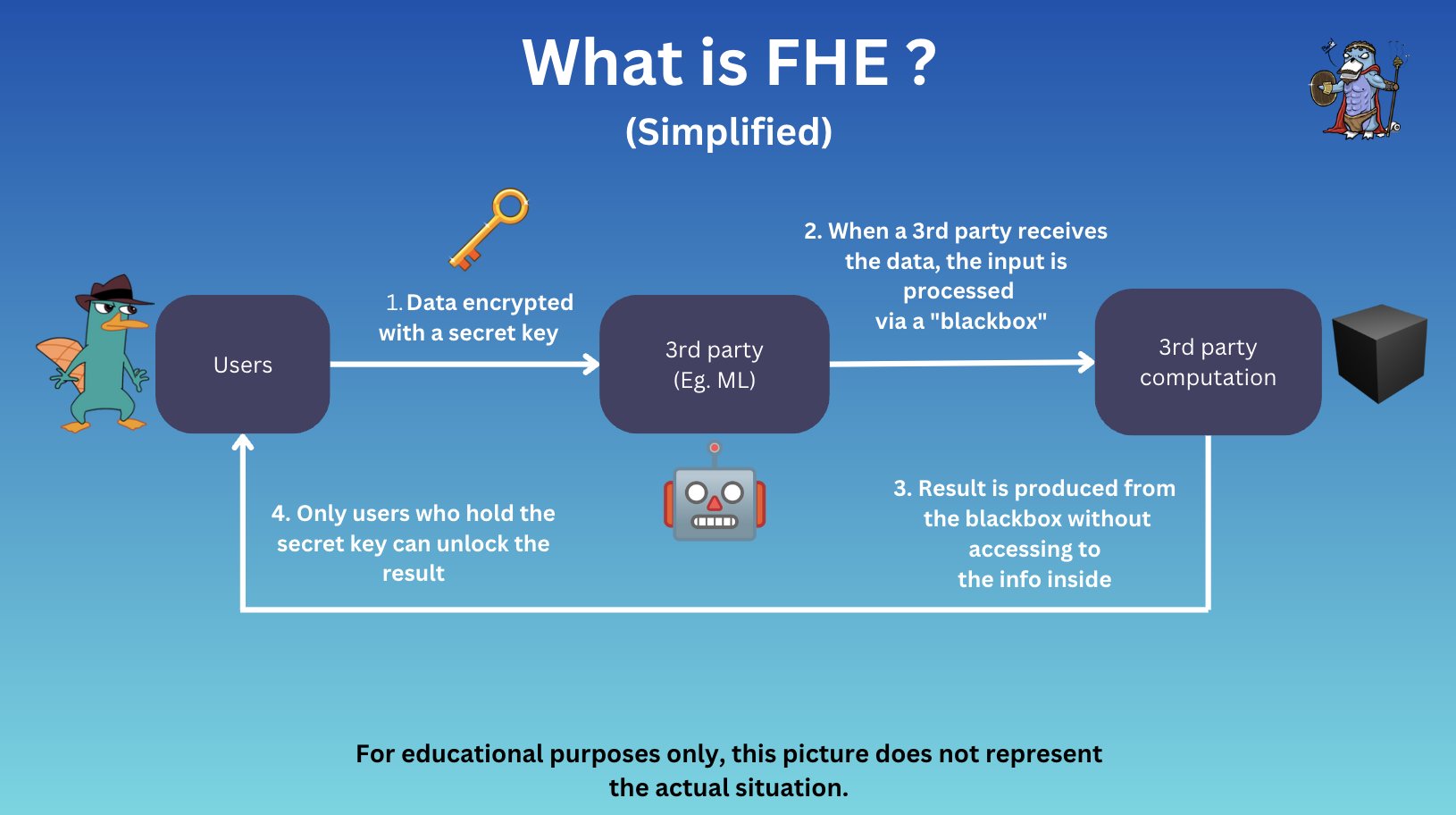
Public blockchains have long faced a fundamental tension: while they deliver transparency and auditability, this same openness exposes sensitive data to anyone watching the network. For applications like financial contracts, healthcare records, or enterprise supply chains, this level of exposure is unacceptable. Fully Homomorphic Encryption (FHE) offers a groundbreaking solution, enabling computations on encrypted data without ever decrypting it. With Zama’s fhEVM, developers can now build confidential smart contracts in Solidity that preserve privacy without sacrificing composability or decentralization.

What is Fully Homomorphic Encryption and Why Does It Matter for Smart Contracts?
At its core, fully homomorphic encryption smart contracts allow you to process encrypted inputs and produce encrypted outputs, so no one but the intended recipient ever sees the underlying data. In traditional Ethereum smart contracts, all variables and transactions are visible to every network participant. This transparency makes it impossible to keep transaction amounts, user identities, or business logic confidential.
Zama’s fhEVM changes the game by integrating FHE directly into the Ethereum Virtual Machine (EVM). With fhEVM, developers can use familiar Solidity syntax but swap in encrypted data types like euint32. This means computations such as voting tallies, private auctions, or confidential financial agreements can run on-chain, without revealing sensitive details to anyone except authorized parties.
The Building Blocks: Encrypted Data Types in Solidity
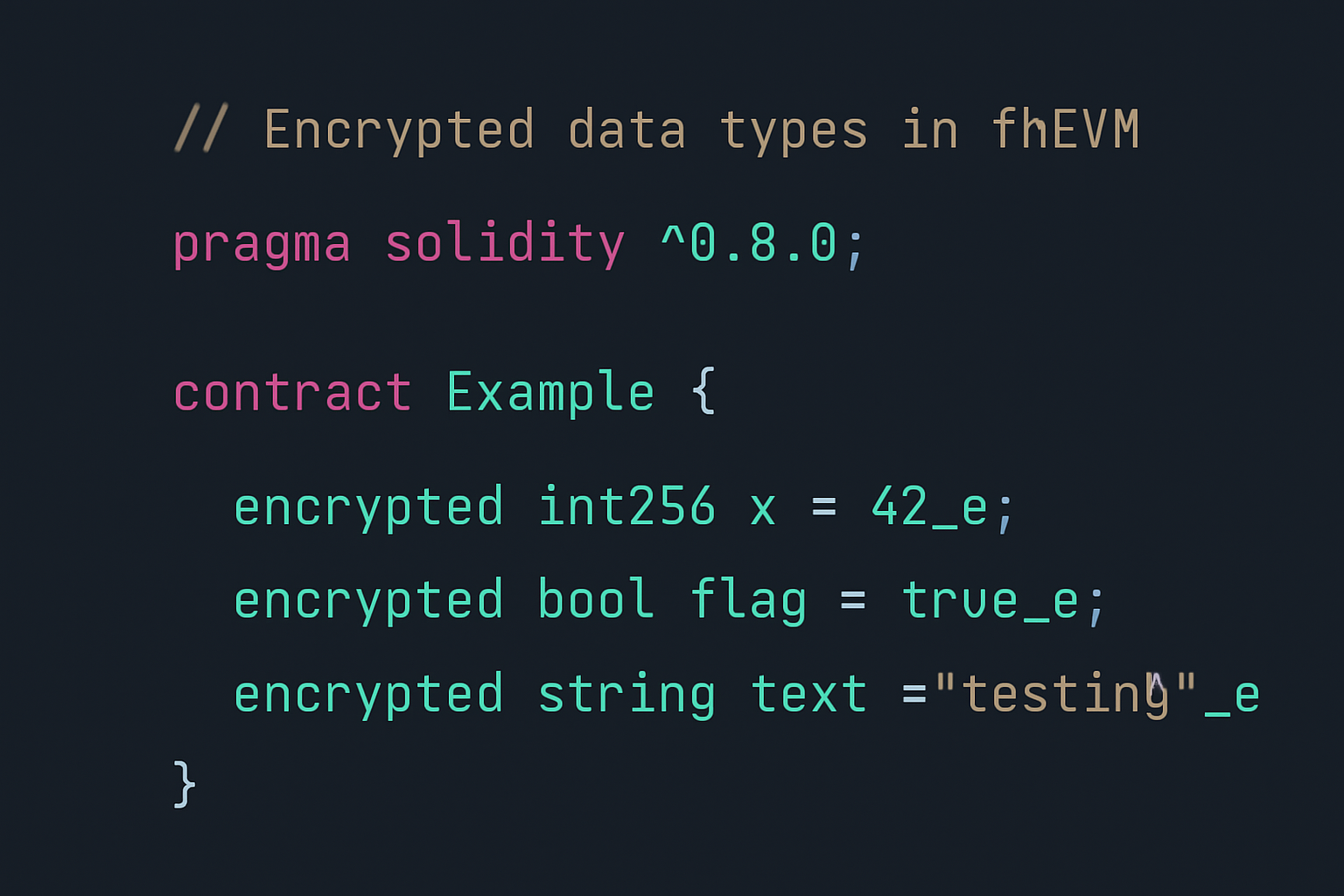
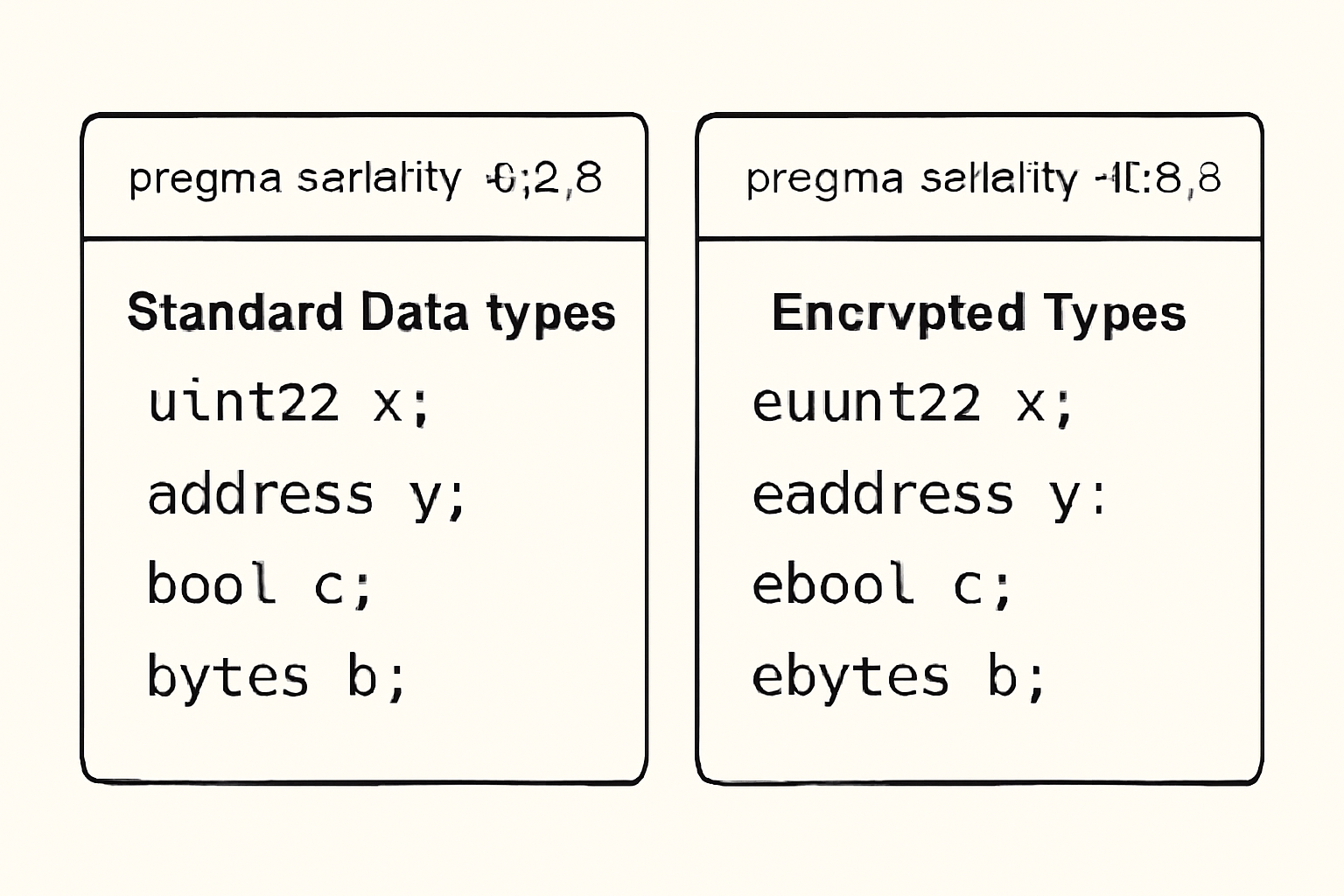
The secret sauce behind fhEVM confidential contracts is its set of encrypted data types. Instead of using typical Solidity types like uint32, developers declare variables as euint32, which represent 32-bit unsigned integers stored in an encrypted form. There are also types like externalEuint32, designed for interoperability with off-chain actors or external contracts.
This approach ensures that all contract state variables and function parameters remain fully encrypted throughout their lifecycle on-chain. The result? Even if someone inspects the blockchain directly, they see only ciphertext, not actual values.
Key Benefits of Encrypted Data Types in Solidity with fhEVM
- End-to-End Data Confidentiality: Encrypted data types like euint32 ensure that sensitive information remains encrypted throughout storage and computation, protecting user privacy even on public blockchains.

- Seamless Integration with Existing Solidity Code: Developers can upgrade smart contracts to support confidentiality by simply replacing standard types with their encrypted counterparts, requiring minimal changes to existing codebases.
- Confidential Computation on Encrypted Data: With fhEVM, all contract logic and operations are performed directly on encrypted values, ensuring that data is never exposed during processing.
- Granular Access Control and Decryption Policies: Smart contracts can define precise access control mechanisms, allowing only authorized parties to decrypt and view specific data, enhancing security and compliance.

- Preservation of Blockchain Composability: Encrypted data types enable confidential smart contracts to interact with other decentralized applications without sacrificing interoperability or privacy.

A Developer’s Perspective: Seamless Integration with Existing Workflows
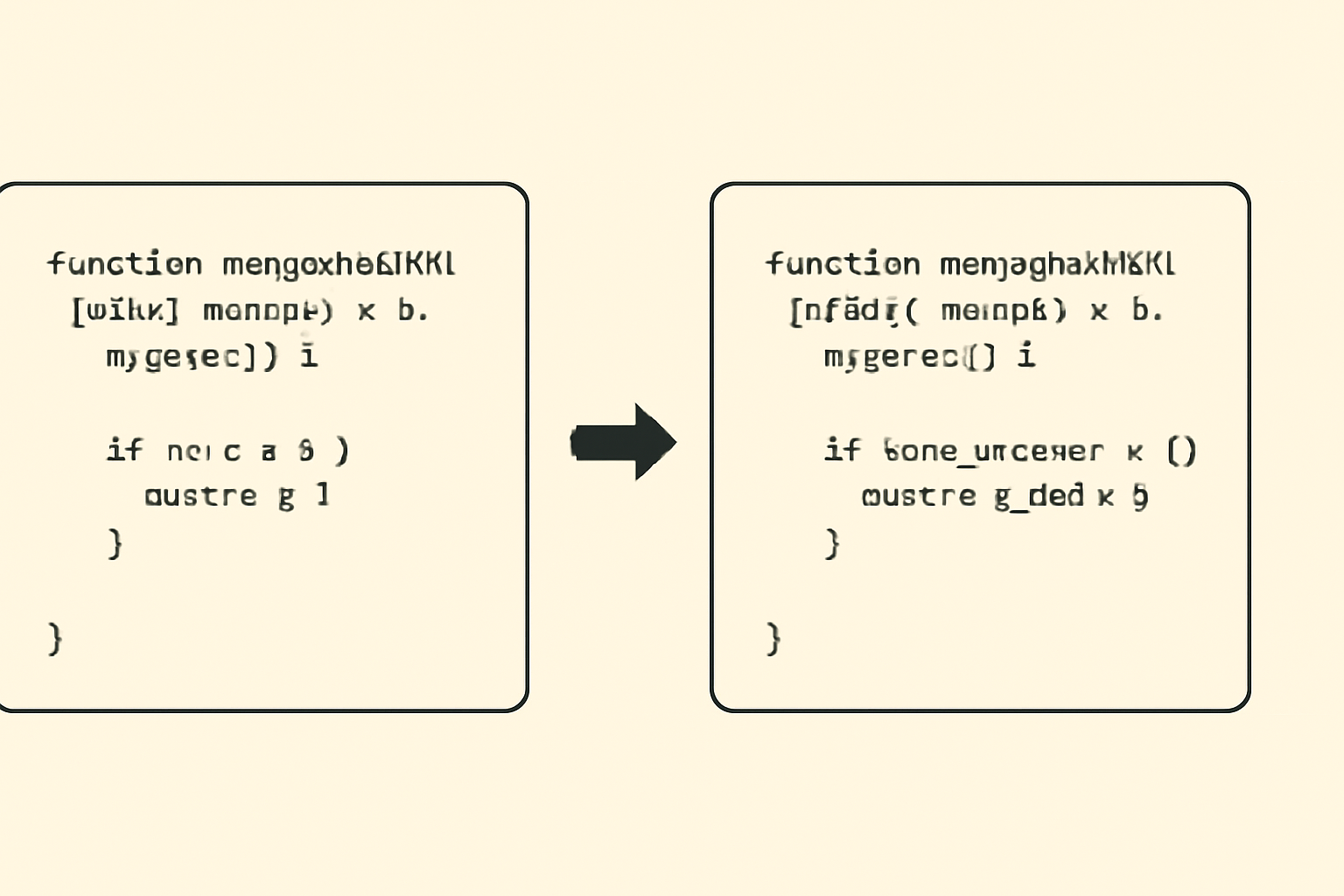
Zama’s approach with fhEVM prioritizes usability for developers who already know Solidity. Rather than forcing teams to learn complex cryptography or new languages, the FHE library lets you import encrypted operations directly into your existing codebase. The transition is as simple as replacing standard data types with their FHE counterparts and importing a library.
The official Zama documentation provides a clear quick start tutorial, demonstrating how to upgrade a vanilla smart contract into a privacy-preserving version in just a few steps:
How to Convert a Standard Solidity Contract into an fhEVM Confidential Contract

This seamless integration empowers developers to focus on business logic while leveraging advanced cryptographic primitives under the hood, no PhD required. The implications for privacy-centric DeFi protocols, private DAOs, and enterprise dApps are enormous.
But the impact of Solidity encrypted data types goes well beyond technical novelty. By making privacy the default, fhEVM opens up entirely new use cases that were previously off-limits on public blockchains. Think about confidential payroll, private voting mechanisms, or supply chain contracts where proprietary business data must remain shielded from competitors and the public alike. With FHE, these applications can now move on-chain without fear of leaking sensitive information.
Privacy in Action: Access Control and Secure Decryption
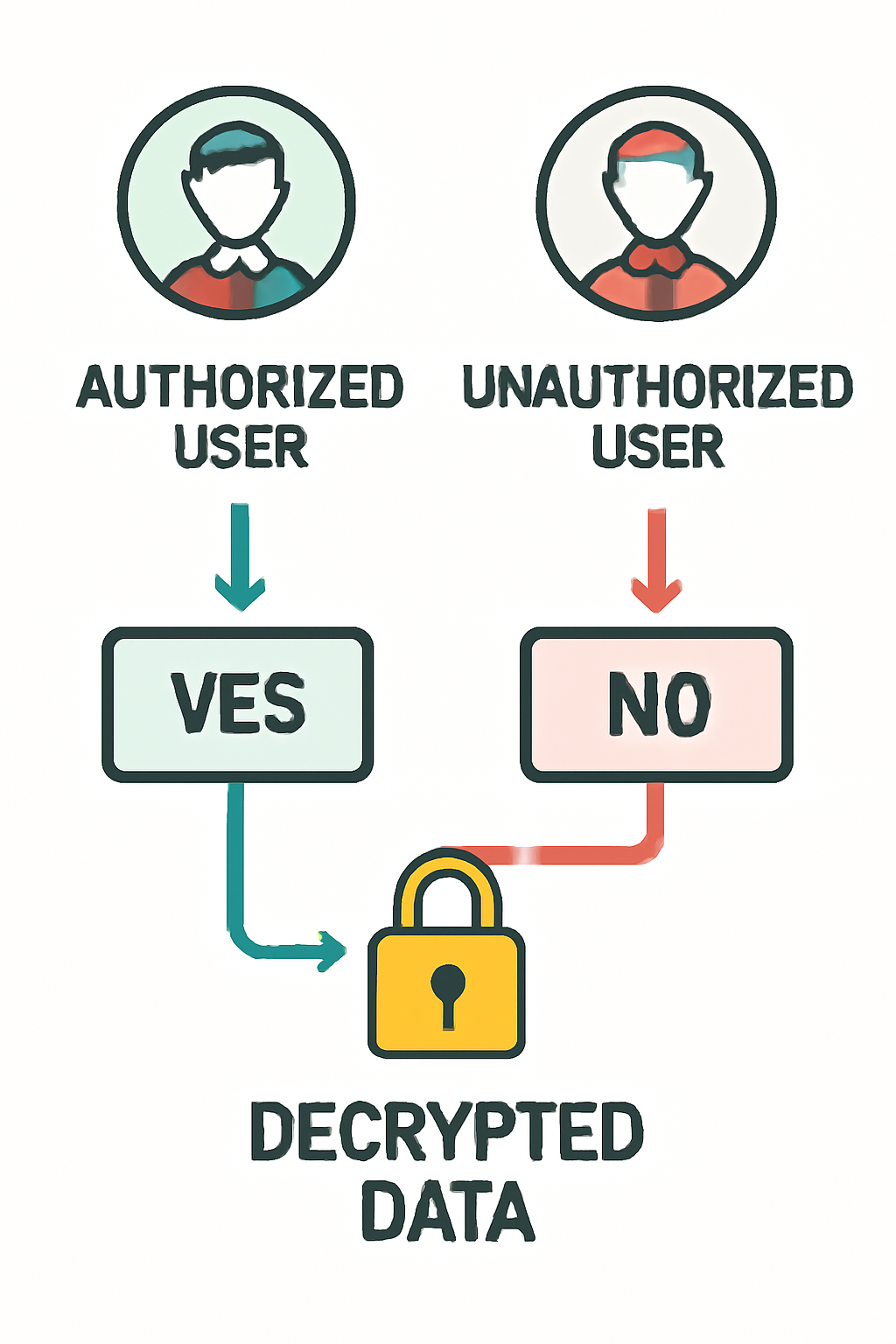
One common concern with blockchain privacy is ensuring that only authorized parties can decrypt and access certain information. The fhEVM addresses this with flexible access control policies built directly into smart contracts. Developers can use Access Control Lists (ACLs) or role-based permissions to define exactly who can trigger decryption of specific variables or outputs.
This granular approach means that even as computations run on encrypted data, only designated users, such as auditors or contract participants, can reveal the underlying values when necessary. For example, a confidential auction contract could allow only the winner and contract owner to see the final bid amounts, while keeping all other details permanently hidden from everyone else.
Real-World Applications: Where FHE Smart Contracts Shine
The promise of FHE blockchain privacy is already drawing attention from enterprises and forward-thinking DeFi builders alike. Here are just a few areas where fhEVM-powered confidential contracts are poised to make a difference:
- Private DeFi: Enable lending, trading, and settlement without exposing user balances or transaction histories.
- Healthcare Data: Store and process medical records on-chain while meeting strict confidentiality requirements.
- Enterprise Agreements: Automate sensitive B2B deals where contract terms must remain secret from competitors.
- Voting and Governance: Conduct elections or DAO votes privately while ensuring transparent tallying.
The Road Ahead: Limitations and Future Potential
No technology is without trade-offs. While fhEVM represents a major leap forward for blockchain privacy, developers should be aware of current limitations. Fully homomorphic encryption is computationally intensive compared to traditional operations; this means higher gas costs and slower execution times in some scenarios. However, Zama’s ongoing research continues to optimize performance, aiming for parity with standard EVM operations over time.
The broader ecosystem is also evolving rapidly. As more dApps adopt FHE-based approaches, expect better tooling, wallet integrations, and cross-chain interoperability for confidential contracts. Zama’s open-source commitment ensures that improvements benefit the entire community, not just early adopters.
Top Tips for Getting Started with fhEVM Confidential Contracts
- Start with Zama's Official fhEVM Quick Start Tutorial. The Zama Docs provide a comprehensive step-by-step guide to set up your development environment and deploy your first confidential contract using fhEVM.

- Import the FHEVM Solidity Library for Encrypted Data Types. Use the zama-ai/fhevm-solidity library to access encrypted types like euint32 and externalEuint32, enabling confidential computation directly in Solidity.

- Replace Standard Types with Encrypted Counterparts. Swap out standard Solidity types (e.g., uint32) for their encrypted equivalents (e.g., euint32) to ensure all sensitive data remains confidential throughout contract execution.
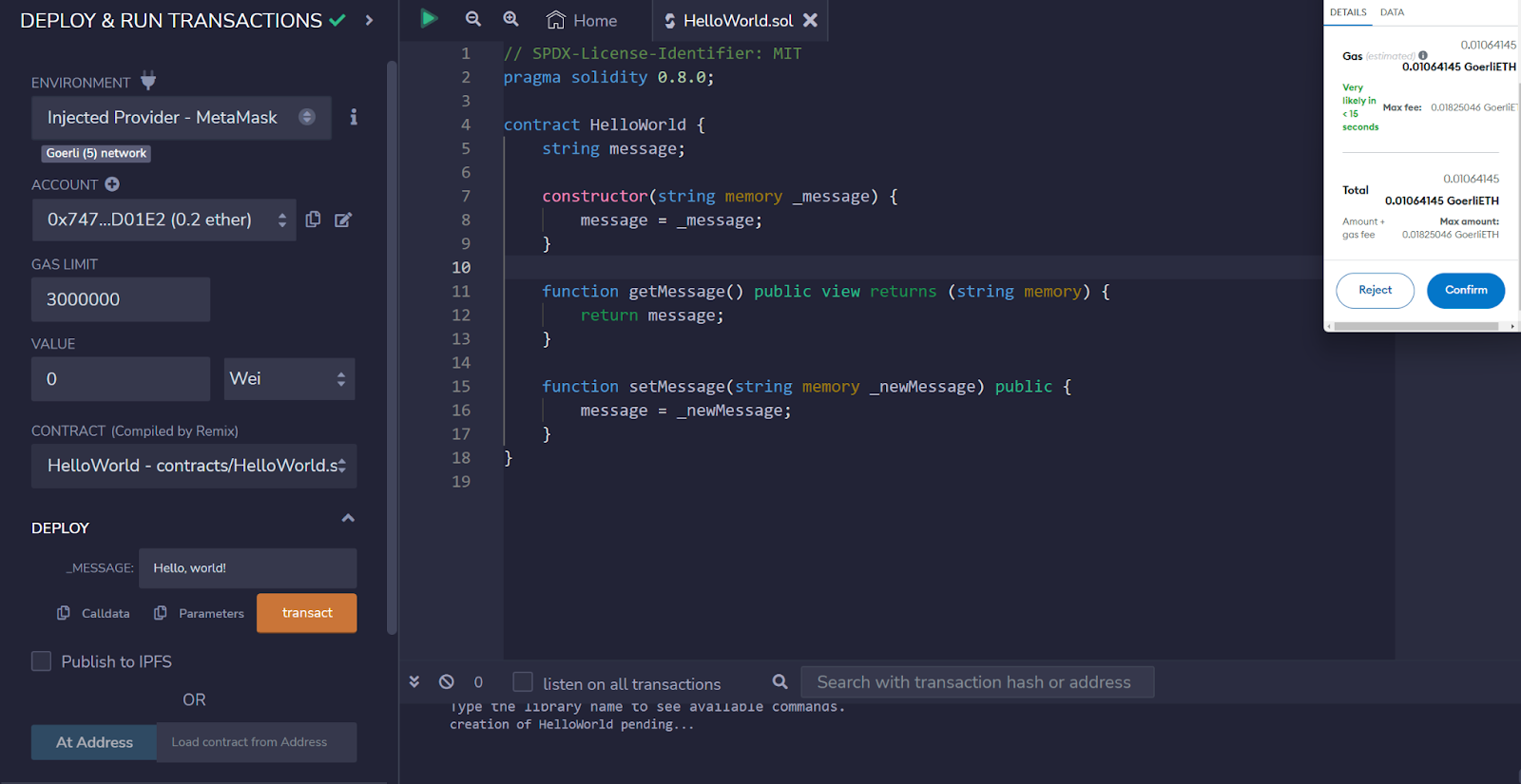
- Define Access Control Policies for Decryption. Implement robust access control mechanisms, such as Access Control Lists (ACLs), within your smart contracts to specify who can decrypt and access sensitive data.
- Test Confidential Computations Thoroughly. Validate that your contract logic performs as expected on encrypted data, and ensure that no unencrypted sensitive information is exposed during computation or storage.

- Use fhEVM-Compatible Tools for Deployment and Interaction. Deploy your contracts and interact with them using tools and networks that support fhEVM, such as testnets provided by Zama or compatible EVM environments.
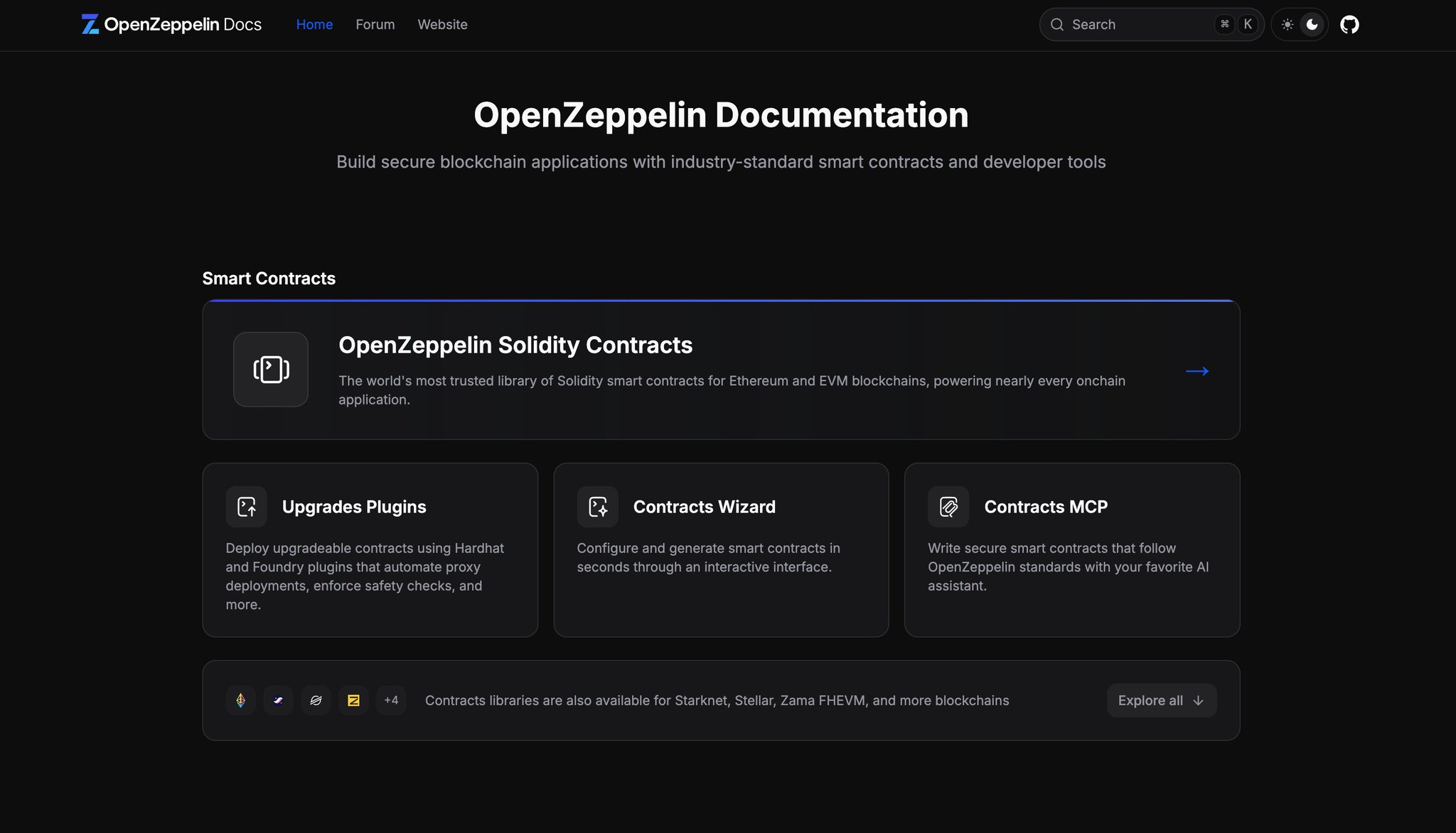
- Stay Updated with Zama's Documentation and Community. Follow the latest updates, best practices, and community discussions via Zama's official site and GitHub repositories to keep your skills and contracts up to date.

The Takeaway: Privacy Without Compromise
The arrival of fully homomorphic encryption smart contracts via tools like Zama’s fhEVM marks a turning point for decentralized application design. Developers no longer have to choose between transparency and confidentiality; they can have both by leveraging encrypted data types in Solidity and robust access controls within their dApps.
If you’re building applications where privacy is non-negotiable, or simply want to future-proof your smart contracts, now is the time to explore what FHE-powered solutions offer. Dive deeper into implementation details with Zama’s official resources at the quick start tutorial, or follow project updates at Zama's product page.




No comments yet. Be the first to share your thoughts!