The quantum threat timeline for crypto
The window to secure your digital assets is closing faster than most investors realize. The Global Risk Institute’s 2026 Quantum Threat Timeline, developed in partnership with evolutionQ, estimates that a cryptographically relevant quantum computer (CRQC) capable of breaking current encryption standards is quite possible within the next decade. This is not a distant theoretical scenario; it is an imminent operational reality for blockchain infrastructure.
While the full computational power to crack RSA or ECC encryption may still be years away, the threat is already here through "harvest now, decrypt later" attacks. Adversaries are actively collecting encrypted blockchain data and private keys today, storing them to decrypt once quantum capabilities mature. By the time a CRQC arrives, your current holdings could be exposed if they rely on legacy encryption methods.
To counter this, NIST has finalized its first set of post-quantum cryptography standards, providing the blueprint for next-generation security. However, implementation lags behind standardization. The financial stakes are immense, as seen in the volatility and market sentiment surrounding quantum-resistant asset strategies.
The transition to post-quantum encryption is no longer optional for long-term crypto asset preservation. Waiting for the threat to become obvious means waiting until it is too late to secure your keys.
NIST Standards and Wallet Updates
The transition from classical cryptography to post-quantum encryption (PQC) is no longer theoretical. In 2024, the National Institute of Standards and Technology (NIST) finalized the first set of global standards, selecting ML-KEM (formerly Kyber) for key encapsulation and ML-DSA (formerly Dilithium) for digital signatures. These algorithms form the backbone of the new security layer required to protect crypto assets against quantum decryption threats.
ML-KEM provides the encryption layer, ensuring that only the intended recipient can read transaction data. ML-DSA handles the signing process, verifying the identity of the sender. Together, they replace legacy standards like ECDSA and Ed25519, which are vulnerable to Shor's algorithm on sufficiently powerful quantum computers. CISA guidance emphasizes that adopting these standards is critical for securing hardware wallets, software nodes, and blockchain protocols against future "harvest now, decrypt later" attacks.
| Standard | Function | Quantum Resistance | Key Size Impact |
|---|---|---|---|
| ML-KEM | Key Encapsulation (Encryption) | High | Moderate increase |
| ML-DSA | Digital Signatures | High | Moderate increase |
| ECDSA | Digital Signatures | Low | Small |
| Ed25519 | Digital Signatures | Low | Small |
Major crypto wallet providers and blockchain protocols are actively integrating these standards. Hardware wallet manufacturers are updating firmware to support ML-DSA signatures, ensuring that private keys remain secure even as quantum computing capabilities advance. Software wallets are implementing hybrid schemes, combining classical and post-quantum algorithms to maintain security during the transition period.
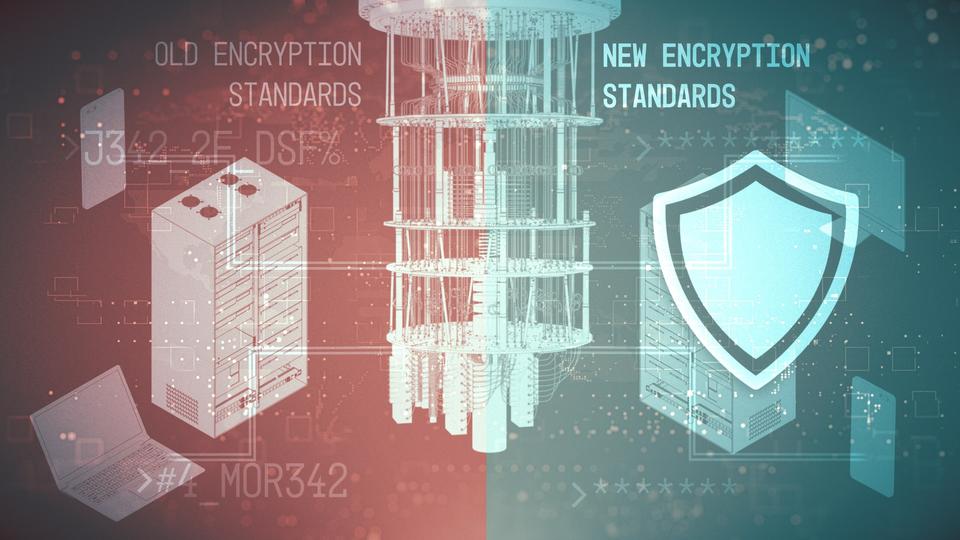
Compliance with NIST standards is becoming a de facto requirement for institutional-grade security. As quantum computers grow more powerful, the window to migrate to PQC-compliant systems narrows. Wallet developers and blockchain networks that delay integration risk exposing user assets to future vulnerabilities. The 2026 landscape demands proactive adoption of ML-KEM and ML-DSA to ensure long-term asset security.
Infrastructure vendors lead migration
Major infrastructure providers are no longer waiting for quantum computers to break current encryption standards; they are actively rewriting the security protocols that underpin the internet. This shift is critical for crypto assets, where the value of stolen keys often outweighs the cost of early hacking. By adopting post-quantum cryptography (PQC) now, cloud giants are setting a technical precedent that smaller exchanges and service providers must eventually follow.
Cloudflare has accelerated its roadmap, targeting full post-quantum security by 2029. This includes securing not just data in transit but also the internal communications between their servers. Their approach demonstrates that migration is not a single event but a continuous process of updating cryptographic libraries and certificate authorities. The company’s public commitment signals to the broader industry that quantum resistance is a non-negotiable infrastructure requirement.
Similarly, Google announced a 2029 timeline for securing its quantum era through PQC migration. Google’s strategy involves integrating post-quantum algorithms into its core services, ensuring that user data remains protected against future decryption threats. These moves by two of the largest tech companies create a ripple effect. As they enforce stricter security standards, they force downstream vendors and crypto platforms to align their systems or risk obsolescence and exposure.
The market impact is immediate. As these providers upgrade, the cost of maintaining legacy security decreases relative to the cost of quantum-resistant alternatives. This economic pressure accelerates adoption across the financial technology sector. For crypto investors, this infrastructure shift represents a quiet but vital layer of protection for their assets.
Secure Crypto Assets Now
The threat to your digital assets is not theoretical; it is happening today. Attackers are harvesting encrypted data now to decrypt it later, once quantum computers are powerful enough to break current standards. For crypto holders, this means every transaction secured with classical cryptography is a potential future liability. Immediate action is required to protect your wealth from this "harvest now, decrypt later" strategy.
Verify Wallet and Exchange Security
Your first step is auditing your current infrastructure. Most major exchanges and wallet providers are in the early stages of migration to post-quantum cryptography (PQC). Check their official security pages for announcements regarding NIST-standardized algorithms like CRYSTALS-Kyber. If your platform has not yet committed to a PQC migration timeline, consider moving a portion of your assets to a self-custody solution that supports hybrid or post-quantum signing.
Audit Your Key Storage
Private keys are the foundation of your security. If you are using hardware wallets, verify that the firmware supports post-quantum algorithms or is on a clear update path. For software wallets, ensure your provider is integrating hybrid signing schemes. This dual-layer approach ensures that even if classical cryptography is broken, the quantum-resistant layer remains intact. Do not wait for a mandatory update; proactive migration is your best defense.
Monitor Official Threat Advisories
Stay informed through official channels. NIST and CISA regularly update their guidance on cryptographic transitions. Subscribe to their alerts to stay ahead of emerging threats. Ignorance of these updates is no longer a valid excuse for asset loss. Treat your crypto security with the same rigor as your financial portfolio, adjusting your strategy as the landscape evolves.
No comments yet. Be the first to share your thoughts!