Why quantum computers threaten crypto wallets
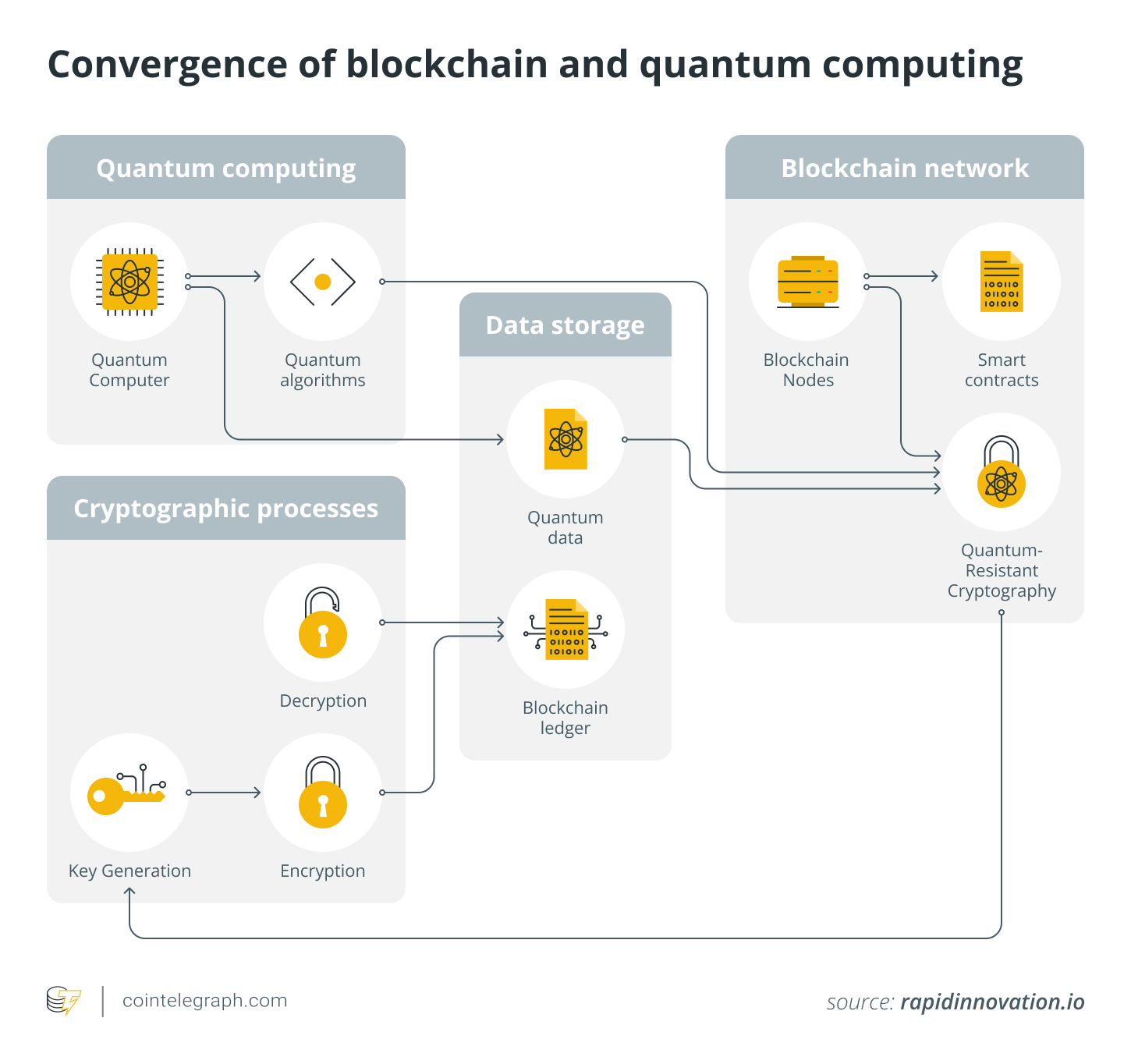
Your current wallet security relies on math problems that are hard for classical computers but trivial for quantum machines. Most cryptocurrencies use ECDSA (Elliptic Curve Digital Signature Algorithm) to generate public and private keys. This system assumes that factoring large numbers or solving discrete logarithms takes thousands of years with today’s technology. Quantum computers change that timeline entirely.
The threat comes from Shor’s algorithm, a quantum computing method that can efficiently solve the mathematical problems underpinning RSA and ECDSA. Once a sufficiently powerful quantum computer is built, it can derive your private key from your public address in minutes. This means anyone with access to such technology could steal funds from wallets that have ever shared their public key on the blockchain.
A more immediate concern is the "harvest now, decrypt later" attack. Adversaries are already collecting encrypted data and public keys today, storing them until quantum computers become viable. By that time, they can unlock your assets even if the transaction happened years ago. This isn't a future hypothetical; it's a present-day vulnerability that current encryption standards cannot mitigate.
The transition to quantum-resistant encryption is not just about upgrading software; it's about replacing the fundamental math that keeps your wallet secure. Until post-quantum cryptography becomes the standard, your assets remain exposed to a threat that is no longer theoretical.
The finalized standards: ML-KEM, ML-DSA, and SLH-DSA
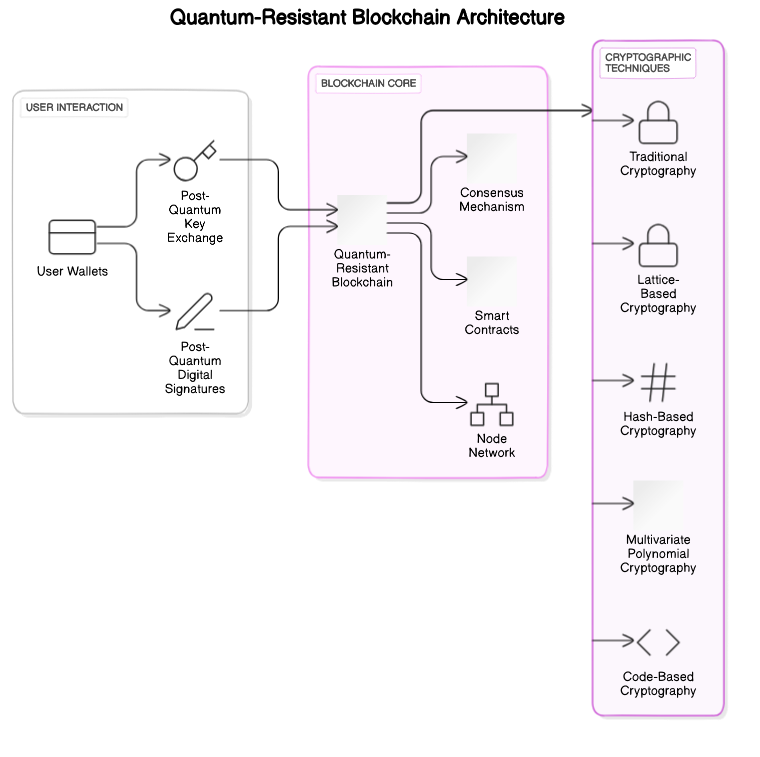
NIST has moved post-quantum cryptography from theoretical papers to enforceable standards. In 2024, the agency finalized three primary algorithms that will replace the cryptographic foundations of current digital wallets. These standards address the specific threat quantum computers pose to blockchain security by introducing lattice-based and hash-based encryption.
The three finalized algorithms serve distinct roles in securing digital assets.
ML-KEM (Key Encapsulation)
Formerly known as CRYSTALS-Kyber, ML-KEM is the first standardized algorithm for key encapsulation. It replaces traditional Elliptic Curve Diffie-Hellman (ECDH) key exchanges used in most current wallets. ML-KEM allows two parties to establish a shared secret key over an insecure channel, ensuring that future quantum computers cannot derive the private key from the public exchange. Its adoption is critical for protecting the initial handshake in wallet transactions.
ML-DSA (Digital Signatures)
Replacing the Schnorr and ECDSA signatures that verify ownership on blockchains, ML-DSA (based on CRYSTALS-Dilithium) provides quantum-resistant digital signatures. When you sign a transaction, ML-DSA proves you own the funds without revealing your private key. This standard is essential for maintaining the integrity of blockchain ledgers, as it prevents quantum adversaries from forging signatures or stealing assets by breaking existing signature schemes.
SLH-DSA (Hash-Based Signatures)
SLH-DSA (SPHINCS+) offers an alternative signature scheme based on hash functions rather than lattices. While generally slower and producing larger signatures than ML-DSA, it relies on a different mathematical foundation. This diversity is valuable for long-term security; if a vulnerability is discovered in lattice-based math, SLH-DSA provides a robust backup for high-value, long-hold assets.
| Algorithm | Primary Function | Mathematical Basis |
|---|---|---|
| ML-KEM | Key Exchange | Lattices |
| ML-DSA | Digital Signatures | Lattices |
| SLH-DSA | Digital Signatures | Hash Functions |
How wallet providers are migrating
Wallet providers are not waiting for quantum computers to break current encryption. They are actively migrating to quantum-resistant standards to protect user assets against "harvest now, decrypt later" attacks. This transition is technically complex because it requires updating the core cryptographic primitives that secure every transaction signature.
The industry is largely converging on hybrid signatures. This approach combines traditional algorithms like Ed25519 or ECDSA with new NIST-standardized post-quantum algorithms, such as CRYSTALS-Kyber. By using both, wallets ensure that if one algorithm is compromised—whether by a quantum computer or a mathematical breakthrough in classical computing—the other still protects the funds. This redundancy is the current best practice for maintaining security during the transition period.
NIST’s selection of these algorithms provides a clear roadmap for developers. The first four algorithms announced by NIST are based on structured lattices and hash functions, offering a standardized foundation for implementation. Wallet providers are integrating these standards into their codebases, often starting with new account creations or specific high-value features before rolling them out globally.
The timeline for user-facing updates varies by provider. Major platforms are prioritizing backward compatibility to avoid breaking existing user workflows. This means you may not notice the change immediately. Instead, look for gradual updates in transaction signing processes or new security settings that allow you to opt into quantum-resistant features. The goal is a seamless shift where the user experience remains identical, but the underlying security layer is significantly stronger.
Check your wallet's quantum readiness
Your current wallet might be using encryption standards that quantum computers can break. Verifying your setup now is cheaper than migrating after a breach. Use the steps below to audit your provider and confirm whether they support post-quantum cryptography (PQC) or if you need to move your assets.
List every wallet you use, including mobile apps, browser extensions, and hardware devices. Note the exact version number and vendor name. If you are using a major provider like Ledger, Trezor, or MetaMask, check their official security pages for "post-quantum" or "NIST PQC" mentions. Smaller or newer wallets rarely have public PQC roadmaps yet.
Look for references to specific quantum-resistant algorithms in your wallet’s documentation. The NIST standards include CRYSTALS-Kyber (key encapsulation) and CRYSTALS-Dilithium (signatures). If your wallet only mentions ECDSA or Ed25519 without a PQC alternative, it is vulnerable. Hardware wallets often support hybrid modes (classical + PQC) in firmware updates.
PQC protects data in transit and at rest, but it cannot protect a stolen seed phrase. Ensure your backup is stored offline, such as on steel plates or paper, in a secure physical location. Digital backups (cloud storage, screenshots, or text files) are vulnerable to both classical hacking and future decryption advances. Your quantum readiness is only as strong as your offline backup.
Check when your wallet last received a security update. Providers that have not released patches in over a year are unlikely to adopt new PQC standards soon. Visit the vendor’s official blog or GitHub repository to see if PQC migration is on their roadmap. If support is absent or stalled, plan your migration to a provider with active quantum-resistance development.
If your wallet does not support PQC or lacks a clear roadmap, move your assets to a quantum-ready provider. Start with small test transactions to ensure the new wallet generates compatible addresses. Once confirmed, transfer the full balance. Keep your old wallet active only for receiving funds until you are certain the migration is complete.
Market impact of quantum-resistant standards
The transition to post-quantum cryptography (PQC) is reshaping crypto market dynamics, introducing a new layer of complexity to asset valuation and security infrastructure. As NIST finalizes its first four quantum-resistant algorithms, the industry faces a critical migration window that could trigger short-term volatility. This shift is not merely a technical update; it is a fundamental restructuring of trust models that will likely impact wallet security standards and token longevity.
Investors and developers are closely monitoring how exchanges and wallet providers implement these standards. Early adopters of quantum-safe protocols may see a premium in market sentiment, while those lagging behind risk obsolescence. The rise of "quantum-safe" tokens—cryptocurrencies explicitly designed with PQC algorithms—signals a niche but growing sector focused on future-proofing digital assets.
To understand the broader market context, it is useful to observe how major assets react to security-related news cycles. The chart below illustrates the price action of Bitcoin, providing a baseline for how market sentiment shifts during significant security announcements.
The migration to PQC will be gradual, but its impact on market confidence will be immediate. Assets that demonstrate robust quantum resistance are likely to attract institutional capital seeking long-term security guarantees, while those that fail to adapt may face increased scrutiny and reduced liquidity.
Frequently asked questions about PQC
Quantum-resistant encryption addresses the imminent threat of quantum computing breaking current wallet security. Below are the most common concerns regarding migration timelines, costs, and technical compatibility.
No comments yet. Be the first to share your thoughts!