Post-quantum cryptography limits to account for
Post-quantum cryptography (PQC) refers to cryptographic algorithms designed to operate securely against the capabilities of future quantum computers. While current encryption relies on the difficulty of factoring large numbers or solving discrete logarithms, quantum machines using Shor’s algorithm could break these systems in minutes. PQC algorithms instead rely on mathematical problems that are believed to remain hard even for quantum processors, such as lattice-based or hash-based cryptography.
The urgency for migration stems from "harvest now, decrypt later" attacks, where adversaries store encrypted data today to decrypt it once quantum hardware becomes viable. This threat is particularly acute for crypto wallets, where private keys must remain secret for decades. Standard asymmetric algorithms like RSA and ECC are vulnerable, while symmetric algorithms like AES-256 require only key length doubling to maintain security, making them relatively quantum-resistant with minimal changes.
NIST has standardized the first set of PQC algorithms, including CRYSTALS-Kyber for key encapsulation and CRYSTALS-Dilithium for digital signatures. Wallet providers are now integrating these standards into their infrastructure, but widespread adoption is still in early stages. Users should look for wallets that explicitly support hybrid encryption schemes, combining traditional and post-quantum algorithms during the transition period to mitigate risks from potential algorithm weaknesses.
Post-quantum cryptography choices that change the plan
Adopting post-quantum encryption (PQC) is not a simple binary switch; it requires balancing security gains against operational costs. As you evaluate migration paths for your crypto wallet, you must weigh three primary tradeoffs: performance overhead, key storage footprint, and interoperability stability. There is no single "best" algorithm, only the right fit for your specific threat model and device constraints.
Performance and Latency
PQC algorithms generally require more computational power than current elliptic-curve standards. This increased processing load can slow down transaction signing and wallet synchronization, particularly on mobile devices or hardware wallets with limited processing power. For high-frequency traders or users on low-end hardware, this latency is a tangible friction point. However, for typical holding wallets, the difference is often imperceptible unless you are performing thousands of micro-transactions per second.
Key and Signature Size
The most visible tradeoff is storage. Post-quantum keys and signatures are significantly larger than their classical counterparts. A single PQC public key can be kilobytes in size, compared to bytes for traditional keys. This increases the blockchain footprint for wallet addresses and can raise transaction fees if the wallet relies on on-chain storage for public keys. Additionally, larger keys mean more data must be backed up securely, increasing the physical storage requirements for seed phrases or hardware devices.
Interoperability and Standardization
The PQC landscape is still maturing. While NIST has standardized algorithms like CRYSTALS-Kyber and CRYSTALS-Dilithium, implementation details vary across different wallet providers. Choosing an early-adopter wallet might offer cutting-edge security but risks compatibility issues with exchanges or other services that haven't updated their protocols. Conversely, waiting for widespread adoption might leave your assets exposed to "harvest now, decrypt later" attacks if your current encryption is broken before the migration window closes.
Comparison of pqc choices that change the plan
The following table compares the primary tradeoffs across common post-quantum algorithm families and deployment strategies. Use this to evaluate which approach aligns with your wallet's architecture.
| Factor | Performance | Storage Footprint | Maturity |
|---|---|---|---|
| Lattice-based (e.g., Kyber) | Moderate overhead | High key size | NIST Standard |
| Hash-based (e.g., SPHINCS+) | High overhead | Very large signatures | Standardized |
| Hybrid Encryption | Lower (Classical + PQC) | Very high (Combined keys) | High (Fallback safety) |
| Classical Only (ECDSA) | Fast | Minimal | Vulnerable to Quantum |
Strategic Recommendation
For most crypto wallet users, a hybrid approach offers the best balance. By combining classical encryption (like ECDSA) with a post-quantum algorithm (like Kyber), you protect against both current threats and future quantum attacks. This ensures that even if the PQC algorithm is later found to have vulnerabilities, the classical layer still provides security. This strategy is currently recommended by CISA and major cybersecurity firms as the safest migration path.
Choose the next step
Transitioning to post-quantum cryptography (PQC) is not a single switch but a layered migration. The goal is to harden your crypto wallet against Shor’s algorithm, which can break current elliptic-curve signatures, without sacrificing the speed or usability you need for daily transactions.
Start by assessing your current setup. Check if your wallet software supports hybrid signatures, which combine traditional ECDSA with a lattice-based algorithm like CRYSTALS-Kyber. This approach ensures security even if one system is compromised. If your current provider has no PQC roadmap, prioritize migrating to a wallet that implements NIST-standardized algorithms.
Identify which cryptographic algorithms your wallet currently uses. Look for mentions of ECDSA, Ed25519, or hybrid modes. If the documentation is silent, assume it is vulnerable to quantum attacks. Check the vendor’s security page for references to NIST PQC standards.
Choose a wallet that explicitly supports NIST-approved algorithms such as CRYSTALS-Kyber for key encapsulation and CRYSTALS-Dilithium for signatures. Prioritize open-source projects with active audit trails. Verify that the provider has a clear migration timeline and does not rely on proprietary, untested encryption methods.
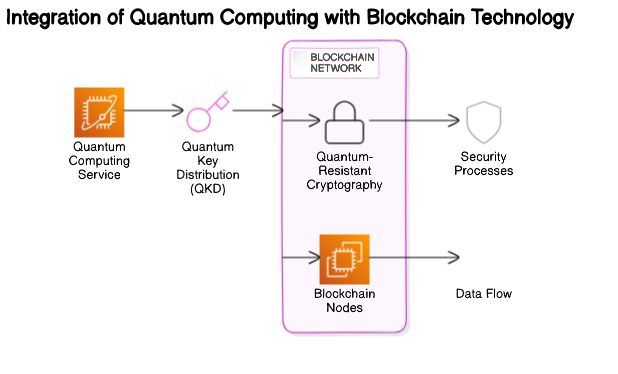
Activate hybrid signature modes if available. This allows your wallet to sign transactions using both traditional and post-quantum algorithms simultaneously. It acts as a safety net, ensuring that your assets remain secure even if quantum computers advance faster than expected. Keep this mode on until all your contacts and exchanges support PQC.
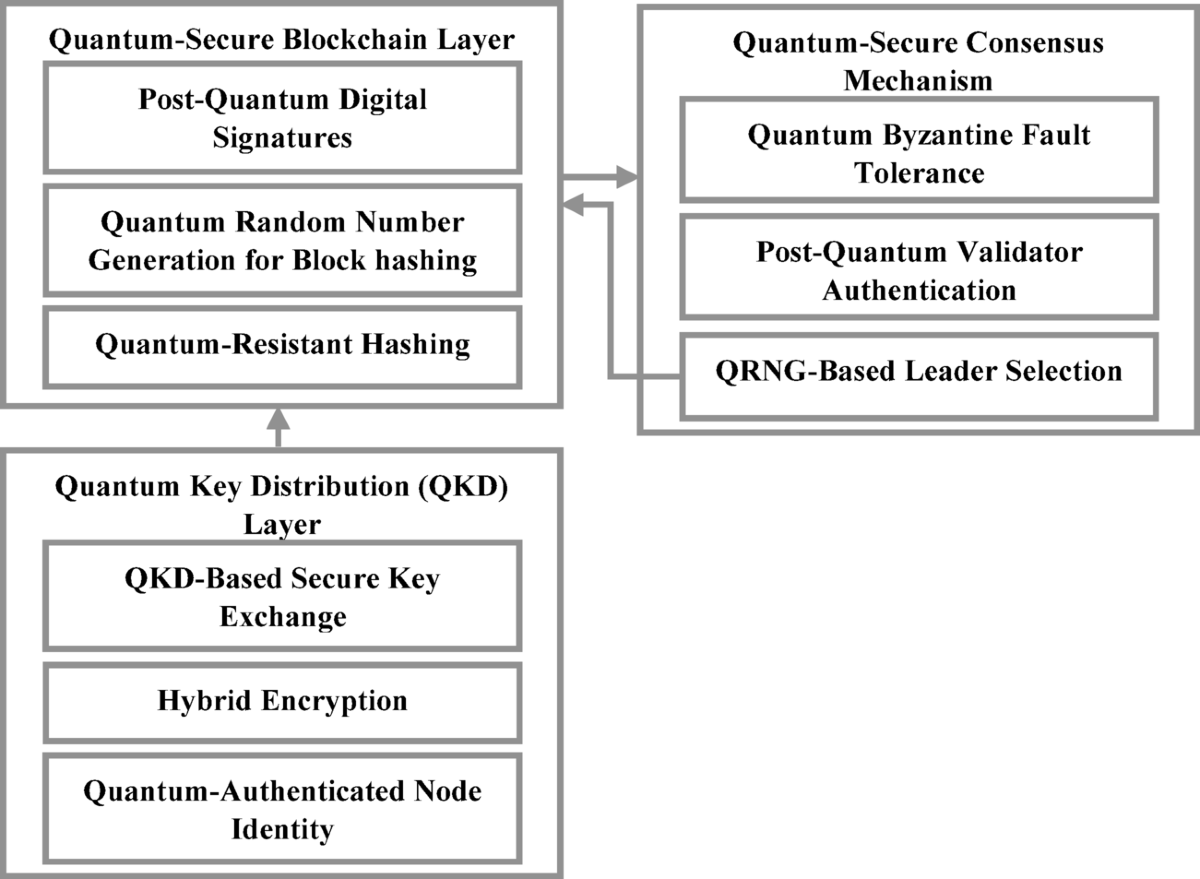
Before moving significant funds, send a small test transaction to verify that the new signature scheme works correctly. Check that the transaction confirms on the blockchain and that your wallet interface displays the correct PQC status. This step prevents irreversible loss due to compatibility issues with exchanges or payment processors.
Avoid the Weak Options
Not every "quantum-safe" label on a crypto wallet means it is ready for the real world. Many products rely on hybrid models that mix old and new algorithms. This creates a false sense of security because the weak link remains. If a wallet uses a flawed implementation, the post-quantum layer does not matter.
Be wary of wallets that claim "quantum-proof" status without citing NIST standards. Some vendors use custom or unvetted algorithms that have not undergone rigorous peer review. These are essentially security theater. They look modern but fail against actual quantum threats or even classical attacks if the code is buggy.
Another common mistake is ignoring side-channel vulnerabilities. A mathematically perfect algorithm can still leak keys through power consumption or timing attacks. If the wallet software does not implement constant-time operations, your private keys are exposed regardless of the encryption type. Stick to wallets that explicitly mention constant-time implementations and NIST-approved algorithms like CRYSTALS-Kyber.
Post-quantum cryptography: what to check next
What is post-quantum cryptography?
Post-quantum cryptography (PQC) refers to cryptographic algorithms designed to remain secure against attacks from future quantum computers. Unlike traditional encryption, which relies on mathematical problems that quantum processors can solve quickly, PQC uses complex lattice-based or hash-based structures that resist both classical and quantum calculation methods. The National Institute of Standards and Technology (NIST) is currently standardizing these algorithms to replace vulnerable protocols like RSA and ECC in digital wallets and blockchain networks.
Can a quantum processing unit replace a GPU?
No, a quantum processing unit (QPU) cannot replace a graphical processing unit (GPU) for current cryptocurrency mining or daily computing tasks. These processors operate on fundamentally different principles: GPUs use billions of traditional transistors to perform parallel arithmetic, while QPUs manipulate qubits using quantum mechanical phenomena like superposition. A QPU is specialized for specific mathematical optimizations and cannot run the software or mining algorithms that GPUs currently power.
Is AES-256 post-quantum?
AES-256 is considered resistant to quantum attacks, but only if implemented correctly. While Shor’s algorithm breaks public-key cryptography, Grover’s algorithm only provides a quadratic speedup for symmetric ciphers like AES. This effectively halves the security strength, meaning AES-256 retains a 128-bit security level against quantum search attacks. This level is still considered computationally infeasible to break, making AES-256 a safe choice for encrypting wallet data, though many experts recommend migrating to NIST-approved hybrid schemes for long-term defense.
Should I turn on post-quantum encryption?
Enabling post-quantum encryption depends on your threat model and the wallet software you use. If you are holding long-term assets, adopting "hybrid" encryption—where traditional and PQC algorithms are used simultaneously—offers protection against both current and future threats. Many modern wallet providers are already integrating NIST-standardized algorithms like CRYSTALS-Kyber. Check your wallet’s security settings for a "quantum-resistant" or "PQC" toggle, and prioritize wallets that have undergone independent security audits for these new standards.
No comments yet. Be the first to share your thoughts!