The post-quantum cryptography limits to account for
You are likely reading this because your systems still rely on RSA or Elliptic Curve Cryptography (ECC). Those standards work fine against today’s classical computers, but they are fragile against quantum processors. NIST’s 2026 mandates are not a future projection; they are a deadline for organizations handling sensitive data.
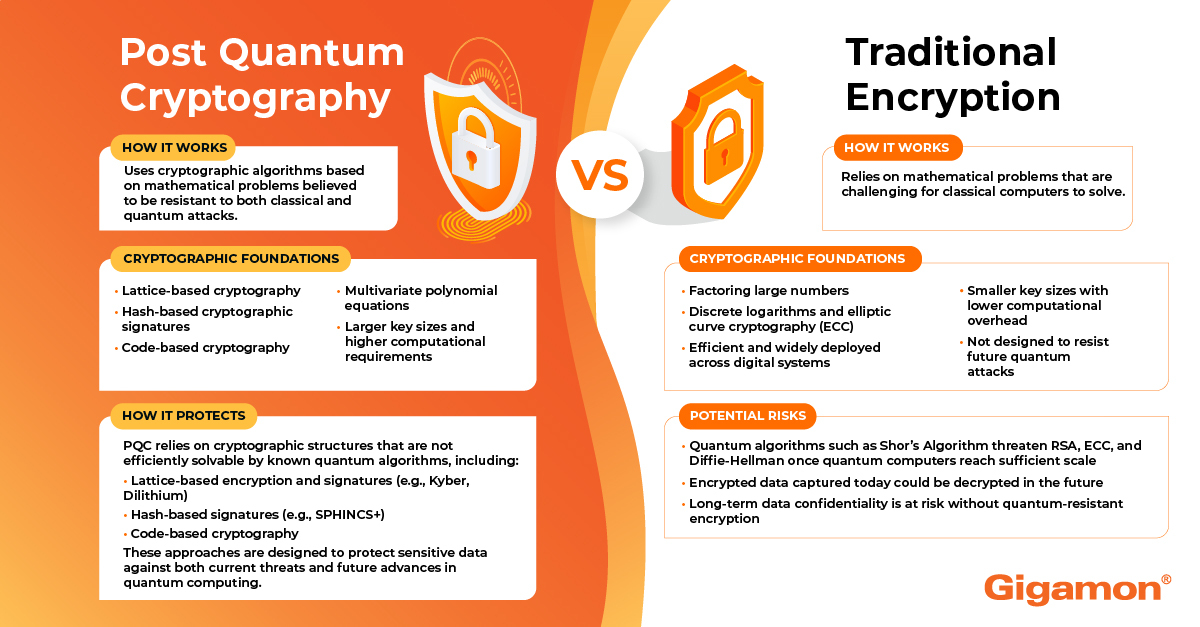
Post-quantum cryptography (PQC) is the development of cryptographic algorithms resistant to quantum computers. While classical encryption relies on the difficulty of factoring large numbers, PQC algorithms use complex mathematical structures like lattice-based problems. These structures are significantly harder for Shor’s algorithm—the primary quantum threat—to break.
The constraint is practical, not just theoretical. Quantum computers capable of breaking RSA-2048 do not yet exist in a usable form, but the "harvest now, decrypt later" strategy is already active. Adversaries are stealing encrypted data today to unlock it once quantum hardware matures. By the time the hardware is ready, your data could already be exposed.
NIST’s transition plan forces a shift in infrastructure. You must audit your current TLS certificates, database encryption, and API keys. The new standards, such as CRYSTALS-Kyber for key exchange and CRYSTALS-Dilithium for signatures, introduce larger key sizes. This increases bandwidth usage and processing latency. You need to weigh this performance cost against the security risk of staying on legacy standards.
The mandate applies to federal systems first, but private sector adoption follows quickly. Financial institutions and healthcare providers cannot afford to wait. Start by identifying where your most sensitive data is stored and which protocols protect it. The window to upgrade before quantum threats become mainstream is closing fast.
Post-quantum cryptography choices that change the plan
Adopting post-quantum cryptography (PQC) is not a simple software update; it is a structural change to how data is secured. The 2026 NIST mandates require organizations to evaluate concrete tradeoffs between security, performance, and compatibility. You are not just choosing an algorithm; you are choosing how your infrastructure handles larger keys and signatures.
The primary tension lies in key and signature size. Traditional algorithms like RSA or ECC are efficient but vulnerable to Shor’s algorithm on quantum computers. Post-quantum alternatives, such as CRYSTALS-Kyber (key encapsulation) and CRYSTALS-Dilithium (digital signatures), offer quantum resistance but at a cost. These new standards often require significantly more bandwidth and storage. For example, a public key for Kyber-768 is roughly 1.2 KB, compared to 32 bytes for a P-256 elliptic curve key. This expansion affects TLS handshakes, certificate storage, and database indexing.
Performance overhead is the second major factor. Lattice-based cryptography, the dominant approach for NIST standards, involves complex matrix operations. While faster than older PQC candidates like isogeny-based schemes, they are still heavier than classical ECC. In high-throughput environments like financial trading platforms or real-time transaction systems, this latency can impact user experience. You must benchmark these algorithms against your specific hardware, noting that software implementations may vary significantly from hardware-accelerated ones.
| Algorithm | Key Size (KB) | Signature Size (KB) | Security Level | Primary Use Case |
|---|---|---|---|---|
| Kyber-768 | 1.18 | N/A | 3 (NIST) | Key Encapsulation (KEM) |
| Dilithium-5 | N/A | 3.30 | 5 (NIST) | Digital Signatures |
| Falcon-1024 | N/A | 0.65 | 5 (NIST) | Low-bandwidth Signatures |
| SPHINCS+-256 | N/A | 16.50 | 5 (NIST) | Stateless Hash Signatures |
Hybrid deployment is the recommended mitigation strategy. Rather than replacing classical cryptography entirely, most implementations now use a hybrid mode: combining a post-quantum algorithm with a classical one (e.g., Kyber + X25519). This ensures security even if one algorithm is broken, either by a quantum computer or a classical cryptanalytic breakthrough. The tradeoff here is increased complexity in key management and certificate handling, but it provides a safety net during the transition period.
Market Impact
The shift to PQC is influencing the cybersecurity market. Companies specializing in quantum-safe solutions are seeing increased demand. The following chart illustrates the broader market sentiment around quantum computing and cybersecurity investments.
Note: This chart reflects general market volatility in tech stocks, not direct PQC financial metrics, as PQC implementation costs are often embedded in broader IT security budgets.
Key Takeaways
- Key Size: PQC keys are larger, impacting bandwidth and storage.
- Performance: Lattice-based algorithms are faster than earlier PQC candidates but slower than classical ECC.
- Hybrid Mode: Combining PQC with classical algorithms provides defense-in-depth.
- NIST Mandates: 2026 deadlines require proactive planning for algorithm migration.
How to choose the next step in your migration plan
NIST’s 2026 mandates shift post-quantum cryptography from experimental to required. You don’t need to rewrite every system overnight, but you do need a clear path. Use this framework to prioritize, test, and deploy without disrupting your current operations.
Start by identifying every system that handles long-term sensitive data. Look for TLS certificates, database encryption, and code signing keys. If a system is "crypto-agile" (meaning it can swap algorithms), it’s easier to upgrade. If it’s hardcoded, flag it for a major refactor.
Not all data needs immediate protection. Focus first on information that must remain secret for 10+ years. Financial records, health data, and state secrets are prime targets for "harvest now, decrypt later" attacks. Short-term transactional data can wait for the next maintenance window.
Don’t replace your current algorithms yet. Instead, implement hybrid keys that combine traditional ECDSA with NIST-standardized PQC algorithms like ML-KEM. This approach lets you test performance and latency impacts in a live environment without sacrificing current security guarantees.
Check your cloud providers, hardware security modules (HSMs), and software libraries. Ensure they support the specific NIST 2026 standards (ML-KEM, ML-DSA, SLH-DSA). If a vendor doesn’t support these yet, delay deployment until they do or use a workaround.
Begin with non-critical internal systems. Monitor for latency spikes and memory usage changes. Once stable, expand to customer-facing APIs. Document every change and rollback plan. A phased rollout minimizes risk and gives your team time to troubleshoot unexpected issues.
By following these steps, you’ll build a resilient defense against future quantum threats while maintaining the stability of your current infrastructure. Start small, verify often, and scale carefully.
Watch out for weak or misleading PQC options
The road to NIST’s 2026 mandate is littered with shortcuts. Many vendors label their products "quantum-safe" without offering real post-quantum cryptography. Before you upgrade, check for these common traps.
Claiming "Quantum-Proof" Without Standards
NIST has standardized four algorithms: CRYSTALS-Kyber (key encapsulation), CRYSTALS-Dilithium (signatures), SPHINCS+, and FALCON. Any vendor claiming full compliance must use these. If they rely on older or obscure math, they are not ready.
Misleading Hybrid Claims
Some solutions offer "hybrid" keys, mixing old RSA with new PQC. This sounds safe, but implementation errors are common. Ensure the hybrid is properly integrated into your TLS stack. A weak link in the chain breaks the whole system.
Ignoring Key Sizes
PQC keys are much larger than current RSA keys. Kyber keys are over 1KB. If your network infrastructure cannot handle this, your security will fail. Test your bandwidth and latency before deploying.
Relying on Proprietary Solutions
Avoid closed-source PQC. Open standards allow for community review. If a vendor hides their algorithm, you cannot verify its strength. Stick to NIST-approved, open-source libraries.
Post-quantum cryptography: what to check next
The shift to NIST’s 2026 mandates raises practical questions for security teams. Here are answers to common concerns about post-quantum cryptography (PQC) and its impact on current infrastructure.
No comments yet. Be the first to share your thoughts!