
Post-quantum encryption limits to account for
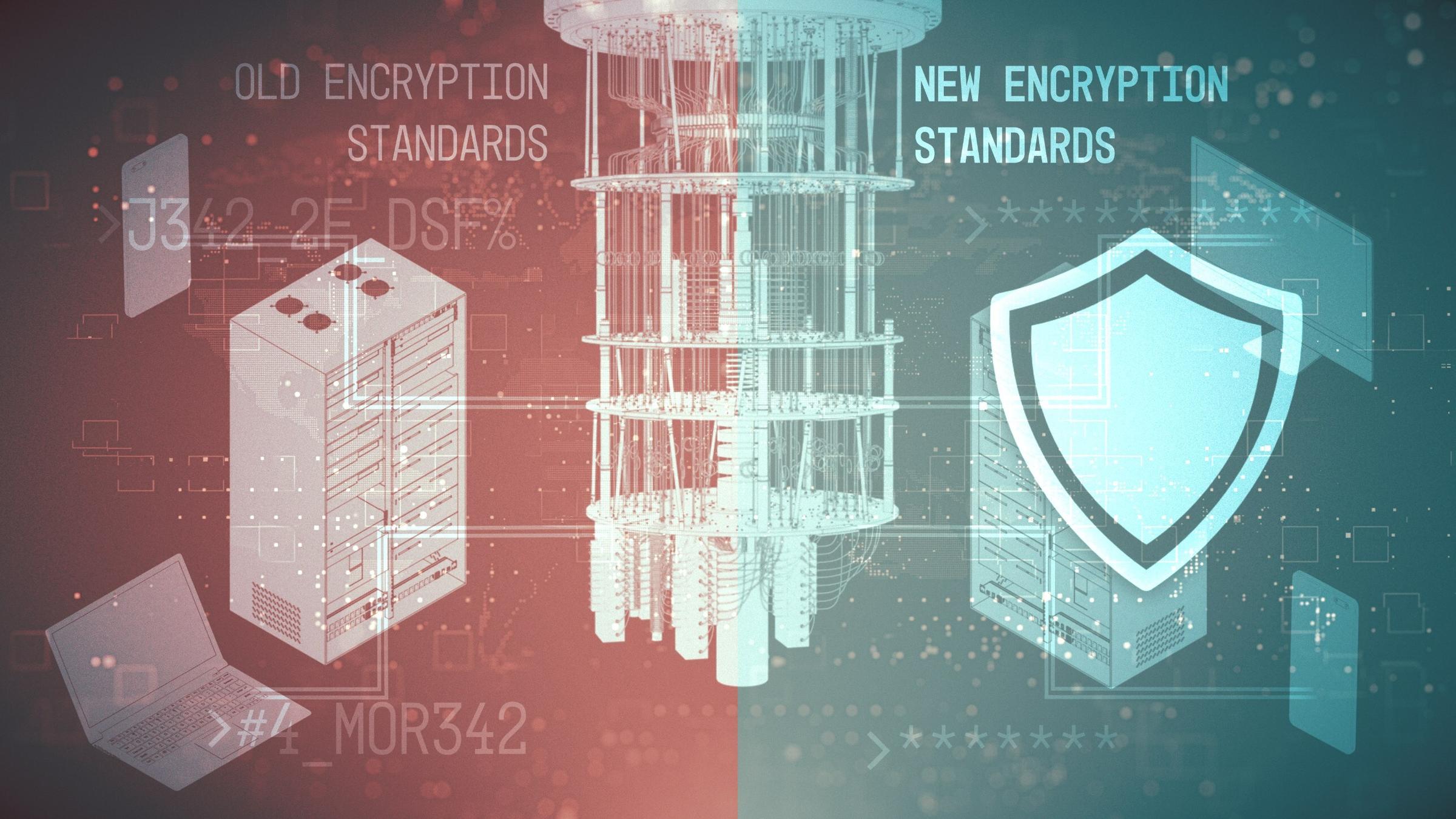
Post-quantum encryption refers to cryptographic algorithms designed to withstand attacks from future quantum computers. Unlike classical encryption, which relies on the difficulty of factoring large numbers or solving discrete logarithms, these new standards use complex lattice-based mathematics that remain secure even against Shor’s algorithm. The National Institute of Standards and Technology (NIST) has officially standardized these algorithms, marking a shift from theoretical defense to practical implementation for crypto wallets and enterprise systems.
The primary constraint is not just algorithmic strength, but the operational trade-offs required to achieve it. Post-quantum keys and signatures are significantly larger than their classical counterparts. For example, replacing RSA or ECC with NIST-approved lattice-based schemes can increase bandwidth usage and storage requirements. This "harvest now, decrypt later" threat forces organizations to adopt these larger keys now, even before quantum computers are fully operational, to protect sensitive long-term data.
While symmetric encryption like AES-256 remains largely quantum-resistant due to Grover’s algorithm providing only a quadratic speedup, asymmetric encryption is fundamentally broken by quantum computing. This distinction is critical for wallet security, where asymmetric keys protect private assets. As major browsers like Chrome begin supporting hybrid TLS key exchanges combining classical and post-quantum methods, the infrastructure is shifting, but full enterprise readiness remains a work in progress.
Post-quantum encryption choices that change the plan
Transitioning to NIST-approved algorithms like ML-KEM and ML-DSA requires balancing three competing factors: ciphertext size, computational overhead, and interoperability. Unlike classical algorithms, post-quantum cryptography (PQC) introduces structural changes that impact both performance and storage. Security teams must evaluate these tradeoffs to determine which standard suits their specific infrastructure.
The table below compares the primary NIST-standardized algorithms based on their most critical operational metrics.
| Algorithm | Type | Avg. Ciphertext Size | Best Use Case |
|---|---|---|---|
| ML-KEM (FIPS 203) | Key Encapsulation | ~1,184 bytes | TLS 1.3, hybrid key exchange |
| ML-DSA (FIPS 204) | Digital Signature | ~3,300 bytes | Code signing, document integrity |
| SLH-DSA (FIPS 205) | Stateless Hash Signature | ~4,600 bytes | Low-power IoT, constrained devices |
Ciphertext and Key Sizes ML-KEM is the most compact key encapsulation mechanism, making it ideal for bandwidth-constrained environments like mobile crypto wallets. However, its signatures are significantly larger than Ed25519. For devices with limited storage, such as hardware security modules (HSMs), this bloat requires careful planning.
Computational Overhead ML-DSA signatures are computationally expensive to verify. While acceptable for server-side code signing, this latency can be problematic for high-frequency trading platforms or real-time blockchain transactions. SLH-DSA offers faster verification but requires more memory for hash table management.
Interoperability Risks Hybrid key exchanges, which combine classical (X25519) and post-quantum (ML-KEM) methods, are the current industry standard. This approach ensures backward compatibility; if a quantum computer breaks ML-KEM, the classical layer still protects the session. However, not all legacy systems support hybrid handshakes, potentially causing connection failures for older clients.
Choose the next step: Turn the research into a practical decision framework
Post-quantum encryption is no longer theoretical. NIST has standardized algorithms like ML-KEM (formerly CRYSTALS-Kyber) for key exchange and ML-DSA (formerly CRYSTALS-Dilithium) for digital signatures. While the transition is underway, most systems are in a hybrid state, combining traditional algorithms with post-quantum ones to ensure security even if one layer fails.
For crypto wallets and enterprise systems, the immediate goal is not to replace everything overnight, but to inventory and prioritize. Start by identifying where your most sensitive data lives and how long it needs to remain secret. If you are handling long-term financial records or private keys, the "harvest now, decrypt later" threat is real and immediate.
Check which cryptographic primitives your wallet or server uses. Look for dependencies on RSA, ECC, or DH. If you are using a standard library like OpenSSL or BoringSSL, verify if it includes NIST-approved PQC modules. Most modern libraries now support hybrid key exchanges.

Modern browsers like Chrome and Edge already support hybrid TLS key exchange, combining X25519 with ML-KEM. For web-based wallets, ensure your backend servers support PQC-enabled TLS. This provides immediate protection against quantum threats without breaking existing connections.

PQC algorithms are larger and slower than traditional ones. Test performance impacts on your hardware, especially for mobile wallets or low-power devices. NIST recommends a phased approach: first, add PQC to your key exchange; later, migrate signatures. Keep traditional algorithms as a fallback during the transition.
81% of professionals believe current crypto-libraries and HSMs are not yet ready for full PQC deployment (TCG, 2025). Stay informed about updates from NIST, the TCG, and your hardware vendors. Join industry working groups to share best practices and anticipate hardware changes.
Watch out for weak post-quantum claims
Many vendors market "post-quantum" features that rely on standard algorithms, leaving your crypto wallets exposed. The most common mistake is assuming AES-256 is post-quantum. While AES-256 resists quantum attacks better than older symmetric keys, it is not an asymmetric post-quantum algorithm like ML-KEM. Relying on AES alone for digital signatures or key exchange is a critical vulnerability.
Be wary of "hybrid-only" implementations that lack fallback mechanisms or clear documentation. Some providers disable post-quantum encryption when using dedicated IPs or specific protocols like NordVPN’s Meshnet, creating silent gaps in security. If a vendor doesn’t explicitly state which NIST-approved algorithms (ML-KEM or ML-DSA) they use, assume they are not truly post-quantum ready.
The industry is still transitioning. According to the TCG, 81% of professionals believe their current infrastructure is not ready for PQC. Before upgrading, verify that your wallet supports hybrid TLS key exchanges, such as combining X25519 with ML-KEM, as seen in modern Chrome versions. Without this layered approach, your assets remain vulnerable to "harvest now, decrypt later" attacks.
Post-quantum encryption: what to check next
Post-quantum cryptography (PQC) refers to mathematical algorithms designed to remain secure against attackers with access to powerful quantum computers. While NIST has standardized these new protocols, practical adoption varies across browsers, VPNs, and enterprise infrastructure.
Is AES-256 post-quantum?
Yes, symmetric encryption like AES-256 is considered post-quantum safe. Grover’s algorithm, which quantum computers use to search databases, only offers a quadratic speedup. This effectively halves the security strength, meaning AES-256 still provides the equivalent of 128-bit security, which remains widely accepted as robust against future attacks.
Does Google Chrome support PQC?
Modern versions of Chrome and Edge automatically attempt hybrid TLS key exchange when connecting to servers that support PQC. For example, Chrome combines traditional X25519 with the new ML-KEM algorithm. This hybrid approach ensures security even if one of the algorithms is eventually broken.
What is post-quantum encryption on NordVPN?
NordVPN implements post-quantum encryption exclusively through its NordLynx protocol. This protection is disabled if you switch to dedicated IPs, Obfuscated servers, Meshnet, or other non-NordLynx protocols. Users must ensure they are using the correct protocol to maintain quantum-resistant security.
Is PQC ready for enterprise use?
Not yet. While experts expect cryptographically relevant quantum computers between 2030 and 2035, the TCG’s State of PQC Readiness report found that 81% of professionals believe their current crypto-libraries and hardware security modules are not ready for PQC. Most enterprises are still in the planning phase rather than active deployment.
No comments yet. Be the first to share your thoughts!