The quantum threat to crypto wallets
Current crypto wallets rely on elliptic curve cryptography (ECC) to secure private keys. This mathematical framework prevents unauthorized access to your funds by assuming that factoring large numbers or solving discrete logarithms is computationally impossible for classical computers. That assumption is about to change.
Quantum computers, when they reach sufficient scale, will run Shor’s algorithm. This algorithm can solve the mathematical problems ECC relies on in minutes. The result is not just a slower hack; it is a total collapse of the security model. A sufficiently powerful quantum machine can derive your private key from your public address instantly.
The danger is not just future-facing. Threat actors are already intercepting and storing encrypted blockchain transactions today. They wait for quantum hardware to mature, then decrypt the data to identify valuable targets for future theft. Your dormant funds are not safe if the transaction data is visible on the public ledger.
NIST is actively leading the global effort to standardize post-quantum cryptography (PQC) to counter this threat. Their timeline for finalizing these new standards is tight, with implementation deadlines approaching rapidly. The window to migrate wallet infrastructure is narrowing.
The shift from ECC to PQC is not a simple software update. It requires a fundamental redesign of how keys are generated and verified. Until this migration is complete, every transaction carries latent risk. The cryptographic integrity of your wallet is only as strong as the algorithm protecting it.
NIST PQC standards and the 2026 timeline
The window for preparation is closing. NIST has finalized the first three Post-Quantum Cryptography (PQC) standards, establishing the mandatory upgrade path for crypto wallets and digital infrastructure. These are FIPS 203 (ML-KEM), FIPS 204 (ML-DSA), and FIPS 205 (SLH-DSA). They replace the legacy algorithms that currently protect your keys.
The threat is not theoretical. A quantum computer with sufficient qubits can break the elliptic curve cryptography securing today’s wallets in seconds. This risk is irreversible. Once a quantum adversary captures encrypted data or digital signatures today, they can store it and decrypt it later. Your private keys must be migrated to NIST standards before that capability becomes reality.
NIST has set a hard deadline for implementation. Federal agencies must transition by 2035, but the crypto industry cannot wait that long. Wallet providers and exchanges are expected to begin mandatory upgrades by 2026. This timeline is driven by the urgency of the quantum threat, not bureaucratic convenience.
The transition involves more than swapping algorithms. It requires updating key generation, signing, and verification processes across the entire stack. Wallets must support hybrid schemes—combining classical and post-quantum algorithms—to ensure security during the migration period. Failure to adopt these standards leaves users exposed to catastrophic loss.
NIST’s official guidance is clear: start planning now. The standards are published and ready for integration. Delaying adoption increases the risk of irreversible compromise. Visit NIST’s PQC project page for the full technical specifications and migration guidelines.
Migrating Crypto Wallet Security
The window to protect private keys from quantum decryption is closing. Once a quantum computer with sufficient qubits becomes operational, current Elliptic Curve Cryptography (ECC) standards like secp256k1 will be broken, allowing attackers to derive private keys from public addresses. This threat is irreversible; funds moved to compromised addresses cannot be recovered. Wallet developers must begin migrating to NIST-approved Post-Quantum Cryptography (PQC) algorithms now to ensure long-term asset security.
1. Audit Current Cryptographic Dependencies
Identify every instance of ECC, RSA, or SHA-256 in your wallet’s key generation, signing, and verification processes. Most wallets rely heavily on libraries like OpenSSL or native curve implementations. Map these dependencies to understand which components are vulnerable to Shor’s algorithm. This audit is not optional; it defines the scope of the migration and prevents accidental exposure of legacy keys during the transition.
2. Integrate NIST-Standardized PQC Algorithms
Adopt the algorithms selected by NIST in its final round of standardization. For key encapsulation, use CRYSTALS-Kyber (ML-KEM). For digital signatures, implement CRYSTALS-Dilithium (ML-DSA) or SPHINCS+ (SLH-DSA). These algorithms are based on lattice-based or hash-based cryptography, which are resistant to both classical and quantum attacks. Do not rely on pre-standardization drafts; use the final FIPS standards released by NIST to ensure compatibility and security guarantees.
3. Implement Hybrid Signature Schemes
Deploy hybrid signatures that combine traditional ECDSA or EdDSA with ML-DSA. This approach ensures backward compatibility with existing blockchain networks while adding a quantum-resistant layer. If a quantum attack breaks the classical signature, the PQC component remains secure, and vice versa. Hybrid schemes also mitigate the risk of potential future vulnerabilities in new PQC algorithms, providing a safety net during the early adoption phase.
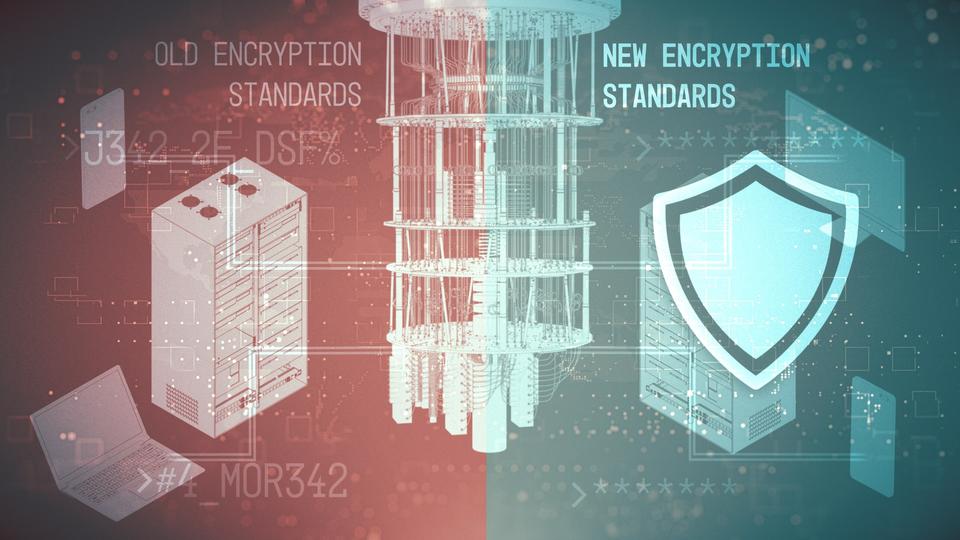
Update your secure element or hardware wallet integration to handle larger key sizes. PQC keys and signatures are significantly larger than ECC equivalents; Kyber keys are roughly 1.2 KB compared to ECC’s 32 bytes. Ensure your key storage infrastructure can accommodate these sizes without performance degradation or memory overflow errors.
Validate that your hybrid signatures are accepted by target blockchain networks and exchanges. Some networks may reject non-standard signature formats. Work with protocol teams to ensure your wallet’s transaction format is compatible with the network’s verification logic. Test thoroughly on testnets to identify any latency issues introduced by the computational complexity of lattice-based operations.

Provide users with a clear, secure migration path for existing addresses. Since quantum attacks are not imminent, immediate mass migration is not required, but users must be able to generate new PQC-compatible addresses. Offer dual-signing capabilities where users can sign transactions with both classical and PQC keys, ensuring their assets remain accessible and secure during the transition period.
4. Monitor NIST Updates and Algorithm Revisions
NIST may issue updates or additional standards as the field evolves. Stay aligned with the CSRC Post-Quantum Cryptography project for the latest guidance. Regularly review security advisories and update your cryptographic libraries accordingly. Proactive monitoring ensures your wallet remains secure against emerging threats and maintains compliance with industry best practices.
5. Conduct Independent Security Audits
Before full deployment, engage third-party security firms to audit your PQC implementation. Focus on side-channel attacks, which are a significant risk for lattice-based cryptography. Auditors should verify that your implementation of Kyber and Dilithium is constant-time and resistant to timing attacks. This step is critical for maintaining trust and ensuring that your wallet’s security is robust against sophisticated adversaries.
6. Educate Users on Security Implications
Communicate the importance of PQC migration to your user base. Explain that while quantum computers are not yet a threat, the risk of retroactive decryption attacks is real. Encourage users to update their wallets and generate new addresses. Transparency builds trust and ensures that users understand the long-term value of adopting post-quantum security measures.
7. Establish Long-Term Maintenance Protocols
Create a governance framework for ongoing cryptographic updates. As new attacks emerge or algorithms are compromised, you must be able to pivot quickly. Define clear procedures for emergency updates, key rotation, and user notification. This ensures your wallet remains secure and functional in the face of evolving quantum computing threats.
The Performance Cost of Quantum-Resistant Encryption
The shift to post-quantum cryptography (PQC) introduces immediate friction for crypto wallets. Unlike classical algorithms, NIST-standardized PQC schemes require significantly larger keys and signatures. This increase in data volume directly impacts transaction fees and wallet storage efficiency.
For users on fee-sensitive networks, these overheads are not abstract. A single signature that grows from 64 bytes to several kilobytes can multiply transaction costs. Wallets must also store these larger public keys, adding bloat to the blockchain state and user device storage.
The table below compares the data footprint of traditional ECDSA against NIST’s ML-DSA (Module-Lattice-based Digital Signature Algorithm). This comparison highlights the tangible trade-offs between current security and quantum resistance.
| Algorithm | Public Key Size | Signature Size | NIST Level |
|---|---|---|---|
| ECDSA (P-256) | 32 bytes | 64 bytes | Level 1 |
| ML-DSA-44 | 1,984 bytes | 2,420 bytes | Level 1 |
| ML-DSA-65 | 2,592 bytes | 3,300 bytes | Level 3 |
| ML-DSA-87 | 3,360 bytes | 4,627 bytes | Level 5 |
These numbers illustrate why adoption is cautious. While the security benefits are irreversible against quantum threats, the performance penalty is real. Wallet developers must optimize compression and batching strategies to mitigate these costs for end users.
Quantum-resistant encryption FAQ
When do I need to update my wallet?
You do not need to wait for a quantum computer to exist. The migration to post-quantum cryptography is a software and protocol upgrade, not a hardware replacement. You must update your wallet software as soon as your provider integrates NIST-standardized algorithms. According to NIST, the first standardized PQC algorithms were finalized in 2024, with a migration window extending through 2030. If your wallet provider has not announced a PQC migration path, treat it as a high-risk asset until they do.
Is my current wallet vulnerable?
Yes. All wallets relying on ECDSA (Elliptic Curve Digital Signature Algorithm) or RSA for key generation and signing are vulnerable to Shor’s algorithm. This includes most legacy Bitcoin addresses (P2PKH, P2SH) and Ethereum accounts. The vulnerability is mathematical, not a bug in your specific device. Your private keys are exposed to any adversary with sufficient quantum computing power. The only mitigation is the rapid adoption of lattice-based or hash-based signatures, which are resistant to quantum attacks.
What is the role of NIST in this timeline?
NIST is the sole authoritative body defining the cryptographic standards for this transition. Their Post-Quantum Cryptography Standardization Project has selected algorithms like CRYSTALS-Kyber (for key encapsulation) and CRYSTALS-Dilithium (for digital signatures). Compliance with NIST standards is non-negotiable for institutional and serious individual security. Do not rely on proprietary "quantum-resistant" algorithms from wallet vendors; they are not battle-tested. Only NIST-approved standards provide a verifiable security baseline.
Can I migrate my existing private keys?
No. You cannot convert an existing ECDSA private key into a post-quantum key. The mathematical structures are incompatible. Migration requires generating a new key pair using a PQC algorithm and transferring your funds to the new address. This is a one-time action per asset. Your new wallet software must handle the larger key sizes and signature lengths inherent in PQC, which may require slight adjustments in transaction fees due to increased data size.
The migration to post-quantum cryptography is a mandatory infrastructure upgrade, not an optional feature. Treat it with the same urgency as a critical security patch. Delaying migration leaves your assets exposed to a threat that, once realized, cannot be reversed.
No comments yet. Be the first to share your thoughts!