NIST finalizes post-quantum cryptography 2026 standards
Use this section to make the Post-Quantum Cryptography decision easier to compare in real life, not just on paper. Start with the reader's actual constraint, then separate must-have requirements from details that are merely nice to have. A practical choice should survive normal use, maintenance, timing, and budget. If a recommendation only works in an ideal situation, call that out plainly and give the reader a fallback path.
The simplest way to use this section is to write down the must-have criteria first, then compare each option against those criteria before weighing nice-to-have features.
Crypto wallet security faces immediate migration pressure
The threat to crypto wallets is no longer theoretical. Current digital signatures, primarily ECDSA and Ed25519, rely on elliptic curve cryptography (ECC). While ECC is secure against classical computers, it is vulnerable to Shor’s algorithm, which can efficiently factor large integers and solve discrete logarithm problems. Once quantum computers achieve sufficient qubit stability and error correction, they will break the mathematical foundations that protect private keys.
This vulnerability creates a "harvest now, decrypt later" attack vector. Adversaries are already intercepting and storing encrypted blockchain transactions and wallet data today. They do not need to break the encryption immediately; they only need to wait for quantum capabilities to mature. When that day arrives, they will retroactively decrypt the harvested data, exposing private keys and draining funds from wallets that were considered secure at the time of the theft.
For cold storage, this risk is particularly acute. Unlike hot wallets that interact frequently with the internet, cold wallets often hold long-term holdings. The longer the asset is held, the more exposed it becomes to this retrospective decryption threat. The migration to post-quantum cryptography is not just an upgrade; it is a defensive necessity against data that has already been stolen.
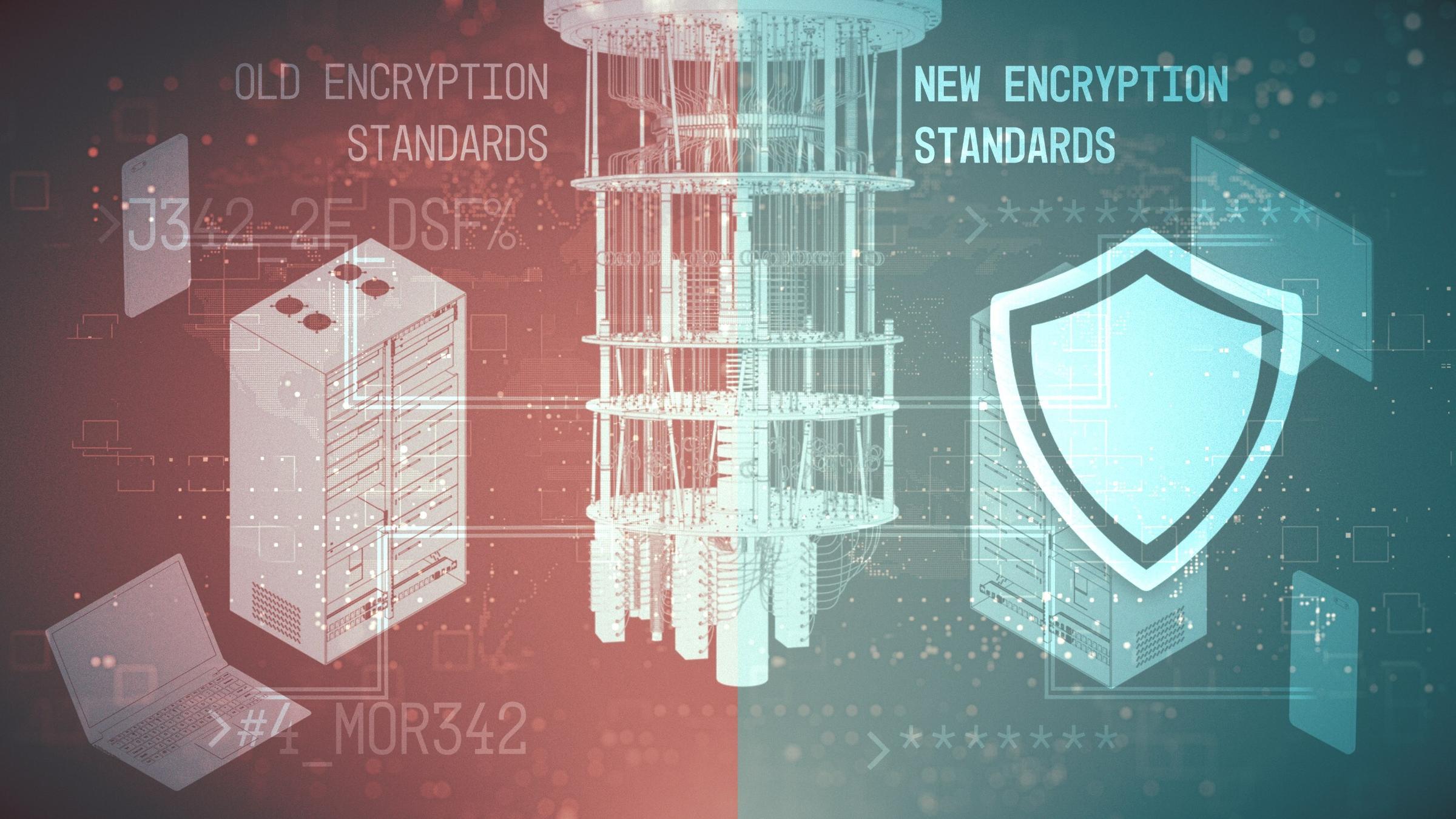
NIST’s ongoing standardization process aims to define these new cryptographic algorithms. The goal is to replace ECC-based signatures with quantum-resistant alternatives before large-scale quantum computers become a reality. Until these standards are fully integrated into wallet software, users remain at risk. The window to migrate is closing, and the cost of waiting is potentially total loss of assets.
Comparing NIST PQC algorithms for digital assets
The National Institute of Standards and Technology (NIST) finalized three core algorithms in August 2024, forming the backbone of the post-quantum transition. For crypto wallets, these standards are not interchangeable; each serves a distinct role in securing digital assets against future quantum threats. The three selected algorithms are ML-KEM (key encapsulation), ML-DSA (digital signatures), and SLH-DSA (stateless hash-based signatures).
ML-KEM, formerly known as CRYSTALS-Kyber, is the standard for encryption. It replaces traditional RSA and ECC key exchanges, ensuring that the communication channel between a wallet and an exchange remains secure. ML-DSA, based on CRYSTALS-Dilithium, is the primary choice for signing transactions. It verifies ownership without exposing the private key, serving as the day-to-day workhorse for moving funds. SLH-DSA, based on SPHINCS+, offers a different security model. It relies on hash functions rather than lattice problems, providing a robust backup layer for long-term storage where computational assumptions might eventually fail.
The table below compares these algorithms based on their operational characteristics and security levels defined in FIPS 203 and FIPS 204. Understanding these differences helps wallet developers choose the right tool for specific use cases, from immediate transaction signing to archival security.
| Algorithm | Primary Use | Key Size | Security Level |
|---|---|---|---|
| ML-KEM | Key Encapsulation | ~1KB | 1-6 |
| ML-DSA | Digital Signatures | ~2.5KB | 2-5 |
| SLH-DSA | Hash-Based Signatures | ~40-80KB | 1-3 |
Secure your crypto assets now
The threat of quantum computers breaking current encryption is no longer theoretical. For anyone holding digital assets, waiting for a standardized mandate is a risky strategy. You must begin migrating to quantum-resistant standards immediately to protect your wealth.
The most effective defense today is a hybrid approach. This method combines your existing cryptographic protocols with newly standardized post-quantum algorithms. By layering these protections, you ensure that even if one system fails, your assets remain secure. This redundancy is your best defense against "harvest now, decrypt later" attacks, where adversaries steal encrypted data today to unlock it once quantum technology matures.
Update your wallet software
The first step is to audit every wallet and exchange you use. Look for explicit mentions of "hybrid" or "post-quantum" support in their release notes. Major providers are rolling out updates that integrate NIST-approved algorithms like ML-KEM and ML-DSA. If your provider has not announced a migration timeline, consider moving your assets to a more forward-looking platform.
Enable hardware wallet firmware
Software wallets are vulnerable to remote exploits. Hardware wallets offer a physical layer of security that is harder to breach. Ensure your device firmware is fully updated to the latest version. Newer firmware versions often include the necessary cryptographic libraries to handle hybrid signing processes without compromising your private keys.
Audit your backup keys
Post-quantum signatures are larger than traditional ones. Verify that your backup recovery phrases and seed files are stored securely and can be restored using your new hybrid wallet. A failed restoration process is just as costly as a hack. Test your recovery process in a controlled environment before moving significant funds.
Monitor NIST and provider updates
Standards evolve quickly. The National Institute of Standards and Technology (NIST) continues to refine its guidelines. Subscribe to official NIST announcements and follow your wallet provider's security blog. Staying informed ensures you are never caught off guard by a mandatory protocol change or a newly discovered vulnerability.
Check your wallet settings for "hybrid" or "post-quantum" support. If unavailable, switch providers immediately.
Install the latest firmware on all hardware wallets to ensure compatibility with new cryptographic standards.

Verify that your seed phrase can successfully restore your wallet using the new hybrid protocol.
Frequently asked questions about PQC migration
When will NIST standards be finalized?
The NIST Post-Quantum Cryptography Project has already released its first set of standards, with additional algorithms in the final stages of review. According to the NIST presentation at MPTS 2026, the standardization process is moving from selection to deployment, meaning the rules are effectively finalized for implementation. Organizations should treat these standards as the baseline for 2026 and beyond, rather than waiting for a single "completion" date.
Will existing crypto keys become obsolete?
Post-quantum algorithms are not designed to replace every existing key immediately. Instead, the industry is adopting hybrid cryptography, which combines classical algorithms (like ECDSA) with post-quantum algorithms (like ML-KEM). This approach ensures that even if a quantum computer breaks the classical layer, the post-quantum layer still protects the data. Your existing keys remain valid, but new transactions and wallet setups should include post-quantum components to future-proof security.
How does hybrid cryptography protect my wallet?
Hybrid cryptography acts as a safety net. It uses two independent cryptographic systems simultaneously. If a quantum attack compromises one system, the other remains secure. For crypto wallets, this means generating a post-quantum key pair alongside your standard private key. The transaction is signed with both, ensuring that the asset remains secure against both classical and quantum threats during the transition period.
No comments yet. Be the first to share your thoughts!