
In the evolving landscape of blockchain privacy, fully homomorphic encryption (FHE) stands out as a game-changer for FHE encrypted smart contracts. Developers can now perform computations on encrypted data without decryption, unlocking true confidentiality on public chains. Enter the INCO Lightning SDK, a powerhouse library bringing post-quantum secure encrypted types to Base Sepolia. With InfinitiCoin (INCO) trading at $0.009136, up a modest 0.000110% in the last 24 hours, momentum builds for privacy-focused protocols. This guide dives into implementing these on Base, leveraging familiar Solidity tooling for confidential smart contracts tutorial applications like private DeFi and governance.

InfinitiCoin (INCO) Live Price

Powered by TradingView

Why Base Sepolia Powers Homomorphic Encryption Blockchain Innovation

Base, as an optimistic rollup on Ethereum, offers low fees and high throughput, making it ideal for compute-intensive FHE operations. The INCO Lightning SDK integrates seamlessly, introducing encrypted primitives like ebool, euint256, and operations such as e. add or e. mul. Unlike zero-knowledge proofs that scale poorly for complex logic, FHE enables direct encrypted arithmetic, programmable access controls, and even hidden randomness. Launched on Base Sepolia in March 2025, this beta testnet lets builders prototype Base Sepolia privacy contracts without mainnet risks.

Strategically, Base's ecosystem aligns with institutional adoption. Coinbase's backing ensures reliability, while seamless bridging to Ethereum mainnet facilitates real-world deployment. For enterprises eyeing confidential payments or prediction markets, this combo sidesteps TEE vulnerabilities through TEE attested decryption alternatives, prioritizing cryptographic rigor over hardware trust.

Essential Setup for INCO Lightning Development

Begin with Foundry for a robust workflow, though Remix suffices for quick tests. Clone a Base Sepolia project: forge init my-fhe-project --template https://github.com/foundry-rs/forge-template. Fund your wallet via the Base Sepolia faucet. Install the SDK via npm or directly in remappings. txt: @inco-lightning/=lib/inco-lightning/. Verify the testnet RPC: https://sepolia-preprod.base.org. This foundation supports encrypted computations without chain modifications, a strategic edge over retrofitted privacy layers.

Configure foundry. toml with Base chain ID 84532. Authenticate via cast wallet or Base Accounts for passwordless flows. Developers report deployments in under two minutes, echoing YouTube guides on Base smart contracts. Opinion: Skip naive ERC20s; encrypt balances from inception to thwart front-running in DeFi.

Foundational Solidity Example: INCO Lightning SDK Import, euint256, and e.add

To harness the power of Fully Homomorphic Encryption (FHE) in smart contracts on Base, import the INCO Lightning SDK and leverage its core primitives. This Solidity example declares euint256 types for encrypted integers and demonstrates the fundamental e.add operation, establishing a strategic foundation for privacy-preserving computations.

```solidity
// SPDX-License-Identifier: MIT
pragma solidity ^0.8.19;

import {INCOLightning} from "@inco-lightning/sdk";

contract FHEAdditionExample {
    /// @notice Performs encrypted addition using INCO Lightning SDK
    /// @param a First encrypted operand
    /// @param b Second encrypted operand
    /// @return sum Encrypted sum of a and b
    function addEncrypted(
        euint256 a,
        euint256 b
    ) public pure returns (euint256) {
        return e.add(a, b);
    }
}
```

This concise integration empowers developers to execute arithmetic on encrypted data seamlessly. Strategically deploy such patterns to build secure, scalable dApps where data privacy is non-negotiable, unlocking new paradigms in DeFi and beyond on Base.

Crafting Confidential Primitives with Encrypted Data Types

INCO Lightning's core shines in composable types. Declare an encrypted balance: euint256 privateBalance = euint256(encryptedValue);. Perform ops like newBalance = privateBalance. e. add(delta);, all on-chain without exposure. For a confidential token mimicking ERC20, wrap transfers in encryption. Per INCO's tutorial, encrypt mints and burns, decrypt only via programmed rules.

This enables novel primitives: private voting where tallies stay hidden until threshold, or confidential auctions shielding bids. On Base, gas efficiency rivals unencrypted contracts, a boon for gaming and identity systems. Strategically, layer access controls; designate decrypters post-facto, fostering trust-minimized governance. As INCO holds at $0.009136, with 24h high of $0.009138, early adopters position for scalability rewards.

INCO Price Prediction 2027-2032

Projections based on FHE adoption via Inco Lightning SDK on Base, market cycles, and technological advancements

YearMinimum PriceAverage PriceMaximum PriceYoY % Change (Avg from Prev)
2027$0.0080$0.0110$0.0140+15.8%
2028$0.0100$0.0150$0.0220+36.4%
2029$0.0130$0.0210$0.0320+40.0%
2030$0.0180$0.0300$0.0480+42.9%
2031$0.0220$0.0420$0.0700+40.0%
2032$0.0280$0.0580$0.0950+38.1%

Price Prediction Summary

From a 2026 baseline of ~$0.0095, INCO is forecasted to experience progressive growth fueled by Inco Lightning SDK enabling confidential FHE smart contracts on Base. Average prices could climb to $0.058 by 2032, with bullish maxima up to $0.095 amid adoption surges, while minima account for bearish cycles and competition.

Key Factors Affecting INCO Price

  • Widespread adoption of FHE-encrypted smart contracts on Base and expansions to other chains
  • Crypto market cycles, including potential bull runs post-2026
  • Regulatory developments favoring privacy-preserving tech
  • Technological maturity of post-quantum secure encrypted computations
  • Developer ecosystem growth and integrations (e.g., Base Sepolia testnet to mainnet)
  • Competition from other privacy layers and overall market cap dynamics

Disclaimer: Cryptocurrency price predictions are speculative and based on current market analysis. Actual prices may vary significantly due to market volatility, regulatory changes, and other factors. Always do your own research before making investment decisions.

Next, we'll deploy a live confidential token, testing encrypted transfers end-to-end.

Let's roll up our sleeves and build that confidential ERC20 token, step by step, harnessing the INCO Lightning SDK for seamless encrypted transfers on Base Sepolia. This hands-on approach mirrors INCO's own tutorial, but we'll sharpen it for production-grade confidential smart contracts tutorial readiness, emphasizing gas optimization and access controls.

Master Base Smart Contracts: Write, Deploy & Prep for FHE Privacy
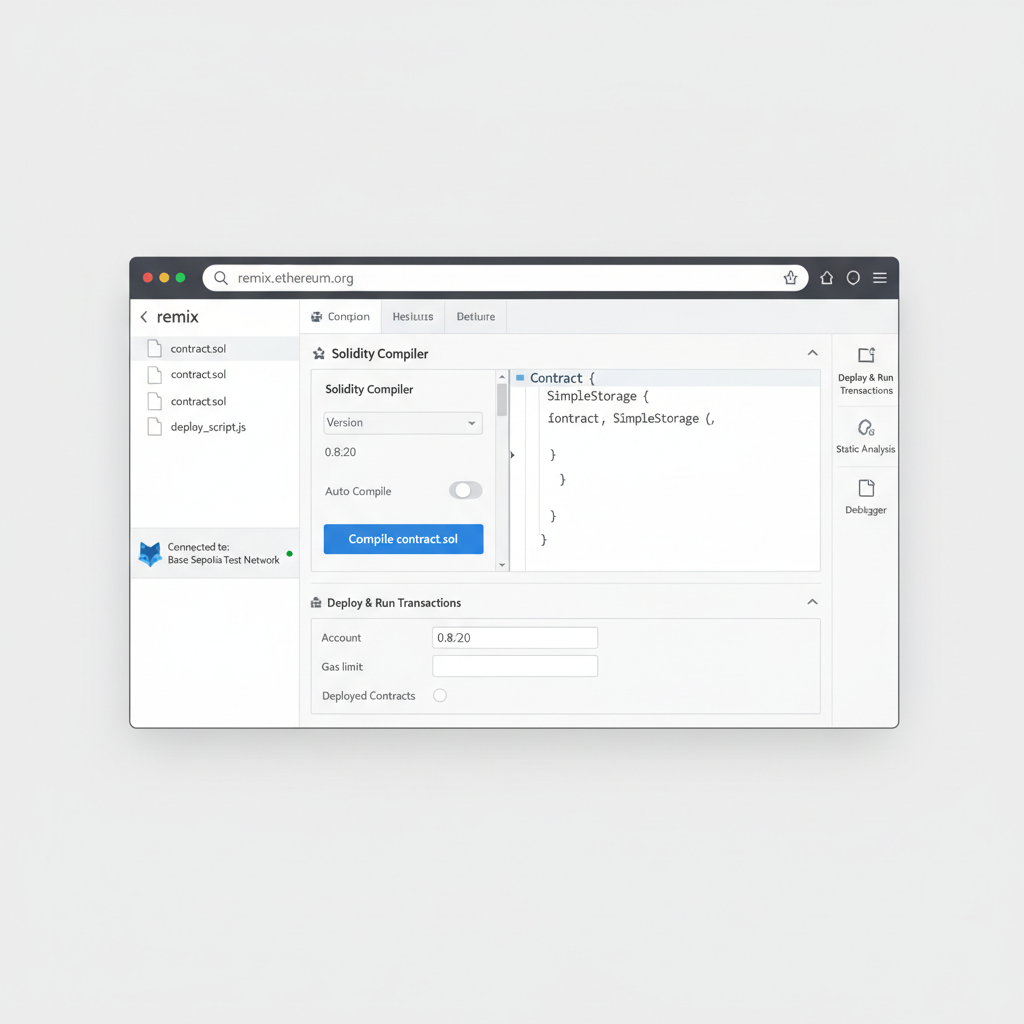
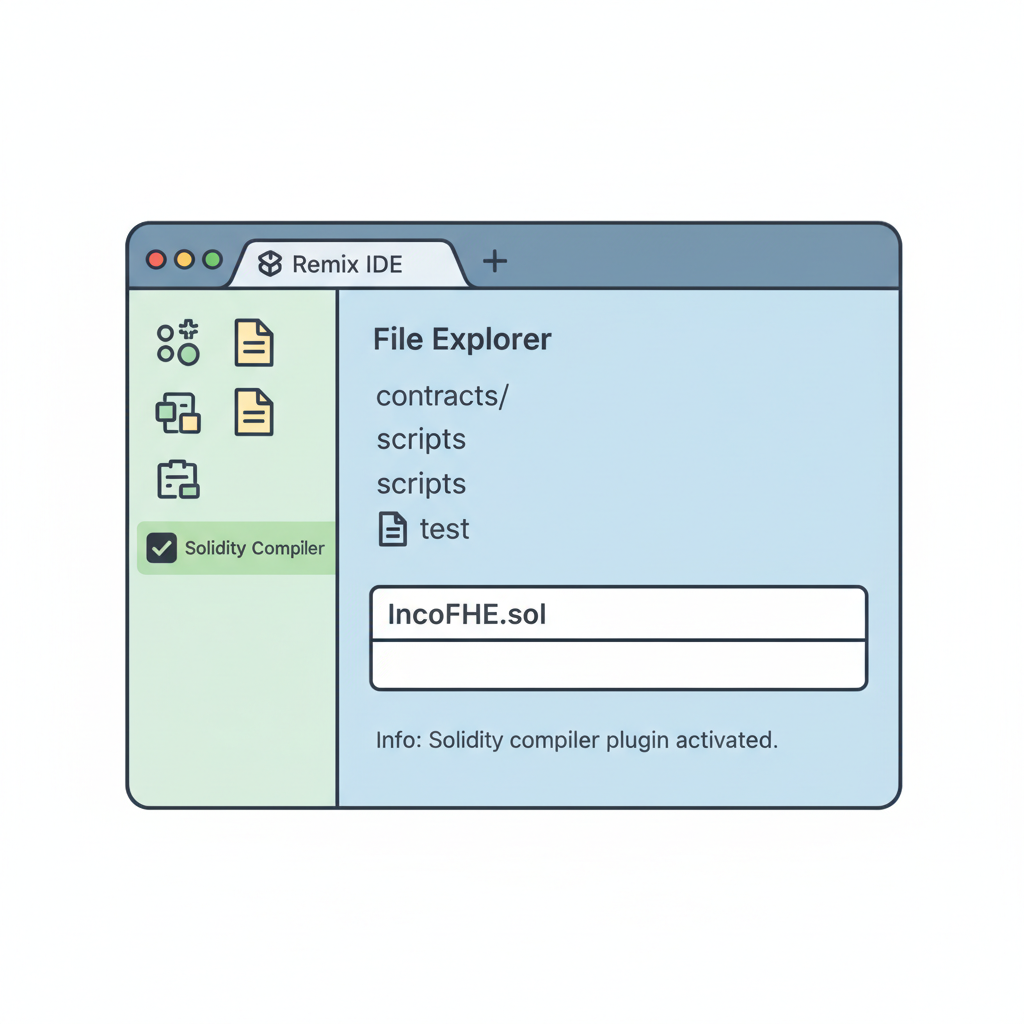
clean screenshot of Remix IDE dashboard connected to MetaMask Base Sepolia network, Solidity compiler visible, professional web3 dev setup
Launch Remix IDE & Connect to Base Sepolia
Access Remix IDE at remix.ethereum.org. Create a new workspace named 'BaseFHEPrep'. In the Deploy & Run Transactions plugin, select 'Injected Provider - MetaMask' as environment. Add Base Sepolia network to MetaMask (Chain ID: 84532, RPC: https://sepolia.base.org). Fund your wallet with Sepolia ETH via a faucet like base.org/faucet for deployment gas.
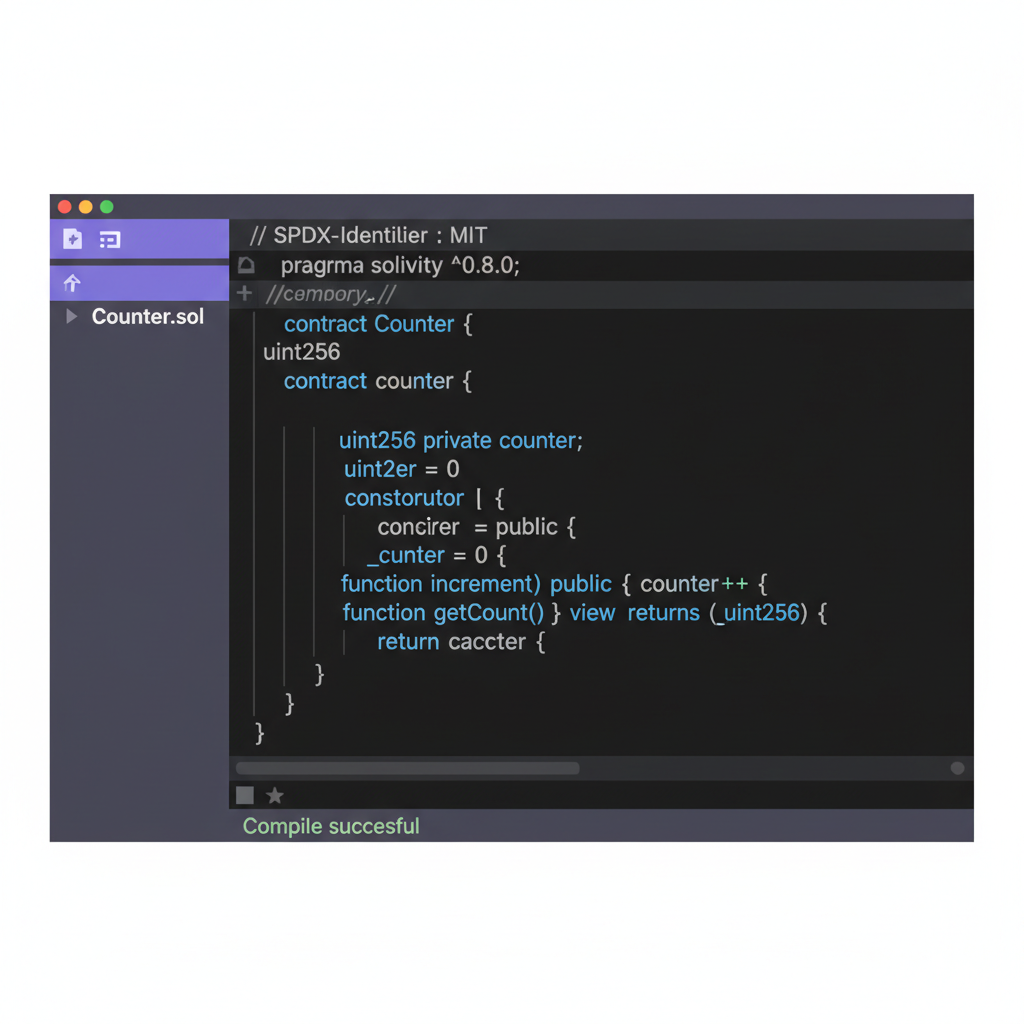
Solidity code editor in Remix showing Counter.sol contract with increment and getCount functions, syntax highlighted, dark theme
Craft a Basic Counter Smart Contract
In the file explorer, create 'Counter.sol'. Implement a strategic starter contract: pragma solidity ^0.8.20; contract Counter { uint256 public count; function increment() public { count++; } function getCount() public view returns (uint256) { return count; } }. This simple, auditable contract serves as the foundation for FHE enhancements, enabling encrypted counters later.
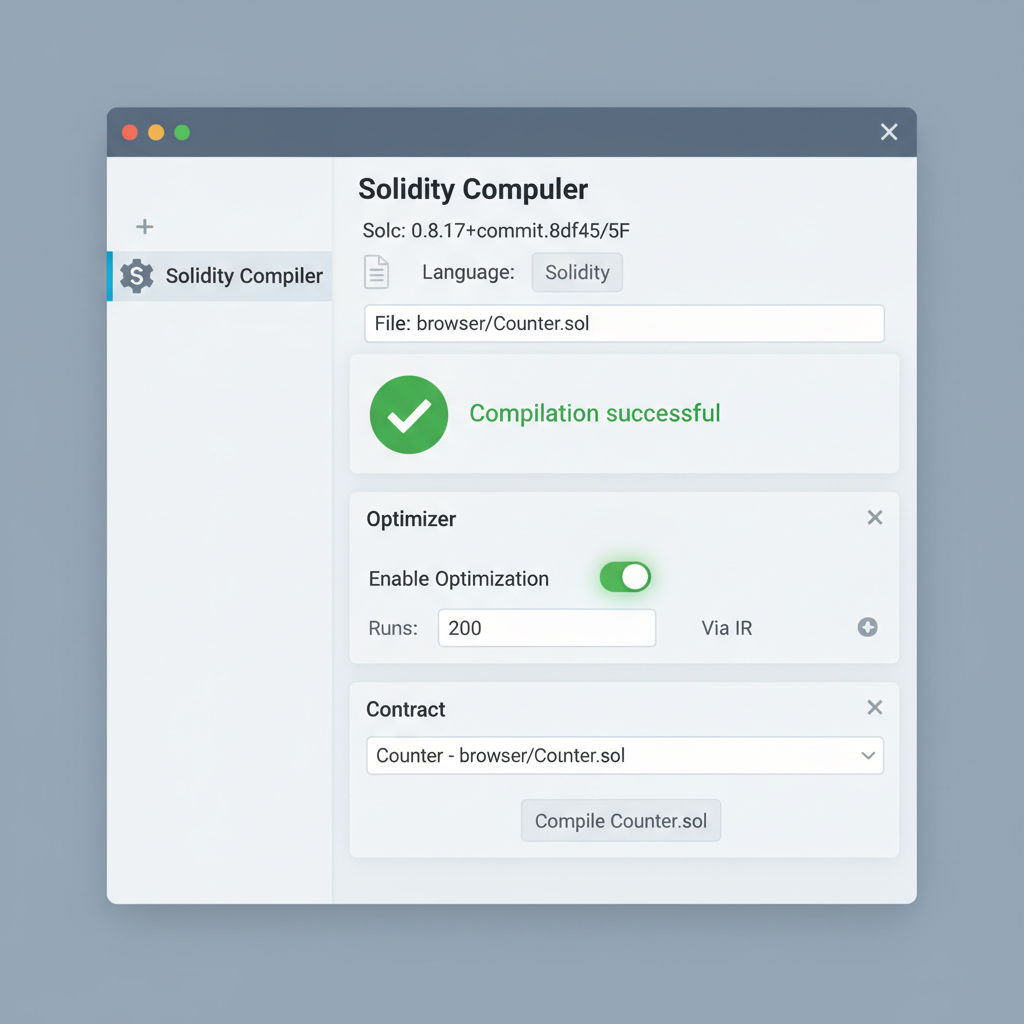
Remix Solidity Compiler interface compiling Counter.sol successfully, green checkmark, optimizer settings visible, clean UI
Compile the Solidity Contract
Navigate to the Solidity Compiler plugin (left sidebar). Select compiler version 0.8.20. Enable optimization (200 runs) for gas efficiency on Base. Click 'Compile Counter.sol'. Verify no errors; green check confirms readiness. Insight: Consistent compilation habits prevent deployment pitfalls in production FHE apps.
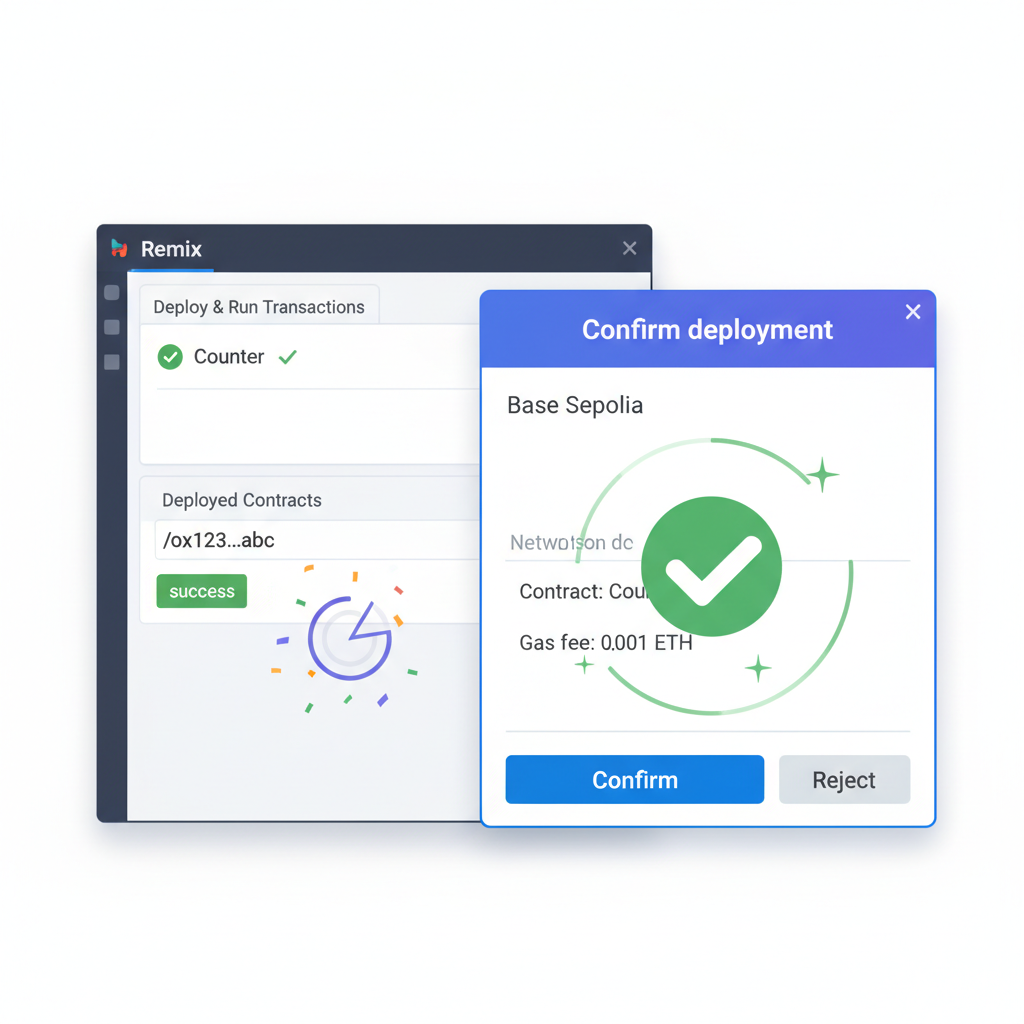
Remix deploy panel showing Counter contract deployment transaction confirmation in MetaMask, Base Sepolia network, success animation
Deploy to Base Sepolia Testnet
Switch to Deploy & Run Transactions. Ensure Counter is selected. Enter constructor args if needed (none here). Click 'Deploy'. Confirm MetaMask transaction (~0.001 Sepolia ETH gas). Note the deployed contract address post-confirmation. Strategic tip: Pin Base Sepolia explorer (sepolia.basescan.org) for verification.
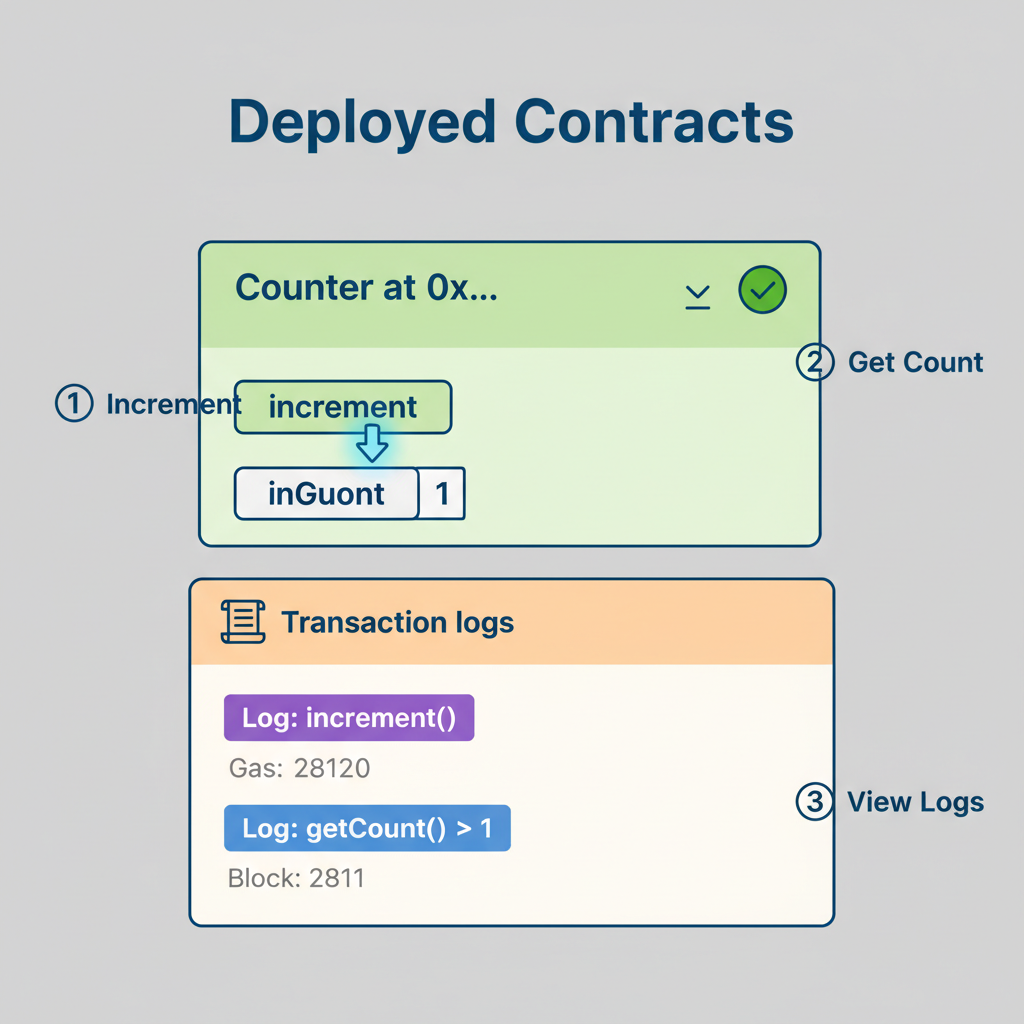
Remix deployed contracts section with Counter instance, increment call executed, getCount showing value 1, transaction logs
Test Contract Functions Interactively
Under Deployed Contracts, expand your Counter instance. Call 'getCount' (should return 0). Execute 'increment' (gas ~25k), then 'getCount' (returns 1). Repeat to validate state mutations. Pro insight: Rigorous testing here builds confidence for scaling to confidential FHE operations without exposing logic flaws.
Solidity code with INCO Lightning import, euint256 encrypted types, FHE operations like count + euint256.wrap(1), Remix editor
Integrate INCO Lightning SDK for FHE Prep
Upgrade to FHE-ready: Import INCO library with 'import {euint256} from "@inco-lightning/core";'. Replace uint256 with euint256 count; adapt functions e.g., function increment() public { count = count + euint256.wrap(1); }. Recompile. This primes your contract for encrypted computations on Base Sepolia beta testnet, unlocking private balances and ops without chain changes.

Hands-On: Coding the Confidential Token Contract

Start with a standard ERC20 skeleton, then encrypt the critical paths. Import the library: import "@inco-lightning/contracts/types. sol";. Define encrypted balances as mapping(address leads to euint256) private _balances;. For transfers, encrypt inputs: euint256 encryptedAmount = euint256(amount);, then update via _balances

Master ConfidentialERC20: FHE-Powered Privacy on Base in 5 Steps
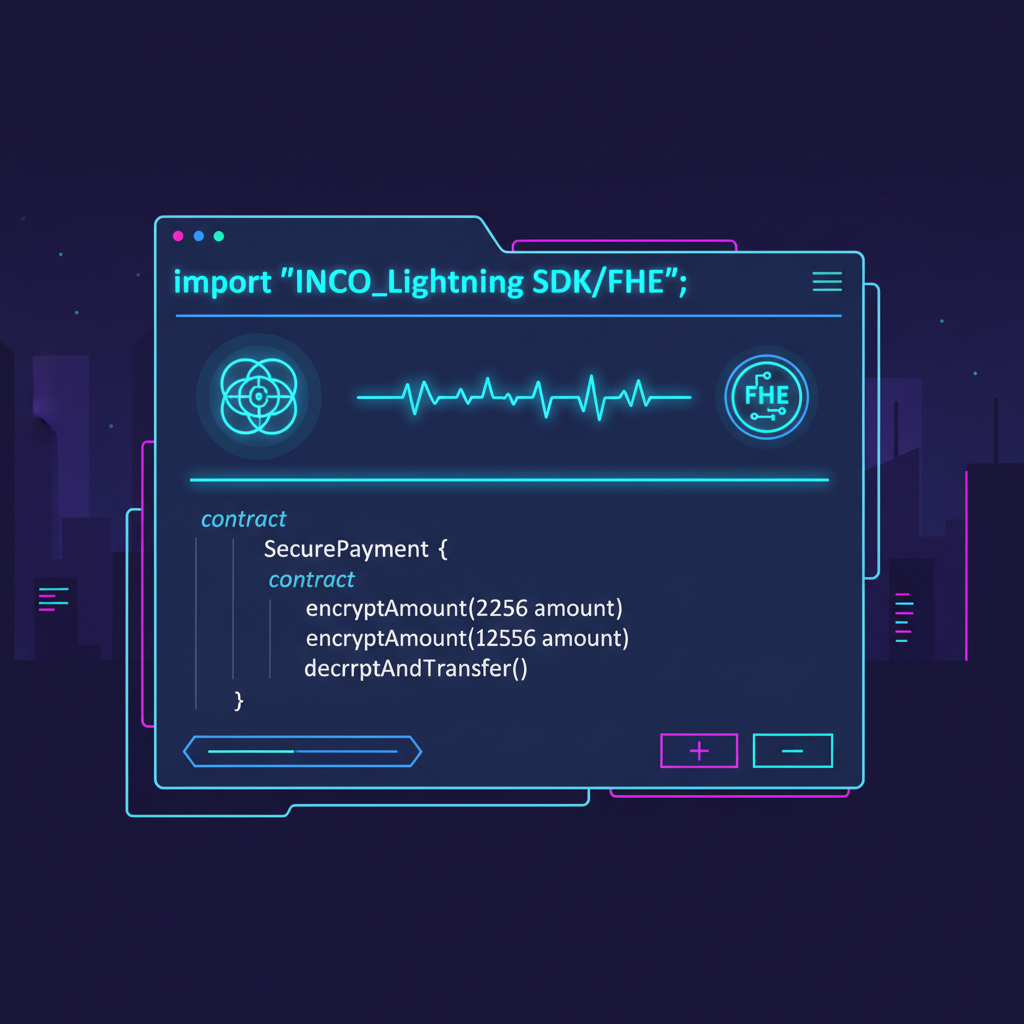
futuristic Solidity code editor importing INCO Lightning SDK with glowing FHE symbols, cyberpunk neon blues, code lines pulsing
1. Imports and FHE Setup
Strategically import the INCO Lightning SDK into your Solidity contract to unlock Fully Homomorphic Encryption (FHE). Initialize the Inco instance for encrypted computations, enabling post-quantum secure operations on Base Sepolia. This foundational step integrates confidential primitives seamlessly. ```solidity pragma solidity ^0.8.0; import {Inco} from "@inco/lightning-sdk/Inco.sol"; contract ConfidentialERC20 { Inco private inco; constructor() { inco = Inco(); } } ```
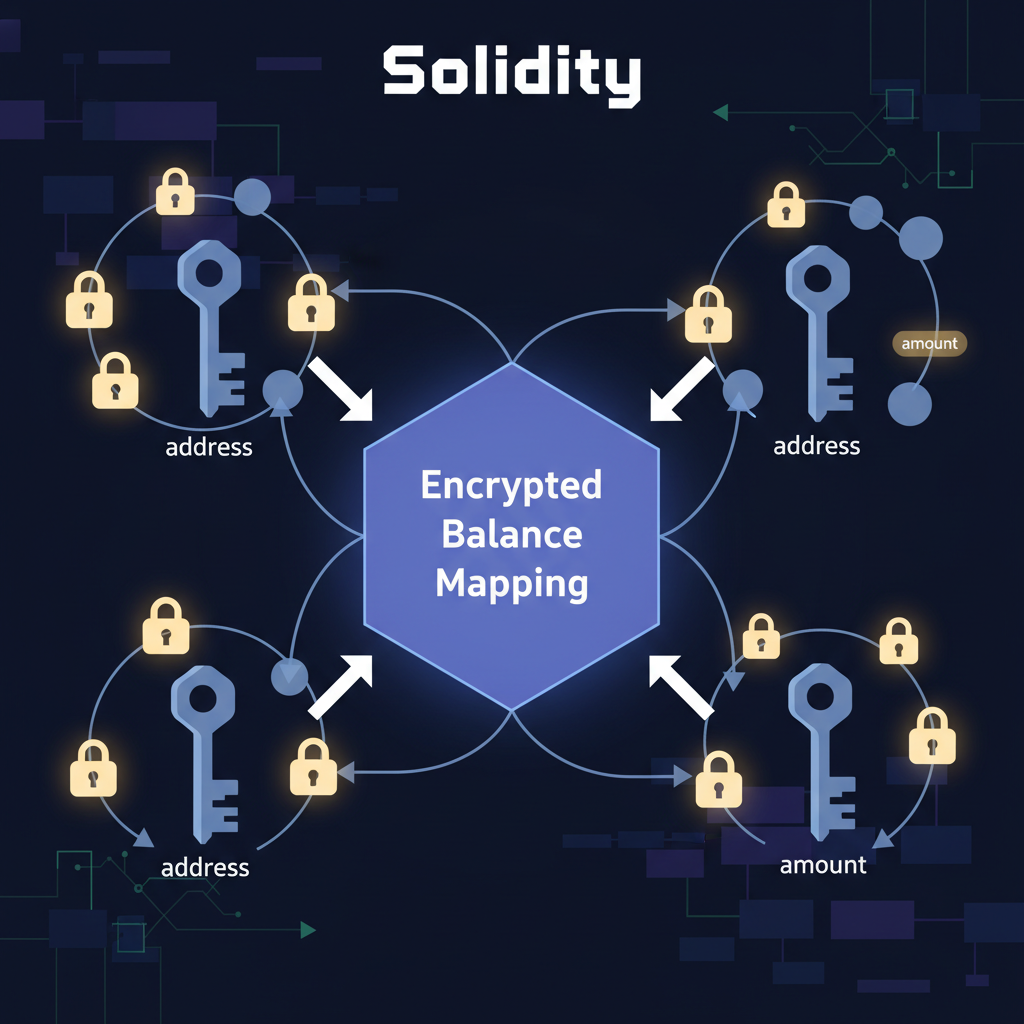
encrypted balance mapping visualization in Solidity, glowing euint256 locks around address keys, dark blockchain network background
2. Encrypted Balances Mapping with euint256
Insightfully store user balances as encrypted `euint256` mappings. This ensures balances remain private on-chain, shielding from front-running and MEV exploitation while supporting homomorphic operations. ```solidity import {euint256} from "@inco/lightning-sdk/types.sol"; mapping(address => euint256) public balances; ``` Leverage Base Sepolia's efficiency for rapid iteration.
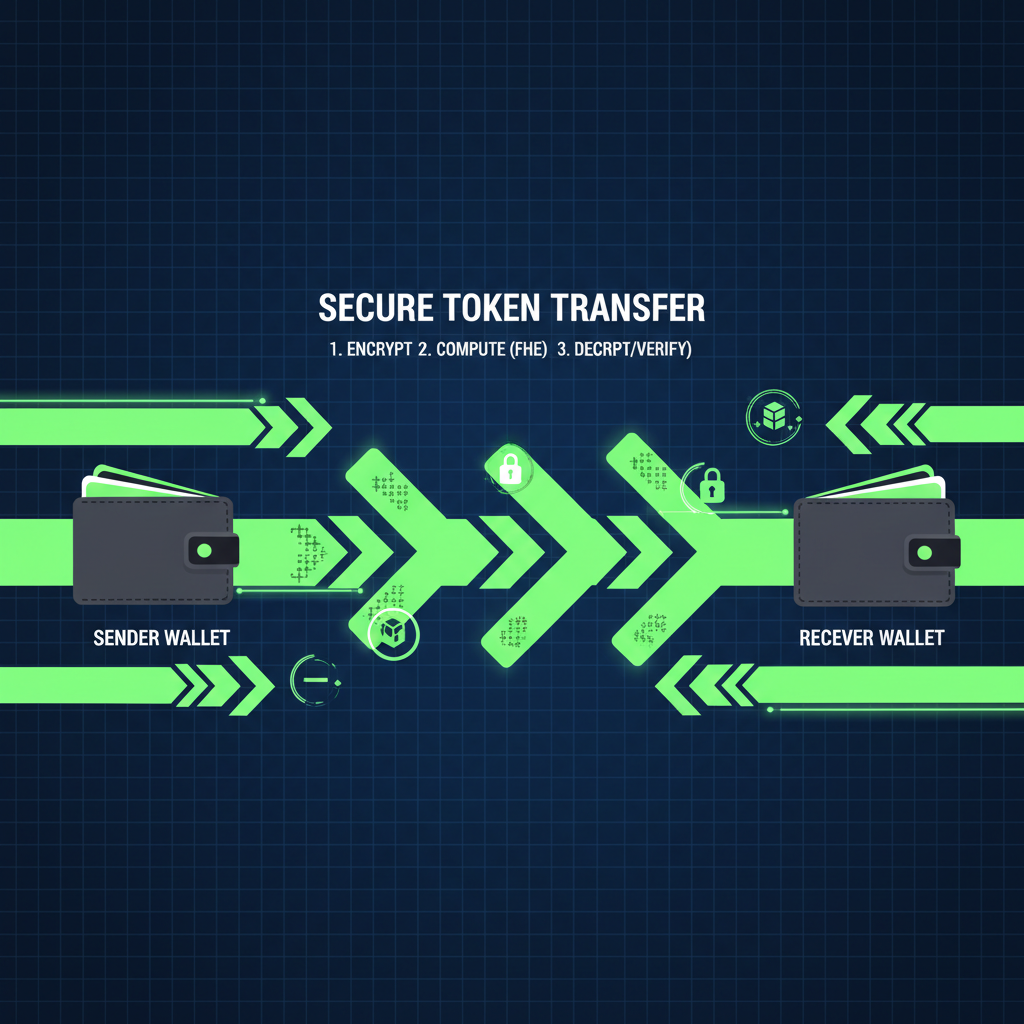
secure token transfer flow with encrypted arrows between wallets, FHE math symbols adding subtracting, neon green secure paths
3. Secure Transfer Function
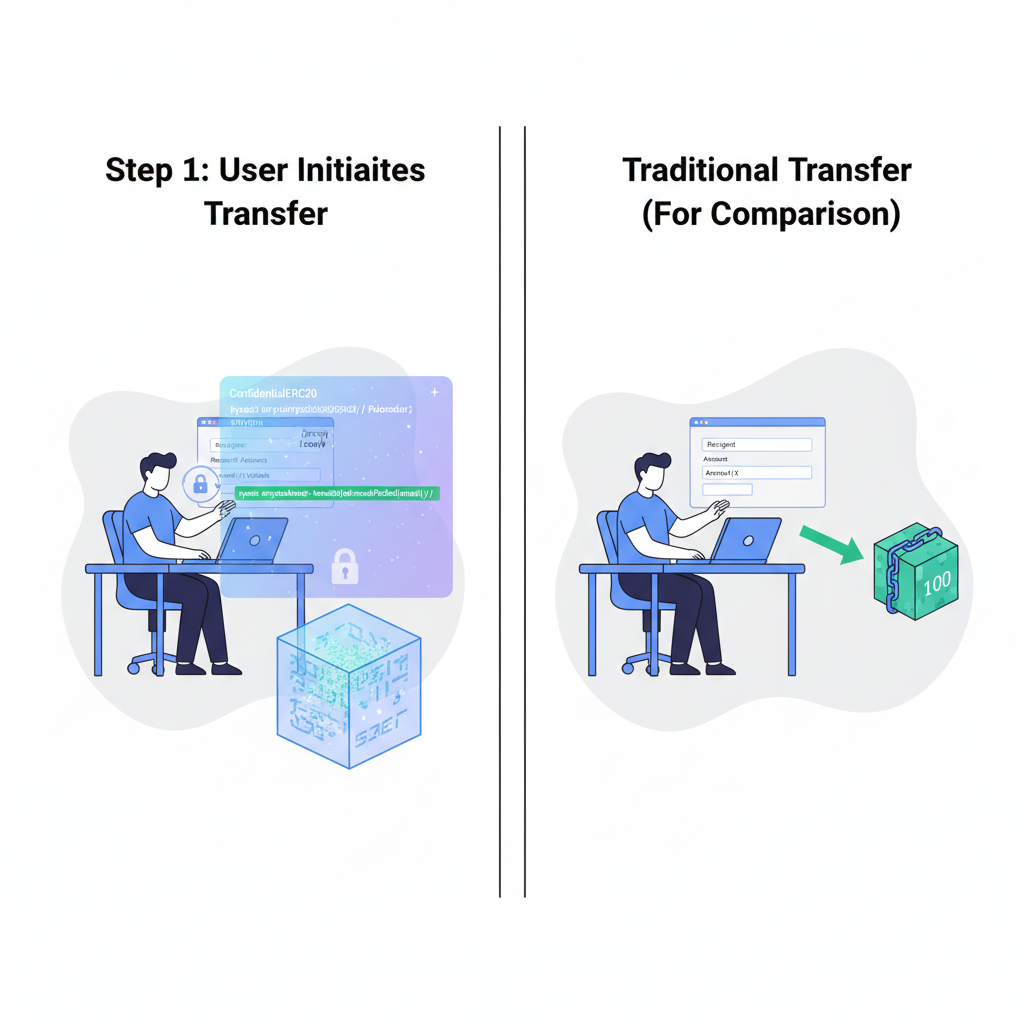
Implement a robust transfer function that operates on encrypted amounts. Encrypt inputs client-side, perform homomorphic sub/add on-chain—balances update invisibly, defeating MEV bots without decryption. ```solidity function transfer(address to, euint256 amount) public { euint256 senderBal = balances[msg.sender]; require(senderBal >= amount, "Insufficient balance"); balances[msg.sender] = senderBal.sub(amount); balances[to] = balances[to].add(amount); } ``` Strategic privacy scales DeFi.
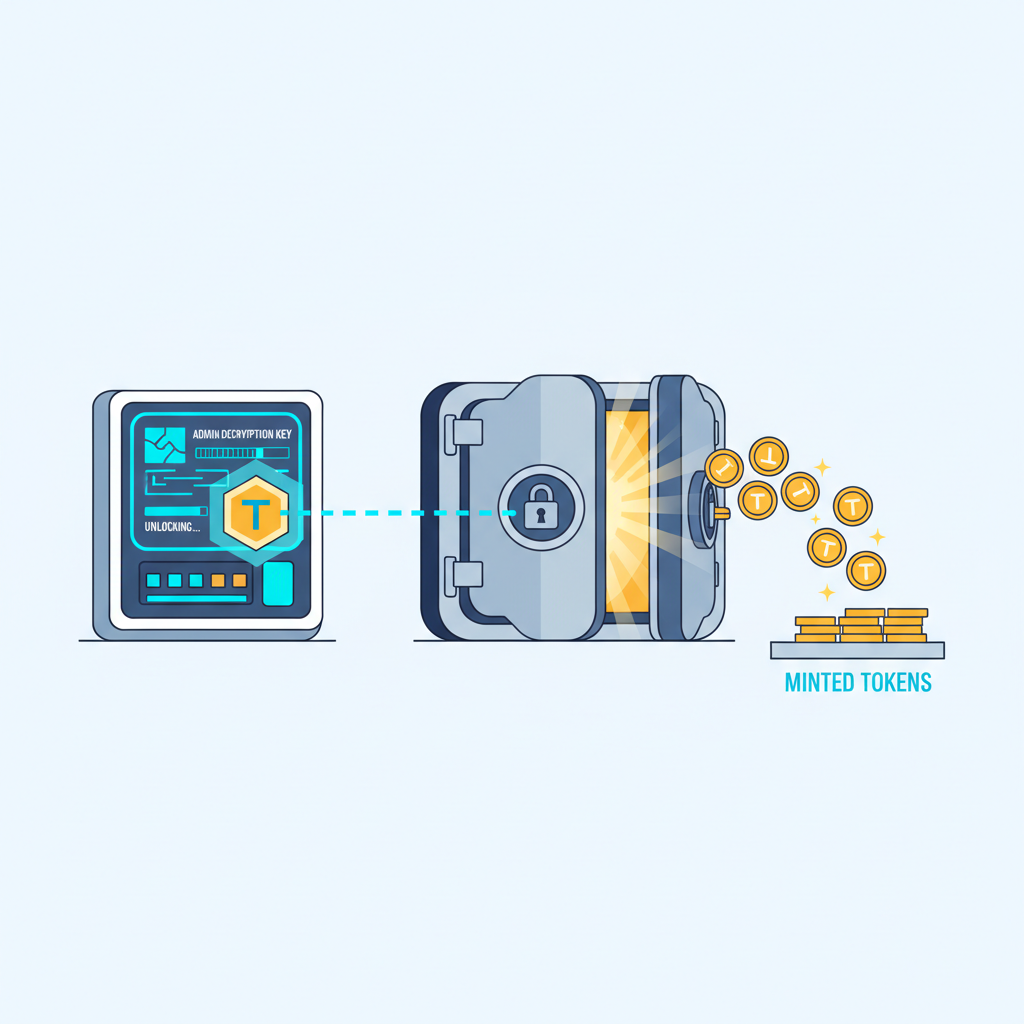
minting tokens with admin decryption key unlocking encrypted vault, golden coins emerging, high-tech control panel
4. Minting and Burning with Authorized Decryption
Empower authorized roles (e.g., owner) to mint/burn via programmable decryption rules. Encrypt mint amounts, update balances homomorphically, then selectively decrypt for compliance—balancing privacy and control. ```solidity function mint(address to, uint256 amount) external onlyOwner { euint256 eamount = euint256(amount); balances[to] = balances[to].add(eamount); // Authorized: inco.decrypt(balances[to]); } ``` Deploy in ~2 minutes on Base Sepolia.
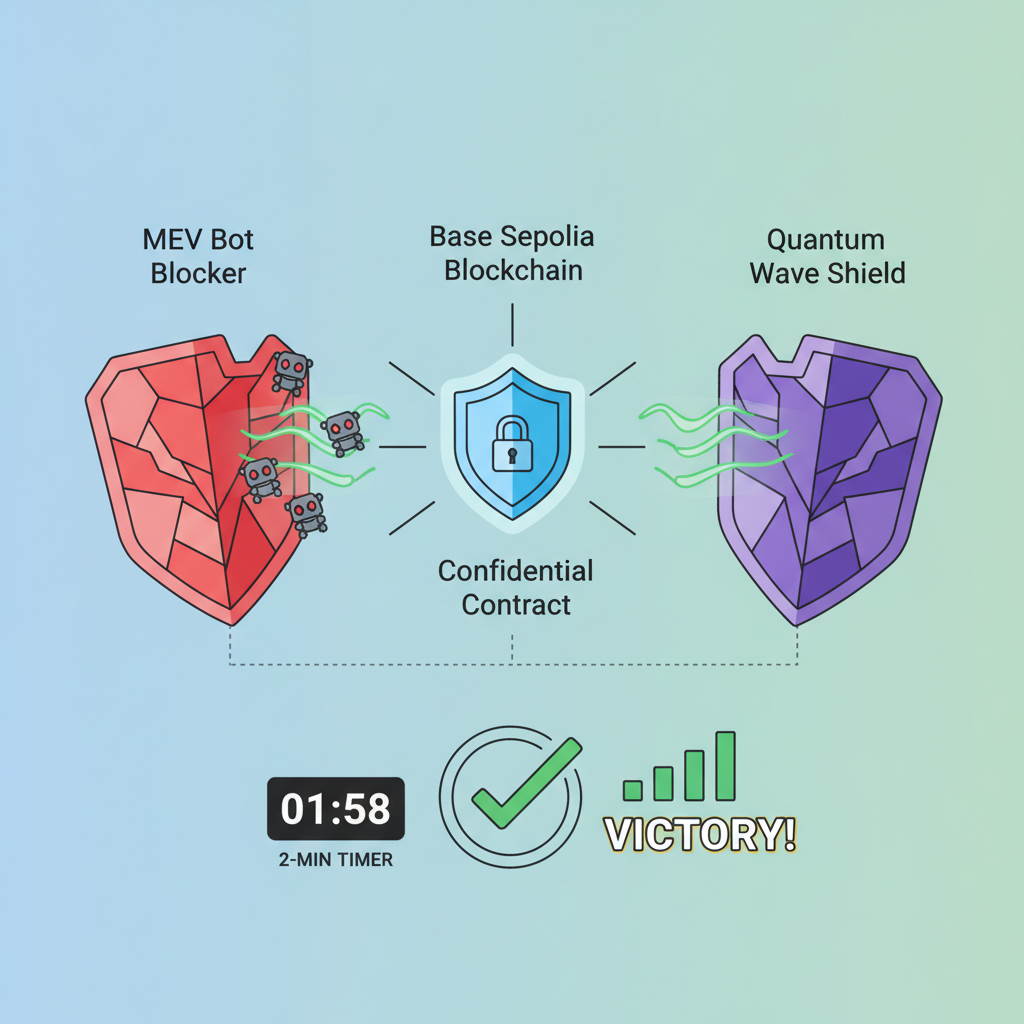
Base Sepolia blockchain deploying confidential contract, shields blocking MEV bots and quantum waves, victory dashboard with 2-min timer
5. Deploy and Harness Strategic Benefits
Deploy to Base Sepolia testnet for lightning-fast validation (~2-minute deployments). Gain MEV immunity via hidden state, quantum resistance with FHE, and composable confidential primitives. Transform DeFi, payments, and governance—INCO Lightning positions you ahead in Web3 privacy.

Deployment Workflow: From Forge to Base Sepolia

Compile with forge build, then deploy: forge create --rpc-url https://sepolia-preprod.base.org --private-key $PRIVATE_KEY ConfidentialERC20 --constructor-args initialSupply. Verify on Basescan Sepolia post-deploy. Fund via faucet, confirm tx hash, and interact via cast: cast call "balanceOf(address)" , though balances decrypt only for permitted viewers. This mirrors ProofPay's verified payments on Base, but with FHE's edge over attestations.

Deploy Confidential ERC20 on Base Sepolia with Inco Lightning
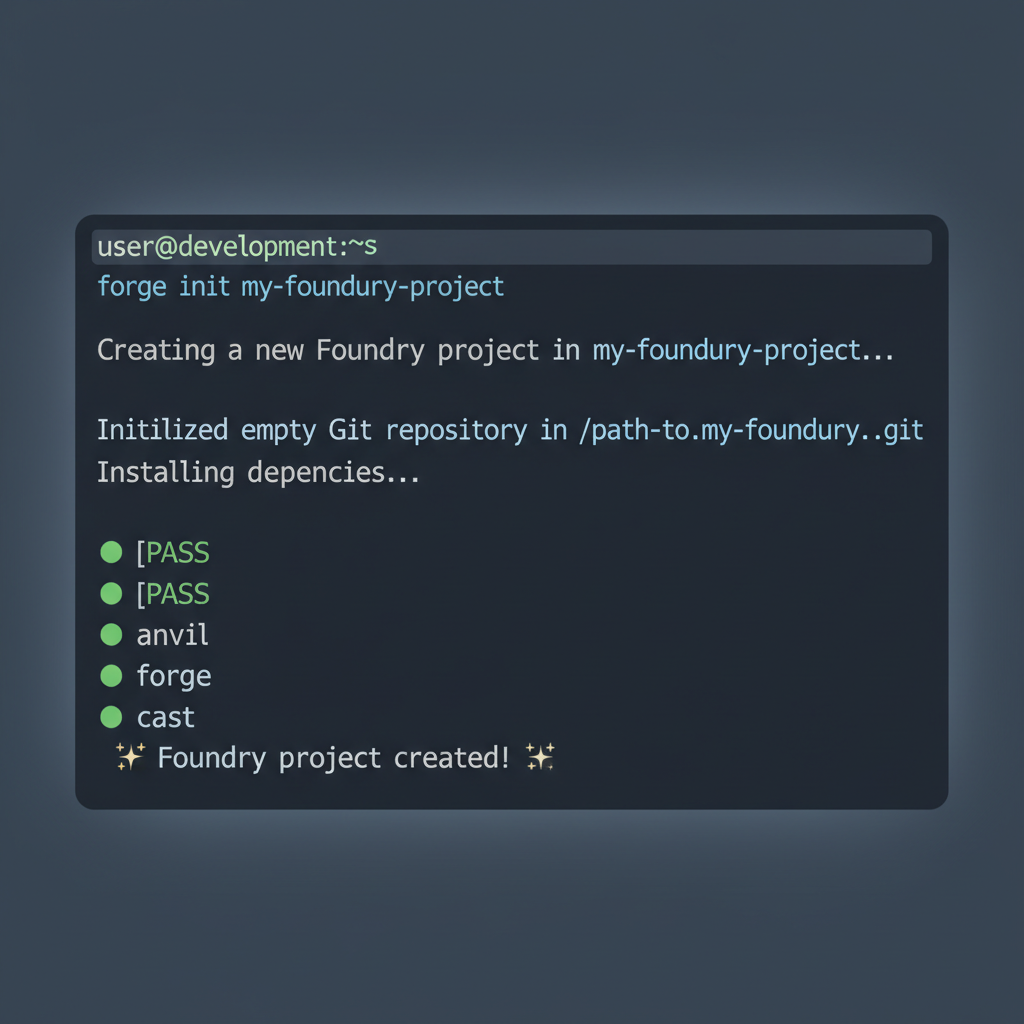
terminal screen showing forge init command for Foundry project on dark background with code syntax highlighting
1. Set Up Foundry Project
Initialize a new Foundry project tailored for Base Sepolia deployment. Install Foundry via `curl -L https://foundry.paradigm.xyz | bash` then `foundryup`. Run `forge init confidential-erc20 --template https://github.com/foundry-rs/forge-template` or `forge init confidential-erc20`. Configure `foundry.toml` with `[profile.default] src = 'src' out = 'out' libs = ['lib'] remappings = [] verbosity = 3 ffi = true cache = true report_gas = true Base Sepolia RPC: https://sepolia.base.org, Chain ID: 84532`. Fund your deployer wallet with Sepolia ETH from a faucet.
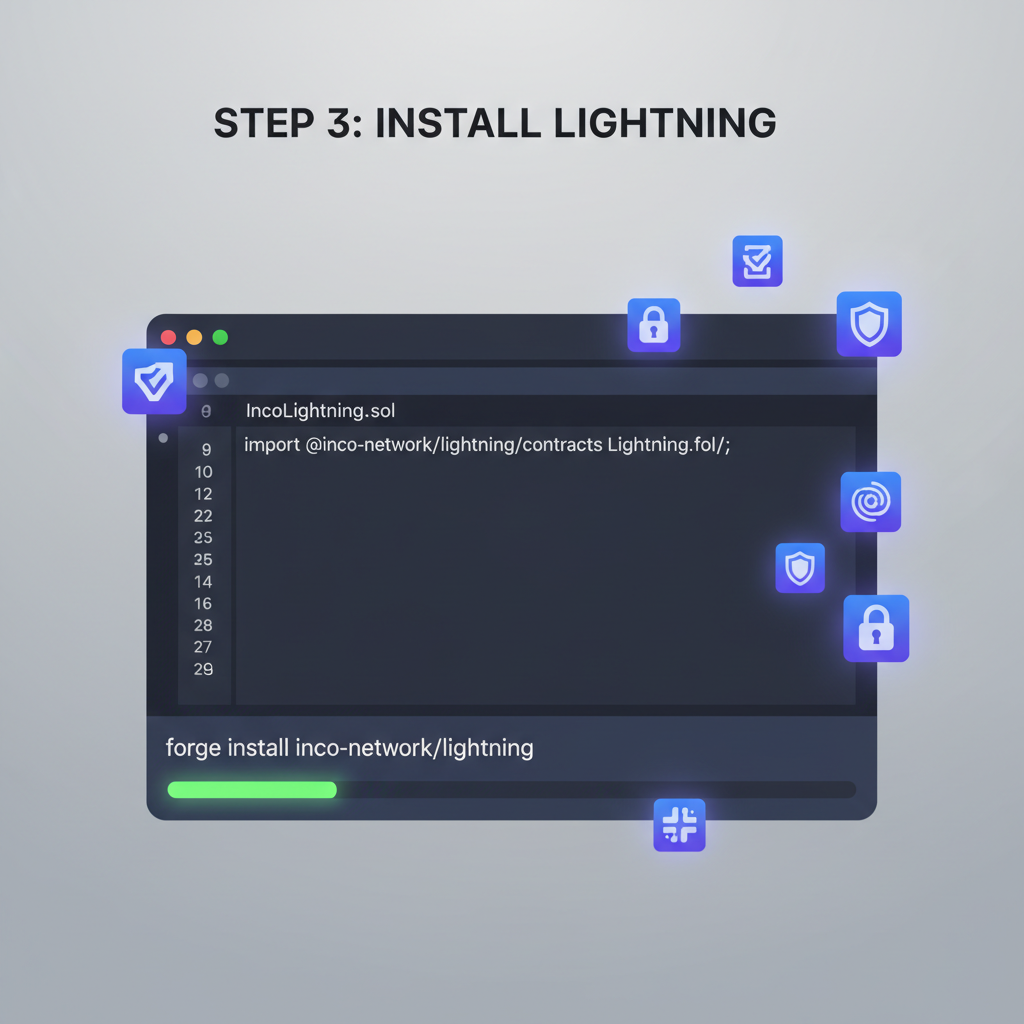
code editor with forge install command and Solidity import for Inco Lightning, glowing encryption icons
2. Import Inco Lightning SDK
Strategically integrate Inco Lightning for FHE-encrypted computations. Add as dependency: `forge install inco-network/inco-lightning --no-commit`. Update `foundry.toml` remappings: `inco-lightning/=lib/inco-lightning/src/`. Verify import in Solidity: `import {euint256} from 'inco-lightning/src/types/Fields.sol';`. This unlocks encrypted primitives like `ebool`, `euint256`, enabling post-quantum secure confidential ERC20 balances without blockchain modifications.
Solidity code snippet for ConfidentialERC20 with encrypted euint256 balances, holographic data visualization
3. Code the Encrypted ERC20 Token
Architect a privacy-preserving ERC20 using Inco Lightning's encrypted types. Create `src/ConfidentialERC20.sol`: ```solidity // SPDX-License-Identifier: MIT import {ERC20} from 'openzeppelin-contracts/token/ERC20/ERC20.sol'; import {euint256} from 'inco-lightning/src/types/Fields.sol'; contract ConfidentialERC20 is ERC20 { mapping(address => euint256) private _balances; // Implement mint, transfer with e.add, e.sub for encrypted balances // Add decryption rules for authorized views } ``` Insight: Leverage `euint256` for hidden balances, programmable decryption for strategic access control in DeFi or payments.
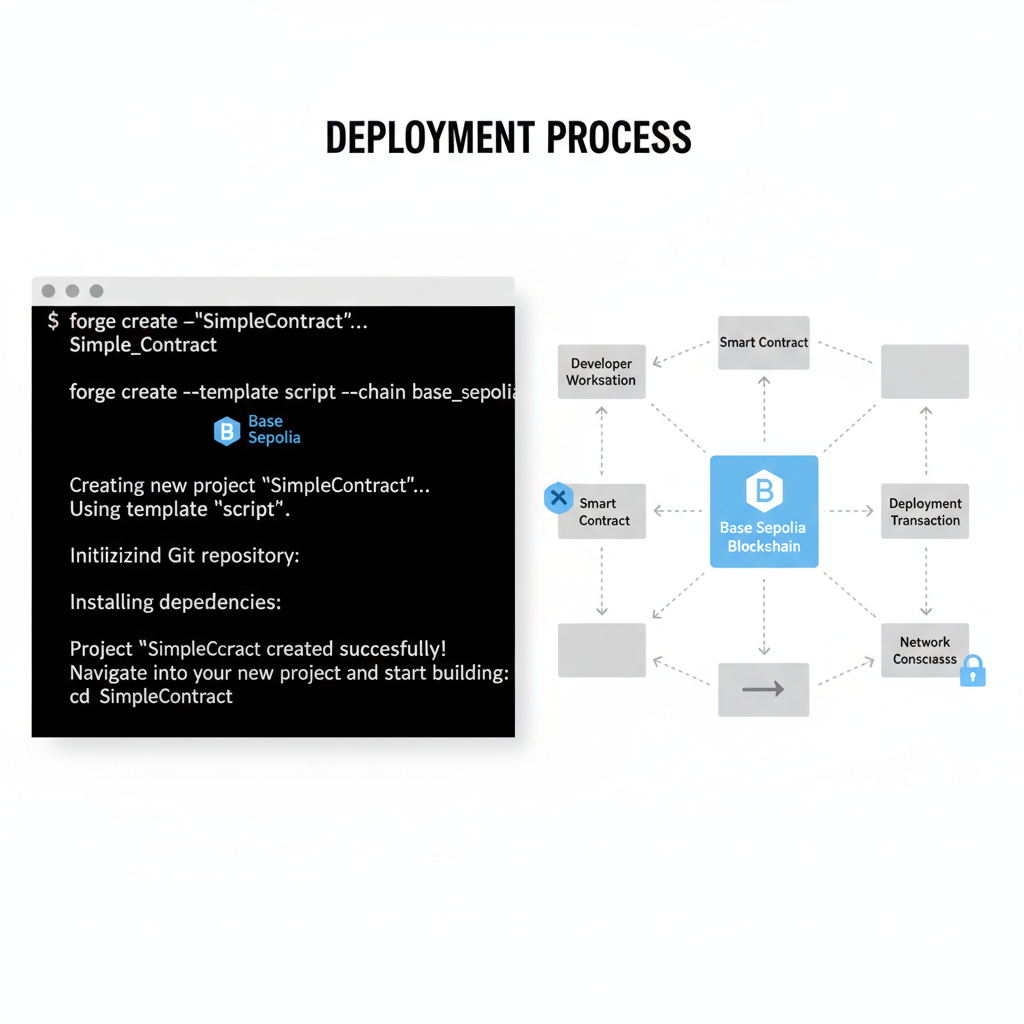
deployment terminal output with forge create on Base Sepolia, blockchain network diagram
4. Compile and Deploy to Base Sepolia
Compile with `forge build --via-ir` for optimized FHE bytecode. Deploy strategically: `forge create ConfidentialERC20 --rpc-url https://sepolia.base.org --private-key YOUR_PK --legacy`. Note the contract address. Verify on Base Sepolia explorer. Pro tip: Use `--verify` with Etherscan API key for transparency. Current Inco (INCO) price: $0.009136 (24h change: +0.000110%), signaling strong momentum for confidential primitives.
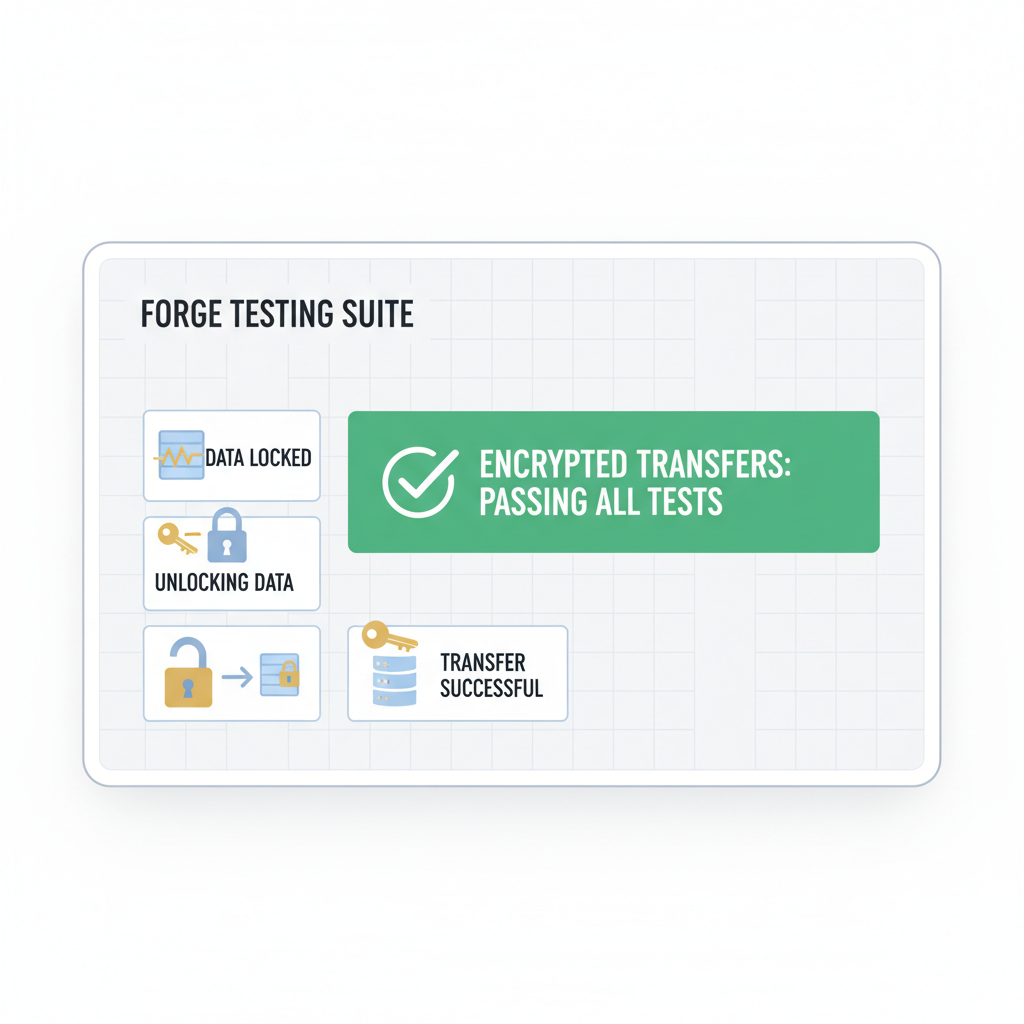
testing dashboard with passing Forge tests for encrypted transfers, lock and key icons unlocking data
5. Test Transfers with Decryption Rules
Validate confidentiality via Foundry tests. Write `test/ConfidentialERC20.t.sol`: ```solidity // Test encrypted mint, transfer // Assert decryption rules reveal balances only to authorized parties ``` Run `forge test -vvv`. Execute transfers: Mint encrypted tokens, transfer with `e.sub(balance, amount)`, decrypt per rules. Strategic insight: This enables confidential DeFi on Base, powering private payments amid INCO's $0.009136 valuation.

Testing reveals the magic: send encrypted USDC-like transfers, aggregate privately for yields, all verifiable yet confidential. Edge case: handle underflows with e. sub safe math. Gas hovers near vanilla ERC20, a strategic win for homomorphic encryption blockchain rollouts.

Advanced Patterns: Beyond Basic Tokens

Layer in programmable decryption for governance: votes as ebool

InfinitiCoin (INCO) Live Price

Powered by TradingView

Builders targeting Base Sepolia privacy contracts gain a moat: FHE's compute fidelity suits complex logic where ZK falters. Enterprises, integrate for compliant confidential treasury ops. As adoption swells, early SDK mastery positions portfolios for the privacy premium, blending Base's speed with INCO's security. Prototype today; the chain rewards the bold.