

Fully Homomorphic Encryption (FHE) stands at the forefront of blockchain privacy innovation, enabling encrypted smart contracts that process data without ever exposing it. In EVM-compatible environments, this technology addresses a critical vulnerability: public ledgers reveal every transaction detail, undermining confidentiality for enterprises and individuals alike. Projects like Zama's fhEVM and Fhenix's CoFHE are pioneering FHE EVM smart contracts, allowing developers to build scalable, private applications on Ethereum and beyond.

Fully Homomorphic Encryption: Foundation for Confidential Blockchain Logic
FHE permits computations on ciphertexts, producing encrypted results that match those from plaintext inputs. Unlike zero-knowledge proofs, which verify without revealing, FHE executes full program logic privately. This unlocks privacy-preserving encrypted contracts for DeFi, voting, and supply chains, where sensitive inputs demand protection. Zama's confidential blockchain protocol exemplifies this, ensuring end-to-end encryption across transactions and states.
Traditional EVM chains expose balances and logic; FHE coprocessors offload heavy encryption while maintaining compatibility. Scalability hits 20 transactions per second on fhEVM, with hardware upgrades promising more. Fhenix's CoFHE accelerates decryption 50-fold, slashing on-chain gas costs by handling intensive work off-chain.
Zama's fhEVM Coprocessor: Seamless Integration for Developers
Zama's fhEVM Coprocessor empowers Solidity developers to craft confidential smart contracts natively. Encrypt inputs, execute logic encrypted, and decrypt outputs only for authorized parties. EVM compatibility means no rewrites; deploy on Ethereum or L2s effortlessly. OpenZeppelin's audited libraries accelerate adoption, offering secure primitives and AI-assisted tools.
Zama fhEVM Key Features
- Confidential Solidity Contracts: Enables developers to write Solidity smart contracts that process encrypted data while maintaining end-to-end privacy.

- EVM Compatibility: Seamlessly integrates with existing EVM chains, allowing easy deployment of confidential dApps on Ethereum.

- 20 TPS Scalability: Supports up to 20 transactions per second, with potential for higher throughput via additional hardware.

- GitHub Resources: Open-source FHEVM framework available for integration at github.com/zama-ai/fhevm.
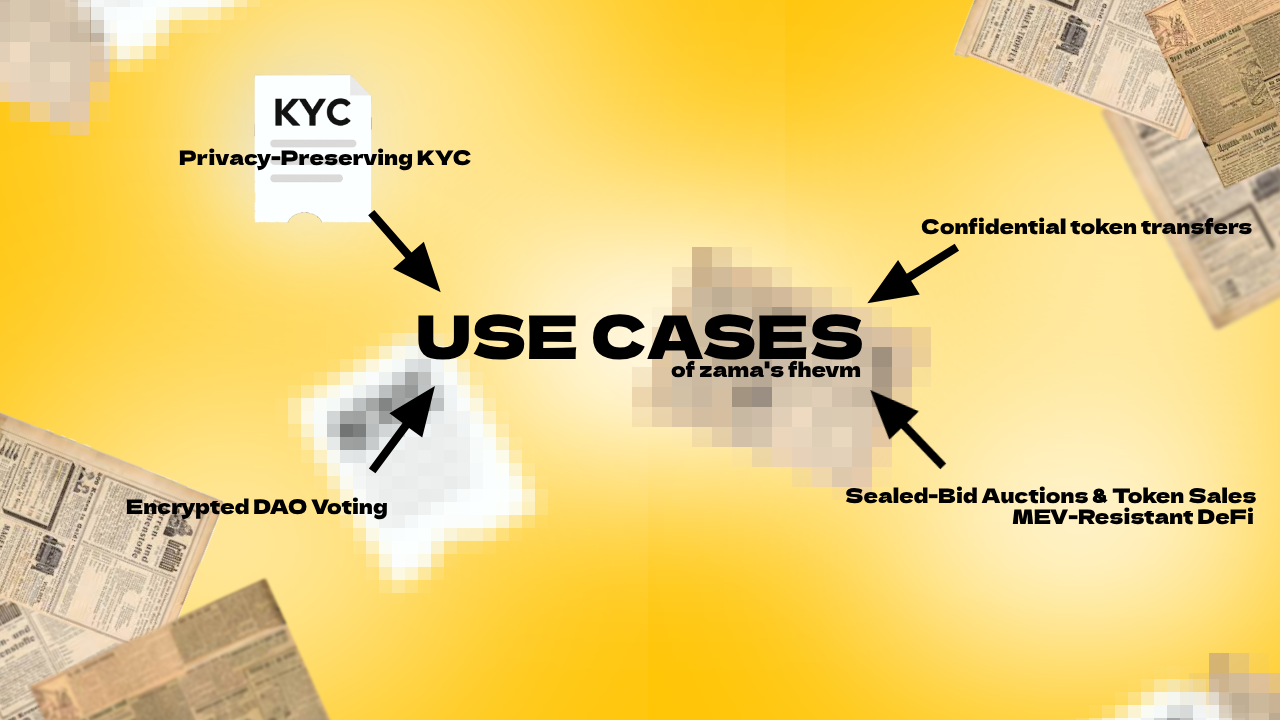
Consider a private auction: bids stay encrypted until reveal. FHE ensures fairness without trusted intermediaries. The GitHub repository provides frameworks for rapid prototyping, democratizing access to these tools.
Fhenix CoFHE: Performance-Optimized Privacy Layer
Fhenix advances with CoFHE, prioritizing real-time confidential computation. Developers benefit from low gas via off-chain processing, ideal for high-volume homomorphic encryption blockchain protocols. Fully EVM-compatible, it supports private on-chain apps across Ethereum ecosystems.
CoFHE's edge lies in efficiency: faster decryption means responsive dApps. Pair it with Inco's confidential layer for composable privacy, blending FHE and ZK where strengths align. Enterprises gain proprietary logic protection, vital for risk-averse deployments.
These protocols signal maturity; FHE transitions from theory to production, fostering trust in DeFi. Next, we examine practical builds.
Developers can now translate these advancements into tangible applications, starting with straightforward confidential tokens or auctions. Tools from Inco Network and Chainlink Confidential Compute complement FHE by layering composable confidentiality over EVM chains, enabling privacy-preserving encrypted contracts without full protocol overhauls.
Practical Implementation: Step-by-Step Confidential ERC20 Token
Building a confidential ERC20 token exemplifies FHE's utility. Using Inco Lightning on Base Sepolia, encrypt balances and transfers, shielding amounts from public view while preserving EVM composability. This approach suits DeFi protocols needing private positions amid volatile markets.
Build Confidential ERC20 with Inco Lightning: Encrypt, Deploy, Transfer Privately


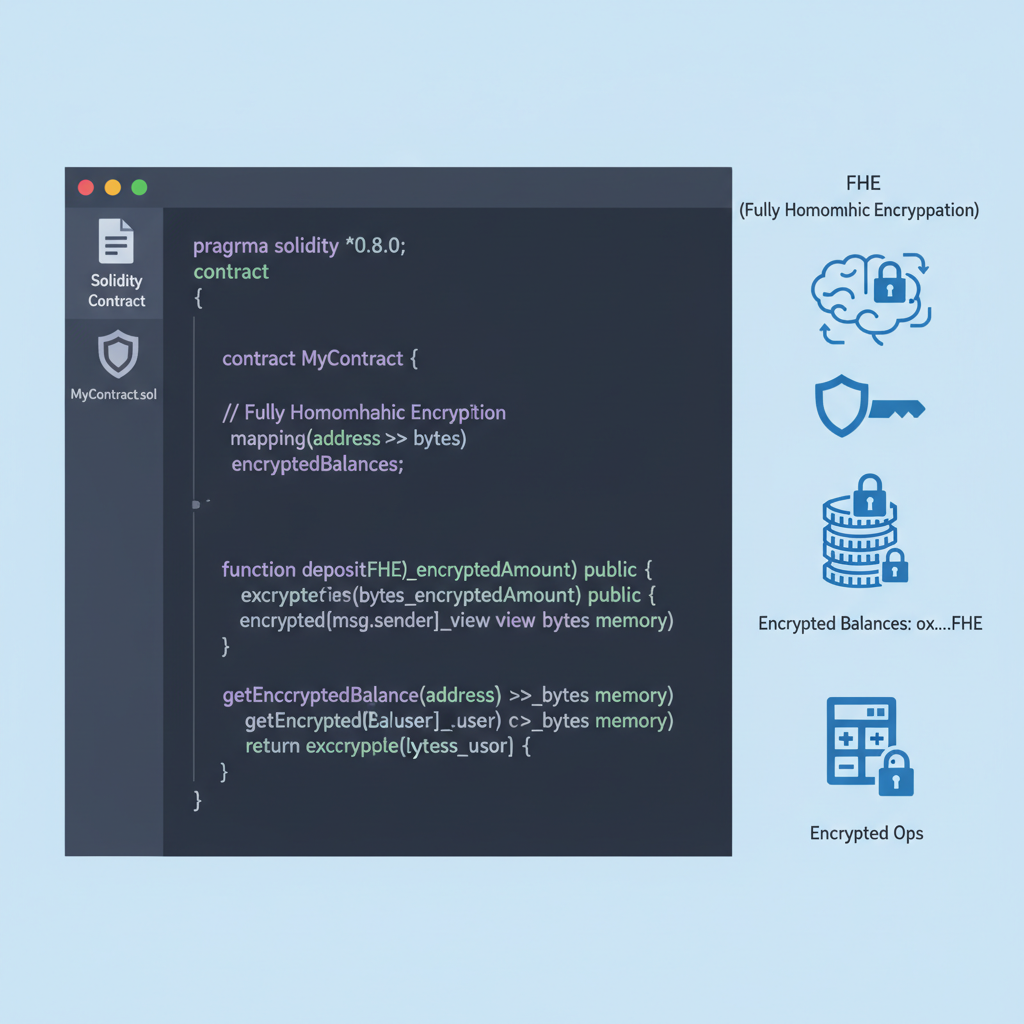
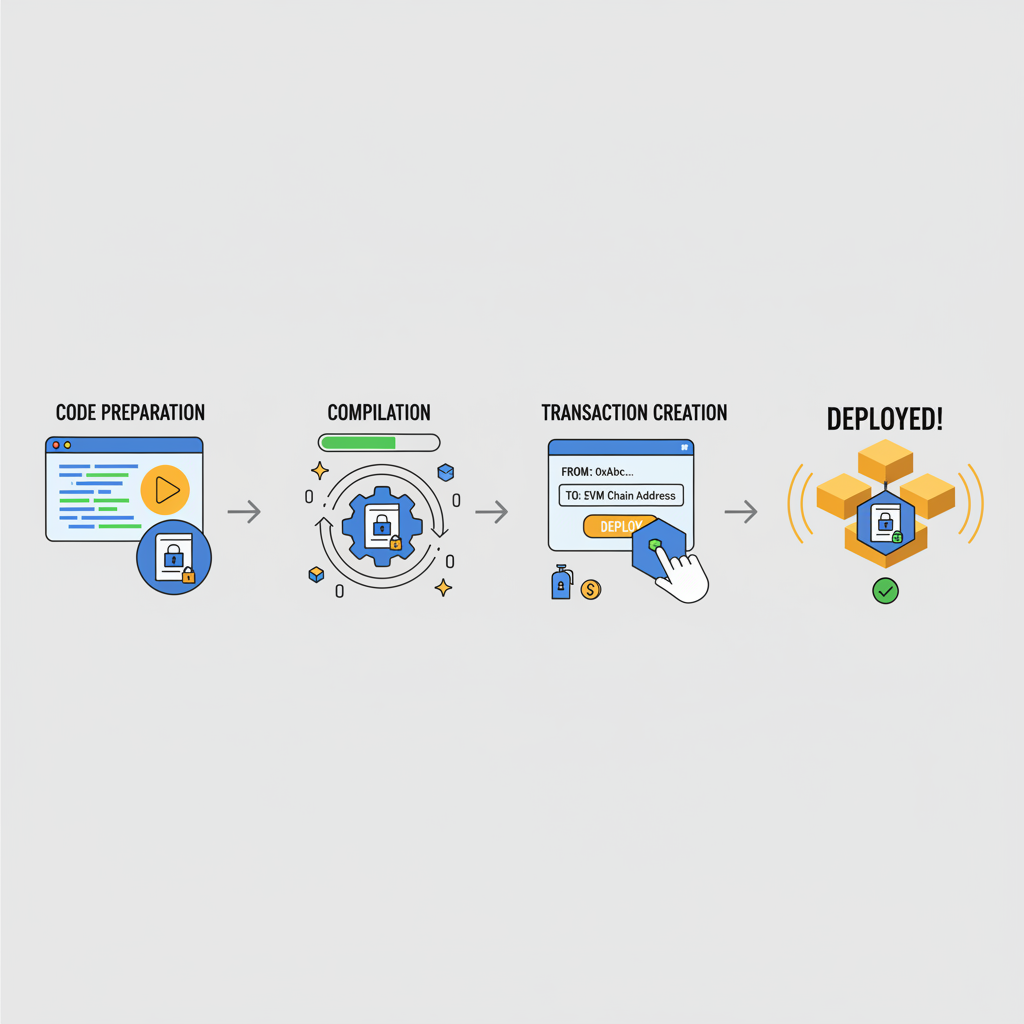

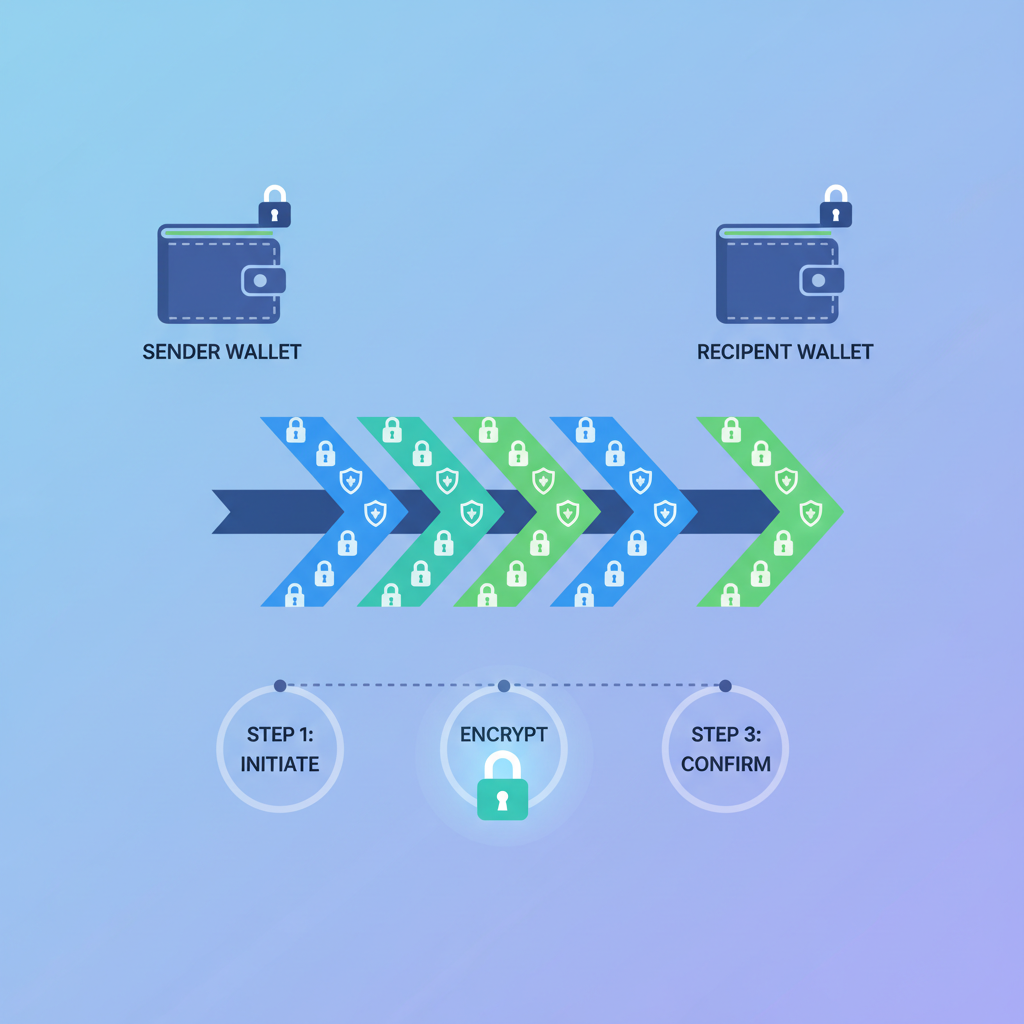

Such tokens integrate seamlessly with existing DEXs, where trades execute on encrypted values. FHELA extends this to full encrypted on-chain data, ensuring states like reserves remain hidden. For confidential smart contracts developers, these primitives reduce boilerplate, focusing efforts on business logic.
Chainlink Confidential Compute adds off-chain oracles for private inputs, encrypting data under threshold keys before on-chain submission. Applications process ciphertexts directly, ideal for proprietary DeFi strategies. Unlike pure ZK, FHE handles arbitrary computations, from risk models to auctions.
Overcoming Challenges in Homomorphic Encryption Blockchain Protocols
FHE's computational intensity poses hurdles, yet optimizations abound. Zama's fhEVM Coprocessor achieves 20 TPS via hardware acceleration, while Fhenix CoFHE cuts decryption latency dramatically. Gas optimization offloads to coprocessors, keeping EVM costs predictable.
Interoperability shines: cross-chain encrypted transactions via Zama's protocol bridge Ethereum L2s and beyond. OpenZeppelin's libraries mitigate smart contract risks, audited for FHEVM specifics. Developers avoid common pitfalls like key management by leveraging these tools.
Comparison of FHE Solutions for EVM-Compatible Privacy Protocols
| Solution | Performance Metrics | Key Features | EVM Compatibility |
|---|---|---|---|
| Zama fhEVM | 20 TPS (scalable with hardware) | Solidity-native confidential smart contracts, fhEVM Coprocessor | ✅ Yes |
| Fhenix CoFHE | 50x faster decryption, Low on-chain gas costs | Real-time confidential computation, Off-chain intensive processing | ✅ Yes |
| Inco | Composable FHE/ZK | Confidential computing layer on existing blockchains, Privacy for ERC20 tokens (e.g., Base Sepolia) | ✅ Yes |
Security demands diligence; threshold encryption distributes keys, preventing single points of failure. Legal frameworks, as in Chainlink's whitepaper, clarify compliance for enterprises handling sensitive data.
Real-world use cases proliferate. Private voting dApps tally encrypted ballots verifiably. Supply chain contracts track goods confidentially, revealing proofs only on demand. DeFi vaults compute yields on hidden positions, attracting institutional capital wary of transparency.
FHE matures alongside EVM ecosystems. GitHub repos from Zama invite contributions, accelerating innovation. As hardware evolves, throughput scales, positioning FHE as the backbone for encrypted smart contracts FHE.
Enterprises deploying today gain first-mover advantage in confidential DeFi. Pair fhEVM with OpenZeppelin for robust stacks, or Fhenix for speed-critical apps. Detailed blueprints await in Ethereum encrypted contract guides and EVM FHE resources.
Inco's layer atop blockchains unifies these, fostering a privacy-first stack. Logan Jastremski's foresight rings true: FHE poised to dominate, rendering public ledgers obsolete for sensitive logic.




No comments yet. Be the first to share your thoughts!