The quantum threat to blockchain assets
The security of your crypto wallet relies on elliptic-curve cryptography (ECC), a mathematical framework that has protected digital assets for decades. This system generates public and private keys that allow you to sign transactions and prove ownership. As long as classical computers remain the standard, ECC is considered unbreakable. However, the advent of quantum computing introduces a vulnerability that could render these keys obsolete almost overnight.
A cryptographically relevant quantum computer (CRQC) is a machine powerful enough to run Shor’s algorithm, which can factor large numbers and solve discrete logarithm problems exponentially faster than classical supercomputers. Once built, a CRQC could derive your private key from your public address, allowing an attacker to drain your wallet without needing your password or seed phrase. This threat is not theoretical; it is a specific timeline event.
Note: The Global Risk Institute’s 2026 Quantum Threat Timeline, produced with evolutionQ, estimates that a CRQC is quite possible within the next 10 years. This makes 2026 a critical preparation window for securing blockchain assets before the threat materializes.
Unlike traditional banking fraud, which can often be reversed through chargebacks or bank intervention, blockchain transactions are immutable. If your assets are stolen via a quantum-derived key, there is no central authority to reverse the transfer. The urgency lies in the fact that data harvested today—such as unused public addresses or pending transactions—can be stored and decrypted later once quantum capabilities mature. This "harvest now, decrypt later" strategy means that waiting until the threat is visible is already too late.
The transition to post-quantum encryption is not merely an upgrade; it is a necessary migration to a new cryptographic standard. Organizations and individuals must begin preparing now to ensure their digital assets remain secure in a post-quantum world.
NIST-approved quantum-resistant algorithms
The National Institute of Standards and Technology (NIST) has standardized three primary algorithms to replace current encryption methods vulnerable to quantum computing. These algorithms—ML-KEM, ML-DSA, and SLH-DSA—form the technical backbone of post-quantum encryption in 2026, providing the mathematical assurance needed to secure crypto wallets against future threats.
ML-KEM (Module-Lattice-Based Key-Encapsulation Mechanism) handles the initial handshake. It secures the key exchange process, ensuring that the symmetric keys shared between a wallet and a server remain hidden even from quantum adversaries. Think of ML-KEM as the secure envelope that protects the communication channel itself.
ML-DSA (Module-Lattice-Based Digital Signature Algorithm) manages identity and authorization. It is used to sign transactions, verifying that a crypto wallet owner genuinely authorized a transfer. This lattice-based approach ensures that digital signatures are computationally infeasible to forge, maintaining the integrity of the blockchain ledger.
SLH-DSA (Stateless Hash-Based Digital Signature Algorithm) offers an alternative for specific use cases where long-term security or minimal computational overhead is prioritized. As a hash-based scheme, it relies on different mathematical principles than ML-DSA, providing a robust fallback for applications requiring stateless signature generation.
| Algorithm | Primary Function | Mathematical Basis |
|---|---|---|
| ML-KEM | Key Encapsulation | Module-Lattice |
| ML-DSA | Digital Signatures | Module-Lattice |
| SLH-DSA | Digital Signatures | Hash-Based |
Crypto wallet providers are integrating these standards to ensure their infrastructure remains secure as quantum computing capabilities advance. The transition to these NIST-approved algorithms is not optional for long-term security; it is a necessary upgrade to protect digital assets against the emerging quantum threat.
Why hybrid cryptography is the standard in 2026
Pure post-quantum deployments remain rare in 2026. Wallet developers and infrastructure providers are not yet ready to switch off classical encryption entirely. Instead, the industry has settled on hybrid cryptography, which layers classical algorithms like ECDSA alongside post-quantum schemes such as CRYSTALS-Kyber. This approach ensures that if one system fails—whether due to a mathematical breakthrough in quantum computing or a bug in new code—the other layer still protects your assets.
Think of hybrid cryptography as a double-lock door. You still have the familiar key (classical encryption) that everyone knows how to use, but you’ve added a second, modern deadbolt (post-quantum encryption) that only opens with a different mechanism. Even if a thief picks the first lock, the second one holds firm. This redundancy is critical during the migration period, where the threat of "harvest now, decrypt later" attacks looms large.
Major infrastructure providers are already implementing this strategy. Cloudflare, for instance, has accelerated its post-quantum roadmap and targets full post-quantum security by 2029, but currently relies on hybrid models to bridge the gap. By combining the proven reliability of classical crypto with the future-proofing of PQC, wallet providers can offer security without sacrificing compatibility or performance.
Migration timelines for wallet providers
The race to secure digital assets against quantum computing is no longer theoretical; it is a logistical challenge defined by infrastructure readiness. Major technology providers are establishing the guardrails for this transition, setting a de facto standard for when wallet providers must act. If the underlying network is not quantum-safe, the wallet itself offers no protection.
Cloudflare, which secures a significant portion of internet traffic, has accelerated its post-quantum roadmap. The company now targets 2029 to be fully post-quantum secure across its infrastructure. This timeline includes the critical deployment of hybrid cryptographic schemes, ensuring that even if a quantum algorithm breaks, the classical encryption layer remains intact. For wallet providers relying on Cloudflare’s services, this means the foundational transport layer will likely be hardened by the end of the decade.
Google has aligned with a similar 2029 timeline for its post-quantum cryptography migration. By securing its own infrastructure first, Google signals to the broader ecosystem that this transition is mandatory rather than optional. Wallet providers building on Google Cloud or using Google’s authentication services must plan their cryptographic upgrades to match these infrastructure milestones.
This infrastructure-level shift has direct implications for end-user wallet security. While individual wallet developers are still finalizing their own PQC implementations, the network layer is moving ahead. Wallet providers must ensure their applications can negotiate these new cryptographic handshakes without breaking compatibility with older nodes during the hybrid transition period. The gap between infrastructure readiness and application-level deployment is the current vulnerability window.
Secure your wallet before quantum computers arrive
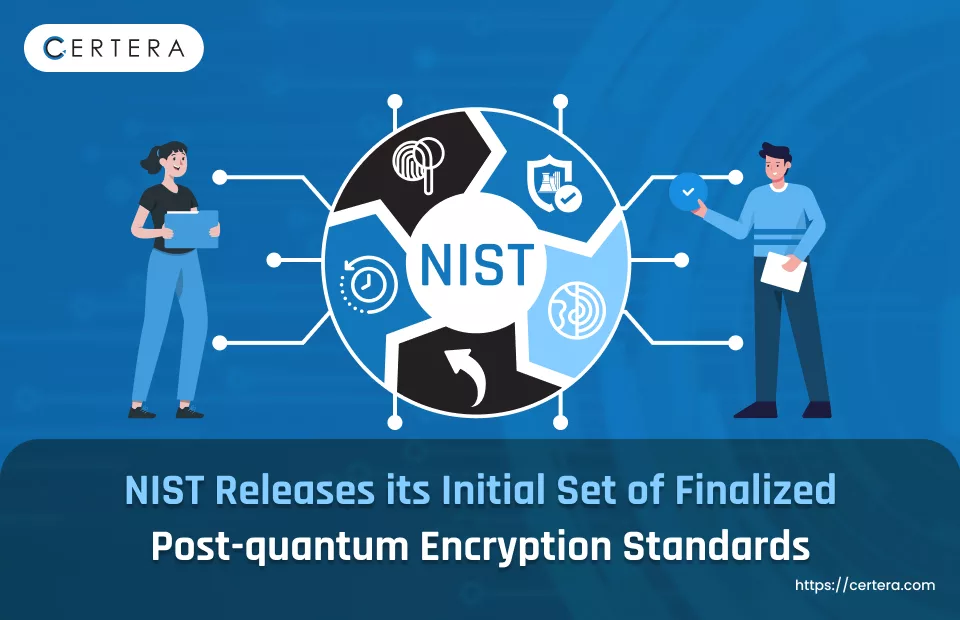
NIST has finalized the first set of post-quantum cryptography (PQC) standards, and the timeline for implementation is already underway. For crypto wallet users, this isn't a distant threat—it is an immediate operational requirement. Waiting for a major provider to force an update can leave your assets exposed during the transition window. You need to assess your current setup and prepare for the shift to quantum-resistant algorithms now.

Identify whether your wallet uses traditional elliptic curve cryptography (ECC) or RSA. Most current wallets rely on these standards, which are vulnerable to future quantum attacks. Check the wallet’s documentation or settings to see if it explicitly mentions "post-quantum" or "hybrid" modes. If your provider hasn't announced a migration plan, treat your wallet as high-risk.
Some advanced wallets and hardware devices are already rolling out hybrid encryption modes that combine classical and post-quantum algorithms. Look for settings labeled "enhanced security" or "quantum-resistant." Enabling these modes adds a layer of protection that remains secure even if the classical algorithms are eventually broken by quantum computers.
Keep track of updates from NIST and your wallet provider. CISA provides guidance on adopting these standards, and wallet developers will release critical patches to support the new algorithms. Subscribe to security newsletters or follow official channels to ensure you don't miss mandatory updates that could secure your private keys against future threats.
No comments yet. Be the first to share your thoughts!