Why current crypto wallets are vulnerable
Your crypto wallet relies on mathematical problems that quantum computers will soon solve. Today’s security depends on elliptic curve cryptography (ECC) and RSA. These systems protect your private keys by making it computationally hard to derive them from public keys. Classical computers would take billions of years to break them. Quantum computers will change that timeline.
Shor’s algorithm is the core threat. It allows a sufficiently powerful quantum computer to factor large numbers and solve discrete logarithm problems efficiently. This directly undermines RSA and ECC. Once a quantum computer reaches the necessary qubit count and error correction levels, your wallet’s signature scheme becomes obsolete. Your funds are no longer protected by the math you trust today.
The urgency isn’t just about future capability; it’s about current exposure. Attackers use a strategy called "Harvest Now, Decrypt Later." They steal encrypted data or wallet transactions today, storing them until quantum computers are viable. By then, they can decrypt the data and claim ownership. This means your crypto could be at risk even before quantum computers are publicly available.
NIST is leading the global effort to standardize post-quantum cryptography. Their project aims to replace current algorithms with quantum-resistant ones. This transition is critical for the entire crypto ecosystem. Without it, the foundation of digital ownership collapses. The window to migrate is closing, and the cost of waiting is total loss.
NIST post-quantum standards explained
The National Institute of Standards and Technology (NIST) has moved past the experimental phase of post-quantum cryptography (PQC). After years of rigorous evaluation, the agency has standardized three core algorithms designed to replace the cryptographic primitives currently protecting your crypto wallets. These standards—ML-KEM, ML-DSA, and SLH-DSA—are no longer theoretical; they are the new benchmark for secure digital storage.
The shift is necessary because quantum computers, particularly those running Shor’s algorithm, will eventually break the elliptic curve cryptography (ECC) and RSA that underpin today’s blockchain infrastructure. NIST’s selected standards are built on lattice-based and hash-based mathematics, which remain resistant to both classical and quantum attacks. Understanding these three pillars is essential for anyone preparing their digital assets for the post-quantum era.
ML-KEM: The New Standard for Encryption
Formerly known as Kyber, ML-KEM (Module-Lattice-Based Key-Encapsulation Mechanism) is the primary standard for encryption. It replaces the key exchange mechanisms used in protocols like TLS and secure messaging apps. ML-KEM allows two parties to establish a shared secret key over an insecure channel. For crypto wallets, this means the encryption protecting your private key backups or seed phrases will rely on lattice-based security rather than elliptic curves.
ML-KEM is favored for its efficiency and relatively small key sizes compared to earlier lattice candidates. It strikes a balance between security strength and computational overhead, making it suitable for resource-constrained devices like hardware wallets and mobile phones. As the standard for key encapsulation, it ensures that even if a quantum adversary intercepts your communications, they cannot derive the shared secret.
ML-DSA: Digital Signatures for Identity
ML-DSA (Module-Lattice-Based Digital Signature Algorithm), previously Dilithium, addresses the critical need for authentication. It is the standard for digital signatures, replacing ECDSA (Elliptic Curve Digital Signature Algorithm) which is used for transaction signing in Bitcoin and Ethereum. When you sign a transaction, ML-DSA ensures that the signature remains valid and unforgeable even against quantum attackers.
Unlike some other candidates, ML-DSA offers a good trade-off between signature size and verification speed. This is vital for blockchain networks where large signature sizes can increase transaction fees and slow down block propagation. By adopting ML-DSA, wallet providers can maintain the integrity of user identities without significantly impacting network performance.
SLH-DSA: Hash-Based Safety Net
SLH-DSA (Stateless Hash-Based Digital Signature Algorithm), formerly SPHINCS+, provides a different security foundation. It relies solely on the security of cryptographic hash functions, which are already quantum-resistant under Grover’s algorithm (though with reduced security margins). SLH-DSA is designed as a conservative backup. While ML-DSA is the primary choice for most applications due to performance, SLH-DSA offers an independent security assumption.
This independence is a key feature. If a future mathematical breakthrough compromises lattice-based cryptography, SLH-DSA remains secure because it does not rely on the same underlying math. It is particularly useful for long-term archival signatures or situations where maximum security assurance is required, regardless of computational cost.
Comparison: Classical vs. Post-Quantum
The transition from classical to post-quantum standards involves significant changes in key and signature sizes. The table below highlights the differences between the widely used ECDSA/RSA and the new NIST PQC standards.
| Algorithm | Type | Typical Key Size | Security Level |
|---|---|---|---|
| ECDSA (P-256) | Classical | ~64 bytes | 128-bit |
| ML-KEM | Post-Quantum | ~1KB | 128-bit |
| ML-DSA | Post-Quantum | ~2.5KB | 128-bit |
| SLH-DSA | Post-Quantum | ~40KB | 128-bit |
The jump in key and signature sizes is the main challenge for widespread adoption. Hardware wallets and blockchain protocols must update their firmware and consensus rules to accommodate these larger data structures. However, the security benefit is undeniable. Migrating to NIST standards is not just an upgrade; it is a necessity for the long-term viability of crypto wallets.
How wallets implement post-quantum keys
Wallet software bridges the gap between legacy security and future threats through hybrid key generation. This process runs two cryptographic algorithms in parallel: a traditional elliptic curve scheme (like ECDH or EdDSA) and a new post-quantum algorithm (such as ML-KEM or ML-DSA). By combining them, wallets ensure that if one algorithm is broken—either today by a sophisticated hacker or tomorrow by a quantum computer—the other still protects the user’s funds. This dual-layer approach maintains backward compatibility with existing exchanges and services while providing forward security against quantum attacks.
Step 1: Generate parallel key pairs
The wallet creates two distinct key pairs simultaneously. One pair follows the legacy standard (e.g., secp256k1), ensuring the address remains recognizable to current blockchain networks. The second pair uses a NIST-approved post-quantum algorithm. This step is invisible to the user but critical for establishing the dual security foundation. The wallet software must securely store both private keys, treating the post-quantum key with the same level of protection as the traditional one.

The wallet creates two distinct key pairs simultaneously. One pair follows the legacy standard (e.g., secp256k1), ensuring the address remains recognizable to current blockchain networks. The second pair uses a NIST-approved post-quantum algorithm. This step is invisible to the user but critical for establishing the dual security foundation.
Step 2: Combine keys into hybrid address
The public keys from both algorithms are combined to form a single hybrid public key or address. This is often done using a hash function that mixes the outputs of both schemes. The resulting address can be used for standard transactions, but it signals to the wallet software that it must handle post-quantum signatures when sending funds. This hybrid address structure allows the wallet to remain compatible with legacy infrastructure while preparing for quantum-resistant protocols.
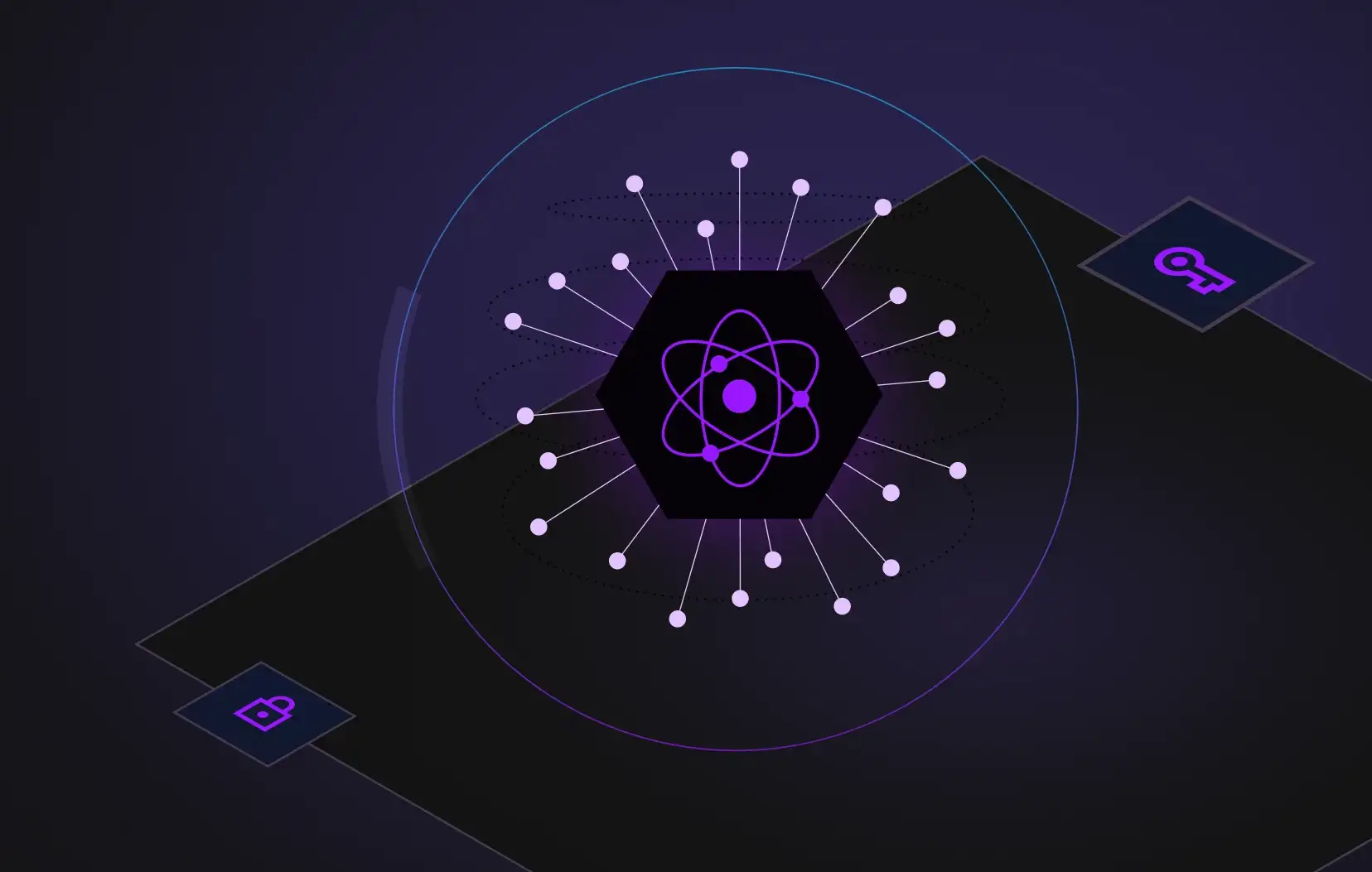
The public keys from both algorithms are combined to form a single hybrid public key or address. This is often done using a hash function that mixes the outputs of both schemes. The resulting address can be used for standard transactions, but it signals to the wallet software that it must handle post-quantum signatures when sending funds.
Step 3: Sign transactions with hybrid signatures
When a user initiates a transaction, the wallet generates a hybrid signature. This involves signing the transaction data with both the legacy private key and the post-quantum private key. The resulting signature is larger than a traditional one, but it ensures that the transaction is valid under both cryptographic standards. This dual signature is embedded in the transaction payload, allowing the network to verify it using either method.
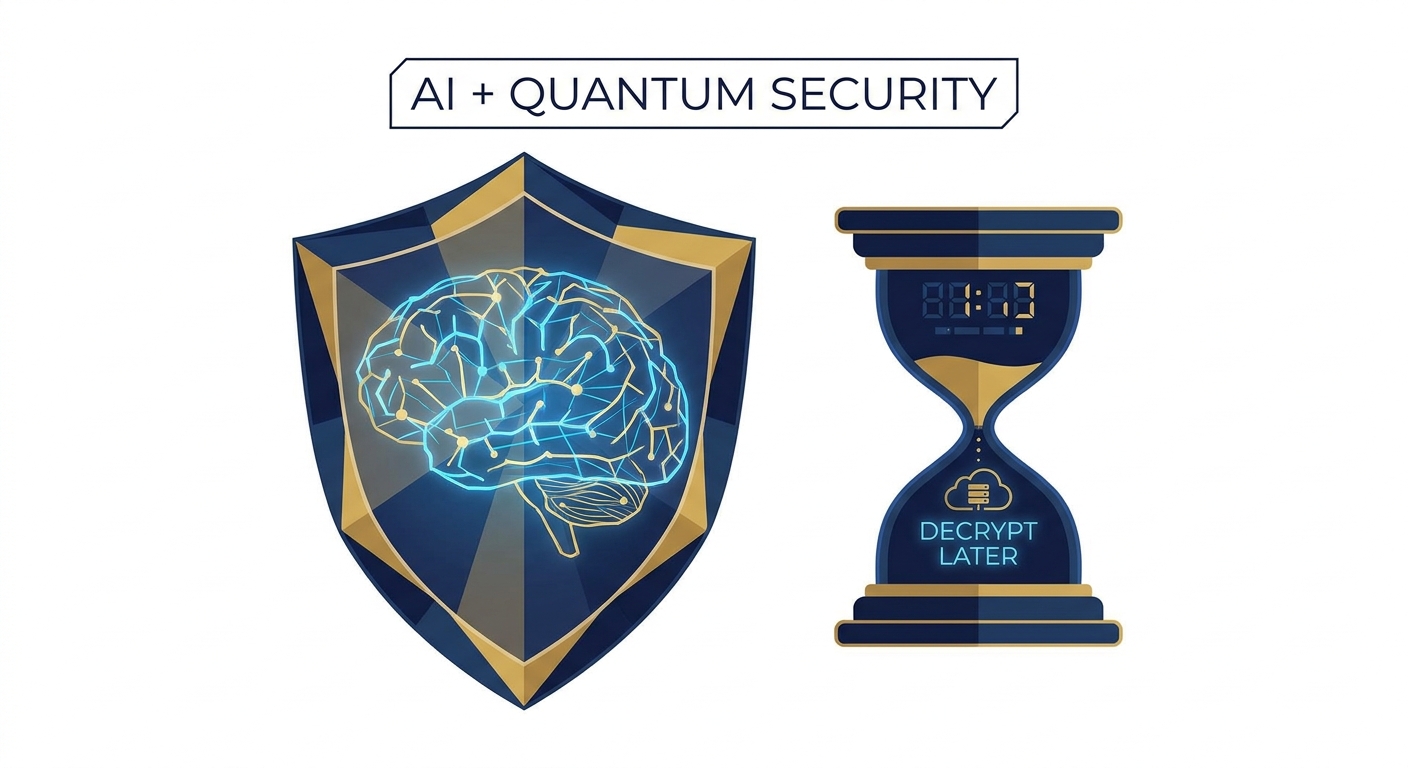
When a user initiates a transaction, the wallet generates a hybrid signature. This involves signing the transaction data with both the legacy private key and the post-quantum private key. The resulting signature is larger than a traditional one, but it ensures that the transaction is valid under both cryptographic standards.
Step 4: Verify signatures on the network
Blockchain nodes and wallet software verify the hybrid signature by checking both the legacy and post-quantum components. If either verification fails, the transaction is rejected. This step ensures that the network remains secure even if one of the algorithms is compromised. The verification process is designed to be efficient, minimizing the computational overhead while maintaining robust security guarantees.
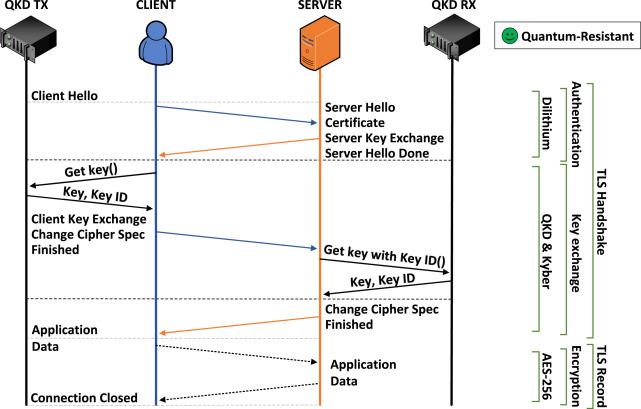
Blockchain nodes and wallet software verify the hybrid signature by checking both the legacy and post-quantum components. If either verification fails, the transaction is rejected. This step ensures that the network remains secure even if one of the algorithms is compromised.
Market impact of quantum-resistant assets
The transition to post-quantum cryptography is shifting from theoretical risk to market reality. As major standard-setting bodies finalize algorithms, investors are beginning to price in the infrastructure overhaul required to protect digital assets. This shift is creating a new asset class focused on quantum-resistant encryption, distinct from general blockchain speculation.
Market participants are closely watching early movers in the quantum-resistant token space. These projects are building infrastructure that prioritizes long-term security over short-term speculative gains. The market response has been measured but growing, with volume increasing as institutional players begin to audit their holdings for quantum vulnerability.
Infrastructure providers are also seeing increased valuation premiums. Companies developing post-quantum key management systems and secure hardware wallets are attracting capital that previously went solely to high-yield DeFi protocols. This represents a structural change in how the market values security assets.
The performance of quantum-resistant assets often correlates with broader regulatory news regarding cybersecurity standards. When official bodies like NIST release final standards, related tokens and infrastructure stocks typically see short-term volatility followed by stabilization.
Investors should distinguish between projects with actual post-quantum implementations and those merely using the terminology for marketing. The market is beginning to penalize projects that lack verifiable cryptographic upgrades, leading to a convergence toward technically robust solutions.
Steps to secure your wallet now
The window to prepare for quantum threats is closing. While large-scale quantum computers capable of breaking current encryption are still years away, the "harvest now, decrypt later" threat is real. Adversaries are already stealing encrypted data, waiting for the day they can unlock it. To secure your crypto wallet against this future risk, you need to take concrete steps today.
Not all wallets are created equal. Many older or less rigorous platforms still rely on traditional elliptic curve cryptography (ECC), which is vulnerable to Shor’s algorithm. Check your wallet provider’s documentation or support pages to see if they are actively developing or implementing post-quantum algorithms. If your provider is silent on the matter, assume your assets are at risk.
Software wallets are more exposed to network-based attacks. A hardware wallet keeps your private keys offline, providing a physical barrier against theft. Crucially, choose a device that supports firmware updates. As post-quantum standards like CRYSTALS-Kyber are finalized and integrated by vendors, you will need the ability to upgrade your device’s security protocols without replacing the hardware entirely.
Stay informed about industry shifts. The Post-Quantum Cryptography Alliance (PQCA) works on high-assurance software implementations of standardized algorithms. Following their updates can help you identify which wallet vendors are serious about security. Look for certifications or public commitments from providers that signal they are preparing for the quantum transition.
If you hold significant assets, consider spreading them across multiple wallets from different providers. This reduces the risk that a single vendor’s delayed migration will leave all your assets exposed. Prioritize providers that have already announced roadmaps for post-quantum migration, even if the full implementation is not yet live.
No comments yet. Be the first to share your thoughts!