NIST crypto security standards
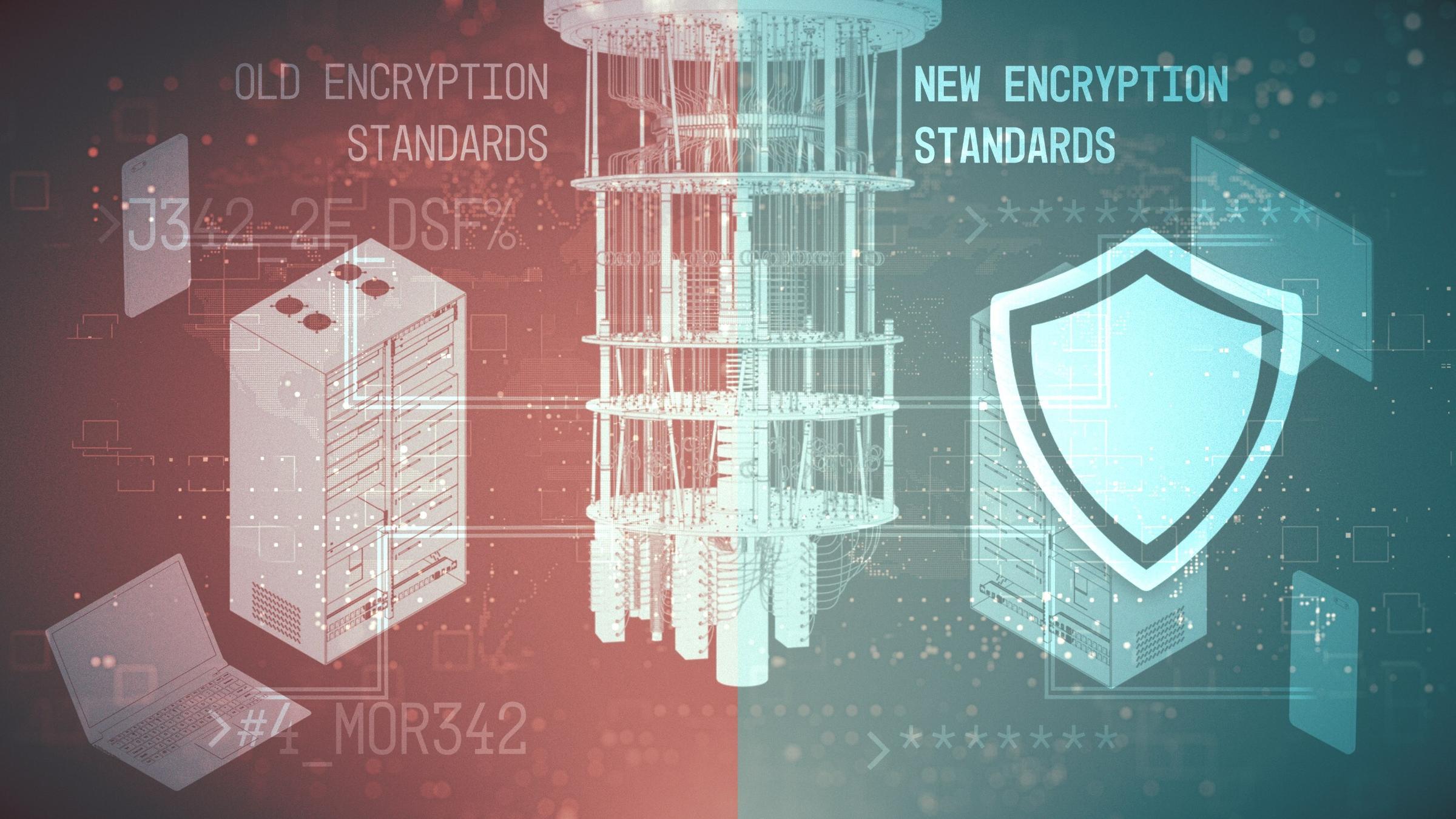
The National Institute of Standards and Technology (NIST) has moved post-quantum cryptography from theoretical research to enforceable federal standards. In 2026, the agency finalized the first suite of cryptographic algorithms designed to resist attacks from both classical and quantum computers. These standards are not proposals; they are the active baseline for securing sensitive data across government and critical infrastructure.
The finalized suite consists of three distinct algorithms, each serving a specific cryptographic function.
Organizations must now migrate their systems to these specific protocols to maintain compliance with Executive Order 14412 and subsequent cybersecurity directives.ML-KEM (Module-Lattice-Based Key-Encapsulation Mechanism) replaces traditional key exchange protocols. It secures the initial handshake between devices, ensuring that shared secrets remain hidden even if an adversary possesses a large-scale quantum computer. This algorithm is the primary defense for data in transit, protecting everything from financial transactions to classified communications.
ML-DSA (Module-Lattice-Based Digital Signature Algorithm) handles authentication and integrity. It allows entities to sign digital documents and verify their origin without relying on vulnerable elliptic-curve cryptography. This standard ensures that software updates, legal contracts, and system configurations cannot be forged by quantum-enabled attackers.
SLH-DSA (Stateless Hash-Based Digital Signature Algorithm) provides a specialized layer of security. It relies on hash functions, which are inherently resistant to quantum attacks, making it ideal for signing one-time keys or long-lived certificates. While computationally heavier than ML-DSA, it offers a mathematically distinct backup layer for high-assurance environments.
These standards form the backbone of the 2026 crypto security landscape. As the threat of "harvest now, decrypt later" attacks intensifies, adopting these NIST protocols is no longer optional for any organization handling sensitive information. The transition requires immediate attention to key management and cryptographic agility, but the foundation is now firmly established.
Why crypto wallets need migration now
The transition to post-quantum cryptography (PQC) is not merely a software update for blockchain networks; it is a fundamental restructuring of how trust is established. As outlined in the NIST Post-Quantum Cryptography Project milestones, the standardization of algorithms like CRYSTALS-Kyber and CRYSTALS-Dilithium provides the necessary cryptographic primitives to secure distributed ledgers against future quantum threats [src-5]. However, integrating these standards into existing blockchain infrastructure requires careful attention to three critical areas: smart contract logic, consensus mechanism security, and node-to-node communication.
Smart contract signature verification
Smart contracts rely heavily on digital signatures to authorize transactions. Traditional elliptic curve cryptography (ECC) signatures, such as ECDSA or Ed25519, are vulnerable to Shor's algorithm. Migrating to PQC-based signatures increases the size of transaction payloads significantly. For instance, Dilithium signatures are larger than their ECDSA counterparts. This increase in data size impacts storage costs and transaction throughput. Developers must optimize contract logic to handle these larger signatures without exceeding block size limits or increasing gas fees disproportionately.
Consensus mechanism resilience
Consensus protocols depend on secure node authentication and message verification. In proof-of-stake systems, validators sign blocks and attestations. If these signatures are compromised, an attacker could forge identities and destabilize the network. NIST standards provide rigorous security levels that must be matched to the consensus layer's threat model. Networks must upgrade their cryptographic libraries to support hybrid schemes, which combine classical and post-quantum algorithms, during the transition period. This hybrid approach ensures security even if one algorithm family is eventually broken.
Node communication encryption
P2P networks use encryption to protect data in transit between nodes. Quantum computers could decrypt recorded traffic if current encryption methods are used. Implementing PQC-based key exchange mechanisms, such as those based on lattice problems, ensures that node communications remain confidential. The General Services Administration (GSA) emphasizes that migration strategies must address both data at rest and data in transit to maintain the integrity of blockchain records [src-3]. This includes updating TLS implementations used by public APIs and internal node communication channels.
Performance and compatibility considerations
The computational overhead of PQC algorithms is higher than classical counterparts. This can affect block propagation times and validation speeds. Networks must evaluate the trade-offs between security and performance. Some blockchains may opt for layer-2 solutions to offload some cryptographic operations. Others may need to adjust block times to accommodate the increased processing time. The White House Executive Order 14412 highlights the urgency of this migration, urging federal agencies and private sectors to adopt PQC standards to secure national infrastructure [src-4]. Blockchain networks, as critical financial infrastructure, must align with these directives to remain viable in a post-quantum era.
Federal mandates and executive orders
The White House Executive Order 14412 highlights the urgency of this migration, urging federal agencies and private sectors to adopt PQC standards to secure national infrastructure [src-4]. This directive mandates a comprehensive inventory of cryptographic assets and the development of migration plans for critical infrastructure. For blockchain networks, this means aligning with federal timelines to ensure interoperability and security compliance.
Preparing your crypto assets for 2026
Start Post-Quantum Cryptography with the constraint that matters most in real life: space, timing, budget, skill level, maintenance, or availability. That first constraint should shape the rest of the plan instead of appearing as an afterthought. Keep the first pass simple enough to verify. Compare the main options against the same criteria, remove choices that only work in ideal conditions, and save optional upgrades for later.

Frequently asked questions about PQC
Is my current crypto wallet secure against quantum attacks? Most existing wallets rely on elliptic curve cryptography (ECC) or RSA, which quantum computers can break using Shor's algorithm. While large-scale quantum computers capable of this do not yet exist, the "harvest now, decrypt later" threat means your encrypted data and keys are already at risk if intercepted today.
Which post-quantum algorithms has NIST standardized? NIST selected CRYSTALS-Kyber (ML-KEM) for general encryption and CRYSTALS-Dilithium (ML-DSA) and SPHINCS+ (SLH-DSA) for digital signatures in its 2024 standards. These algorithms form the basis for the new security protocols being adopted in 2026.
How long does it take to migrate to post-quantum cryptography? Migration is a complex, multi-year process involving software updates, key management changes, and hardware integration. The General Services Administration (GSA) and NIST recommend starting the inventory and planning phases immediately, as full compliance may take several years for large-scale systems.
Do I need to change my private keys now? You should not change your keys until your wallet provider releases a post-quantum compatible update. Changing keys prematurely without a migration path can lead to loss of access. Monitor official announcements from wallet providers and NIST for compatibility releases.
No comments yet. Be the first to share your thoughts!