
What post-quantum cryptography means for crypto
Post-quantum cryptography (PQC) refers to cryptographic algorithms designed to remain secure against attacks from both classical and quantum computers. While current blockchain infrastructure relies on elliptic curve cryptography (ECC) and RSA—methods that quantum computers could theoretically break using Shor’s algorithm—PQC uses different mathematical structures, such as lattice-based problems, to ensure long-term security.
The urgency for PQC in crypto assets stems from the "harvest now, decrypt later" threat. Adversaries are already storing encrypted blockchain data and wallet signatures, waiting for quantum computers to become powerful enough to reverse-engineer private keys. Once quantum advantage is achieved, unprotected assets could be drained instantly. Transitioning to PQC is not just about future-proofing; it is about protecting the integrity of existing holdings against this looming vulnerability.
NIST has begun standardizing these algorithms, marking a critical shift in how financial institutions and blockchain networks must approach security. Unlike classical encryption, which protects data only against current computational limits, PQC provides a defense against the exponential processing power of quantum machines. This shift requires a fundamental overhaul of digital signatures and key exchange protocols used in crypto transactions.
The integration of PQC into crypto ecosystems is a complex engineering challenge. It involves replacing widely used signature schemes like ECDSA with quantum-resistant alternatives such as CRYSTALS-Kyber or CRYSTALS-Dilithium. This transition must be seamless to prevent network forks or loss of access to funds, making early planning essential for crypto holders and infrastructure providers alike.
NIST PQC standards 2026 implementation
The National Institute of Standards and Technology (NIST) has finalized the cryptographic standards that will define security for financial infrastructure in 2026. These standards replace the classical algorithms that currently protect blockchain transactions and banking systems against the threat of quantum decryption.
NIST has standardized four primary algorithms for widespread adoption. ML-KEM (formerly CRYSTALS-Kyber) serves as the standard for key encapsulation, handling the secure exchange of encryption keys. ML-DSA (formerly CRYSTALS-Dilithium) is the designated standard for digital signatures, ensuring the authenticity of transactions. For environments requiring smaller key sizes, ML-DSA-87 and SLH-DSA (SPHINCS+) provide alternative signature schemes with different performance trade-offs.
The shift from Elliptic Curve Digital Signature Algorithm (ECDSA) to ML-DSA is mandatory for long-term security. Classical signatures are vulnerable to Shor’s algorithm running on sufficiently powerful quantum computers. ML-DSA relies on lattice-based mathematics, which remains resistant to known quantum attacks. This transition requires updating cryptographic libraries in wallets, exchanges, and payment processors immediately.
The following table compares the classical standards currently in use against the new NIST standards. Financial institutions must migrate to these lattice-based protocols to prevent data harvesting attacks.
| Algorithm | Type | Security Level | Quantum Vulnerability |
|---|---|---|---|
| ECDSA | Signature | High | Yes |
| RSA-2048 | Encryption | High | Yes |
| ML-DSA | Signature | High | No |
| ML-KEM | Encryption | High | No |
Implementation extends beyond signature algorithms. NIST recommends AES-256 for symmetric encryption, as Grover’s algorithm only halves its effective security strength, leaving 128 bits of security, which remains robust. The integration of these standards into financial protocols is not optional; it is a requirement for maintaining asset security in a post-quantum era.
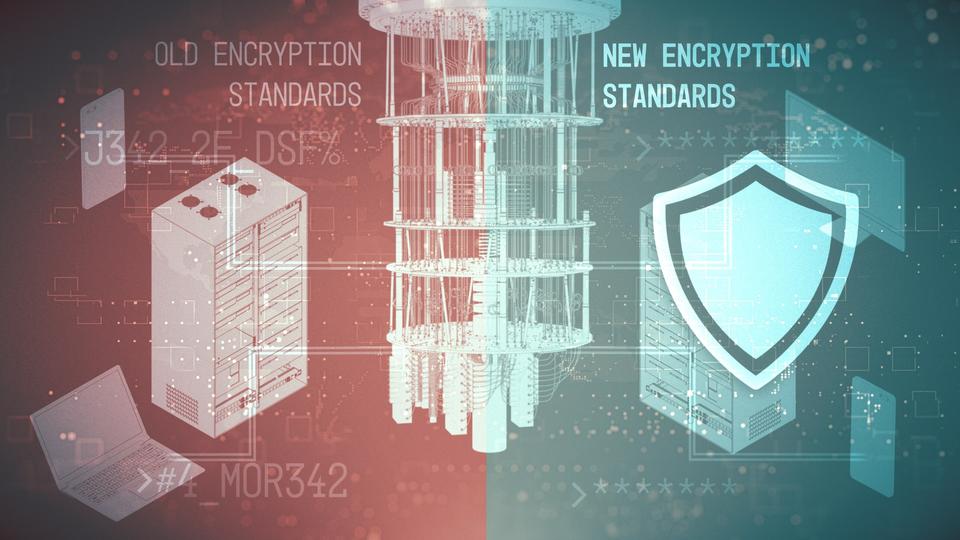
How Quantum-Resistant Encryption Secures Wallets
The threat of "harvest now, decrypt later" attacks is not theoretical; it is an immediate financial risk. Attackers are currently intercepting encrypted blockchain transactions, storing the ciphertext, and waiting for quantum computers to become powerful enough to break current elliptic curve cryptography. PQC algorithms, standardized by NIST, are designed to resist these future attacks, ensuring that today's crypto assets remain secure tomorrow.
Key Generation and Storage
Quantum-resistant wallet security begins with the key pair. Traditional wallets rely on ECDSA or Ed25519, which Shor’s algorithm can easily break. PQC wallets use lattice-based or hash-based signatures, such as CRYSTALS-Kyber or CRYSTALS-Dilithium, which have significantly larger key sizes. This increase in size requires careful memory management during key generation to prevent side-channel attacks.
Storage strategies must adapt to these larger keys. Hardware Security Modules (HSMs) and Trusted Execution Environments (TEEs) are being updated to handle the computational overhead of lattice-based operations. For self-custody users, this means seed phrases may need to be backed up with higher redundancy, as the entropy requirements for quantum resistance are often higher than those for classical security.
Transaction Signing
Signing transactions with PQC algorithms is more computationally intensive than with classical methods. Wallet software must integrate NIST-approved hybrid schemes, which combine classical and post-quantum algorithms. This hybrid approach ensures that if one algorithm is broken, the other still protects the transaction. The signature size also increases, which can impact transaction fees on networks with strict block size limits, requiring efficient serialization methods.
The transition to quantum-resistant wallets is a critical step in securing the financial infrastructure of 2026. By adopting NIST-standardized algorithms now, users and exchanges can mitigate the risk of future decryption and protect the integrity of their digital assets.
Protecting blockchain data integrity and privacy
Securing crypto assets requires a fundamental shift in how blockchain data is protected. Current public-key infrastructure relies on elliptic curve cryptography (ECC) and RSA, algorithms that quantum computers could break using Shor’s algorithm. This vulnerability threatens the integrity of transaction signatures and the privacy of on-chain data, making PQC essential for long-term asset security.
Hybrid cryptographic approaches
The most effective strategy for immediate protection is the hybrid approach. This method combines traditional algorithms with NIST-standardized PQC algorithms during key exchange and digital signature processes. By running both classical and post-quantum protocols simultaneously, systems ensure security even if one algorithm is compromised. For example, a transaction signature might use both ECDSA and a lattice-based signature scheme like CRYSTALS-Dilithium. This redundancy protects against both current classical attacks and future quantum threats without requiring a complete overhaul of existing infrastructure.
Migration timelines and standards
Migration to PQC-ready protocols is not instantaneous. NIST has released initial standards for PQC algorithms, but integration into blockchain nodes and wallets takes time. Organizations are advised to begin inventorying cryptographic assets and identifying where ECC and RSA are used. Early adoption of hybrid schemes allows for a gradual transition. The goal is to achieve "quantum resilience" before large-scale quantum computers become operational, a timeline that experts estimate is still years away but accelerating.
Privacy preservation with PQC
Beyond integrity, PQC enhances privacy. Zero-knowledge proofs and other privacy-preserving technologies often rely on classical cryptography. Upgrading these to PQC variants ensures that transaction details remain confidential from quantum-enabled adversaries. This is critical for maintaining user trust and regulatory compliance in a post-quantum world.
Frequently asked: what to check next
Is AES-256 considered post-quantum secure?
Yes. While NIST does not mandate specific symmetric key sizes for post-quantum environments, the recommendation trend for long-term security favors AES-256. This approach aligns with forward-looking guidance that supports early readiness against quantum decryption capabilities.
Why is PQC necessary for crypto assets?
PQC provides a new generation of cryptographic algorithms designed to withstand attacks from future quantum computers. NIST has standardized a set of PQC algorithms, paving the way for widespread adoption across secure digital infrastructure to prevent asset theft.
Which organizations are leading PQC implementation?
The post-quantum cryptography market is led by established global players including NXP Semiconductor, AWS, Thales, IBM, and Palo Alto Networks. These organizations are driving the development and implementation of quantum-resistant security solutions.
No comments yet. Be the first to share your thoughts!