The quantum threat to blockchain assets
Most crypto wallets rely on elliptic curve cryptography (ECC) to generate public addresses from private keys. This mathematical relationship is easy to compute in one direction but nearly impossible to reverse with classical computers. That security holds today, but it faces an existential deadline as quantum computing advances.
A cryptographically relevant quantum computer (CRQC) could use Shor’s algorithm to derive a private key from a public address in minutes. Unlike password cracking, which can be mitigated by changing the password, a stolen private key grants permanent, irreversible access to the funds. Once a key is exposed, the assets are gone forever.
The threat is not just theoretical. A "Harvest Now, Decrypt Later" strategy allows attackers to steal encrypted data or public addresses today and store them. When quantum capabilities mature, they can retroactively decrypt these assets, draining wallets that were secure at the time of the theft.
The National Institute of Standards and Technology (NIST) is currently finalizing post-quantum cryptography (PQC) standards to replace vulnerable algorithms. These new standards rely on lattice-based cryptography, which is believed to be resistant to quantum attacks. Until wallets migrate to these new standards, the window of vulnerability remains open.
NIST finalizes quantum-resistant standards
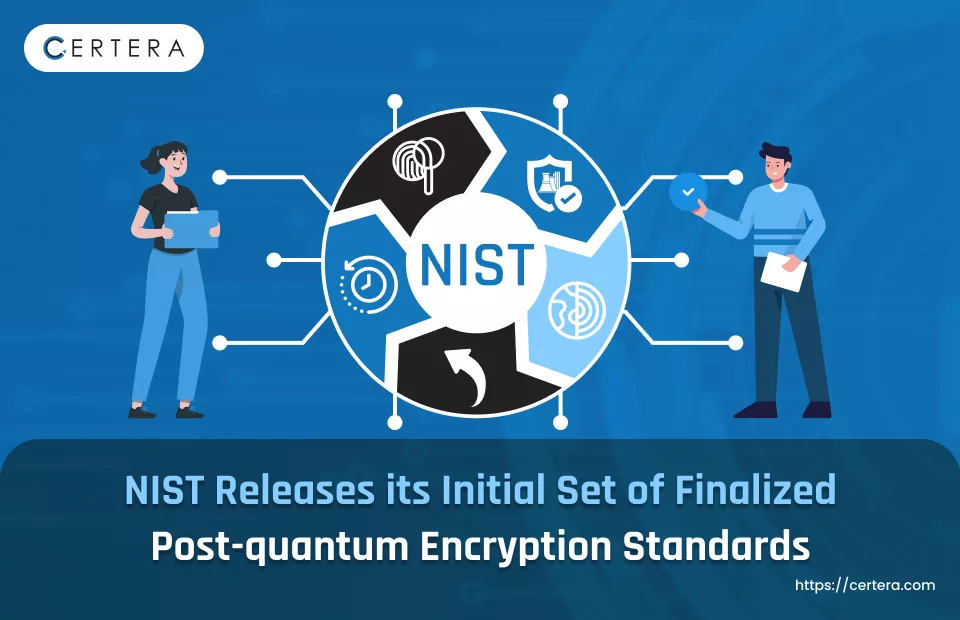
The wait is over. In August 2024, the National Institute of Standards and Technology (NIST) officially standardized the first set of algorithms designed to withstand attacks from future quantum computers. This isn't a theoretical exercise or a distant goal; it is the new baseline for securing digital assets. For crypto wallet users, the stakes are absolute: a compromised key means irreversible loss. There is no "forgot password" button for a blockchain.
NIST selected three primary algorithms to replace the aging Elliptic Curve Cryptography (ECC) and RSA standards that currently protect most wallets. ECC relies on the difficulty of solving discrete logarithm problems—a task quantum computers can solve exponentially faster using Shor's algorithm. The new standards shift to lattice-based cryptography, which relies on the complexity of high-dimensional geometric structures. While mathematically dense, the practical difference is this: quantum computers cannot easily break the lattice math, but they can easily break ECC.
The three selected algorithms serve distinct roles in wallet security:
- ML-KEM (Module-Lattice-based Key-Encapsulation Mechanism): Formerly known as Kyber, this is the standard for encryption. It secures the channel between your wallet and the blockchain, ensuring that transaction details remain private and unalterable during transmission.
- ML-DSA (Module-Lattice-based Digital Signature Algorithm): Formerly known as Dilithium, this handles authentication. It is the primary tool for signing transactions, proving you own the funds without revealing your private key. It is designed to be faster and more efficient for the high-volume signing required by daily crypto usage.
- SLH-DSA (Stateless Hash-Based Digital Signature Algorithm): Formerly known as SPHINCS+, this is a fallback signature scheme. It relies on hash functions rather than lattices, offering a different mathematical defense layer. It is slower and produces larger signatures, making it best suited for long-term archival or as a secondary security layer.
| Algorithm | Primary Role | Key Trait |
|---|---|---|
| ML-KEM (Kyber) | Encryption | Fast key exchange for secure channels |
| ML-DSA (Dilithium) | Digital Signatures | Efficient for high-frequency wallet transactions |
| SLH-DSA (SPHINCS+) | Digital Signatures | Hash-based fallback; larger signature size |
The transition to these standards is not instantaneous. Wallet providers must update their software to generate and verify these new algorithmic signatures. Until then, your current wallet is likely running on ECC, which remains secure against classical computers but vulnerable to a sufficiently powerful quantum machine. This creates a narrow window for action. As quantum computing power scales, the threat becomes immediate. Migrating to NIST-standardized wallets is no longer optional; it is the only way to ensure your assets survive the quantum era.
The Implementation Gap
The cryptographic standards are finally set, but the wallets protecting your assets have not caught up. In August 2024, the National Institute of Standards and Technology (NIST) released the first finalized post-quantum encryption standards. This official approval marks the end of the theoretical debate and the beginning of the urgent work to secure digital wealth. For crypto holders, this creates a narrow window of vulnerability. You are holding keys secured by classical mathematics in a market that has not yet upgraded its defenses.
The delay is not due to a lack of standards, but rather the engineering challenges of implementation. Post-quantum algorithms, particularly lattice-based cryptography, are significantly larger and slower than the Elliptic Curve Cryptography (ECC) currently used by Bitcoin and Ethereum. ECC is like a high-speed sports car: efficient and compact, but vulnerable to quantum attacks. Lattice-based cryptography is a heavy armored truck: it takes up more space on the blockchain and requires more processing power, but it can withstand the brute force of a quantum computer.
Most major wallets are still in the testing phase. While some experimental implementations exist, widespread adoption is stalled by the need to balance security with usability. Users cannot tolerate a wallet that is too slow to use or too large to store. This tension has created a dangerous gap between the availability of the solution and the deployment of the technology. Until this gap closes, your assets remain exposed to a threat that is no longer hypothetical.
The value at stake is immediate and tangible. A quantum-capable attacker does not need to guess your password; they can derive your private key from your public key. If you hold significant assets, the cost of inaction is total loss. The market must act quickly to bridge this divide before the threat becomes a reality.
How to migrate wallet cryptography
The threat of quantum decryption is not theoretical; it is a ticking clock. Once a quantum computer achieves cryptographic relevance, today’s elliptic curve signatures can be reversed, and funds stolen. Because blockchain transactions are immutable, losing keys to a quantum attack means losing assets forever. There is no "undo" button for a compromised private key.
Migration requires a structured transition from current standards to NIST-approved algorithms. Wallet providers must implement hybrid schemes that combine existing ECC signatures with new lattice-based signatures. This ensures security even if one algorithm family is later found to be vulnerable.
Identify every instance of ECDSA or Ed25519 in your codebase. Map which keys are generated, stored, and used for signing transactions. This inventory is the baseline for any migration effort.
Integrate NIST-standardized algorithms like ML-DSA (Dilithium) alongside your current ECC implementation. Hybrid signing requires generating both a traditional and a post-quantum signature for every transaction. This dual-layer approach protects against both classical and quantum attacks during the transition period.
Verify that hybrid signatures do not exceed network size limits or break existing wallet software. Test the new signatures on testnets to ensure they are valid and accepted by the blockchain. Compatibility testing prevents user errors during the upgrade.
Stay aligned with the National Institute of Standards and Technology. NIST’s Post-Quantum Cryptography project provides the authoritative standards for algorithm selection. Regularly check for updates to ensure your implementation remains compliant with the latest security benchmarks.
The transition is urgent. Users should monitor their wallet providers for announcements regarding post-quantum readiness. Delaying migration increases the risk of irreversible loss.
Post-Quantum Cryptography FAQs
When will quantum computers break Bitcoin?
Current estimates suggest a 10-15 year window before quantum computers can break elliptic curve cryptography (ECC). However, the "harvest now, decrypt later" threat is immediate. If your wallet uses standard ECC keys, your private key is vulnerable to being stolen and your funds drained once quantum capabilities mature.
What are the NIST PQC algorithms?
The National Institute of Standards and Technology (NIST) has standardized lattice-based algorithms like CRYSTALS-Kyber for encryption and CRYSTALS-Dilithium for signatures. Unlike ECC, which relies on discrete logarithms, lattice-based math is resistant to Shor's algorithm, the quantum method used to factor large numbers efficiently.
Is my current wallet safe?
Most legacy wallets rely on ECC or RSA, both of which are quantum-vulnerable. While Bitcoin addresses hide public keys until spending, any transaction exposes your key to quantum attacks. You must migrate to a wallet supporting NIST-approved PQC standards to ensure long-term security.
No comments yet. Be the first to share your thoughts!