Why quantum threats matter now
Your crypto assets are currently secured by elliptic curve cryptography (ECC), specifically ECDSA and Ed25519. These algorithms rely on the mathematical difficulty of factoring large prime numbers—a task that would take classical supercomputers billions of years to crack. However, this security assumption is about to change. Quantum computers, once they reach sufficient scale and stability, will be able to solve these problems in minutes using Shor’s algorithm.
The danger is not just theoretical. A major threat model known as "Harvest Now, Decrypt Later" is already in play. Adversaries are intercepting and storing encrypted blockchain transactions today, waiting for the day when quantum decryption becomes feasible. For long-term holders and institutional assets, this means data compromised now could be exposed in the future.
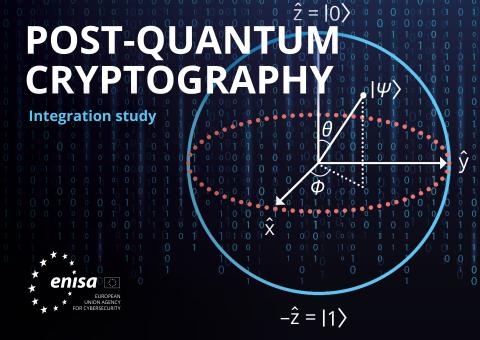
Post-quantum cryptography (PQC) is the solution. It involves new cryptographic algorithms designed to run on classical computers but resistant to attacks from both classical and quantum machines. The National Institute of Standards and Technology (NIST) is leading the global effort to standardize these algorithms, ensuring that digital assets remain secure in a post-quantum world.
The transition is urgent. Unlike traditional software updates, cryptographic changes require coordinated upgrades across wallets, exchanges, and blockchain protocols. Starting the migration to PQC before quantum computers become a practical threat is the only way to ensure the long-term integrity of your crypto assets.
NIST standards and algorithm choices
The National Institute of Standards and Technology (NIST) has finalized the first set of post-quantum cryptography standards, moving the industry from theoretical research to actionable implementation. For blockchain protocols holding crypto assets, these standards define the cryptographic primitives that will replace vulnerable elliptic curve methods like ECDSA and Ed25519 before large-scale quantum computers arrive.
NIST selected three core algorithms based on mathematical structures resistant to Shor’s algorithm, the quantum method capable of breaking current public-key cryptography. The primary choice for key encapsulation (encryption) is CRYSTALS-Kyber, chosen for its balance of security and performance. For digital signatures (authentication), NIST standardized CRYSTALS-Dilithium as the primary option, with FALCON and SPHINCS+ as alternatives for specific use cases requiring smaller signature sizes or stateless security.
The transition is not merely a software update; it requires rethinking how keys are stored, signed, and verified on-chain. Current wallet signatures rely on small key sizes that quantum computers will eventually crack. The new NIST standards introduce larger key and signature sizes, which impacts transaction throughput and storage costs on blockchains.
The table below compares the legacy elliptic curve methods currently securing most crypto assets against the NIST-standardized PQC algorithms. This comparison highlights the trade-offs in key size and computational overhead that developers must manage during migration.
Adopting these standards requires careful integration. CRYSTALS-Dilithium offers strong security but increases signature size by roughly 40-50 times compared to Ed25519. This expansion affects block space efficiency and network bandwidth. Protocols must optimize their consensus mechanisms and transaction formats to accommodate these larger payloads without compromising decentralization or speed. NIST’s selection provides a clear roadmap, but the engineering challenge lies in implementing these lattice-based and hash-based schemes efficiently within existing blockchain architectures.
How wallet providers can migrate to post-quantum signatures
Wallet developers and exchanges face a narrow window to integrate post-quantum cryptography before quantum computers can break current elliptic curve standards. The migration path requires balancing new security assumptions with the strict constraints of blockchain networks, where transaction size and signing speed directly impact user experience. Rather than waiting for a quantum threat to materialize, providers must adopt hybrid signatures now to ensure backward compatibility while establishing quantum-resistant foundations.
The process involves four distinct phases: selecting standards, implementing hybrid logic, updating client software, and validating performance. Each step builds on the previous one, ensuring that existing users can transact seamlessly while new transactions benefit from enhanced security.

Begin by integrating the finalized NIST standards, specifically MLDSA for digital signatures and ML-KEM for key encapsulation. These algorithms have undergone rigorous public scrutiny and offer a known baseline for security. Avoid experimental or non-standardized variants, as they may contain undiscovered vulnerabilities that could compromise assets. Prioritize MLDSA-65 or MLDSA-87 for high-value transactions where security is paramount.
Combine traditional ECDSA or Ed25519 signatures with MLDSA signatures in a single transaction. This hybrid approach ensures that if one algorithm is broken—either classically or quantumly—the other still protects the funds. The hybrid signature must be verifiable by existing nodes to maintain network compatibility. Implement this at the protocol layer so that the wallet can generate both signatures atomically, ensuring no gap in security coverage.
Deploy updates to mobile and desktop wallets that support the new hybrid transaction format. The update must handle the increased payload size of post-quantum signatures without causing transaction failures or significant delays. Test the integration across different operating systems and device architectures to ensure consistent performance. Provide clear user feedback during the update process to maintain trust and adoption rates.
Conduct stress testing to measure the impact of hybrid signatures on signing speed and transaction throughput. Post-quantum signatures are larger and computationally heavier, so optimize key generation and signing routines to minimize latency. Verify that the hybrid scheme does not introduce new attack vectors or side-channel vulnerabilities. Document the performance metrics and share them with the community to build confidence in the migration path.
This structured approach allows wallet providers to migrate gradually, reducing risk while preparing for the post-quantum era. By following these steps, providers can secure crypto assets against future quantum threats without disrupting current user experiences.
Market leaders in quantum-safe tech
The shift to post-quantum cryptography is no longer theoretical; it is a supply chain imperative. Major technology firms and specialized security vendors are currently defining the standards that will protect crypto assets against future quantum threats. These leaders are not just developing algorithms; they are integrating quantum-resistant protocols into existing infrastructure to ensure continuity.
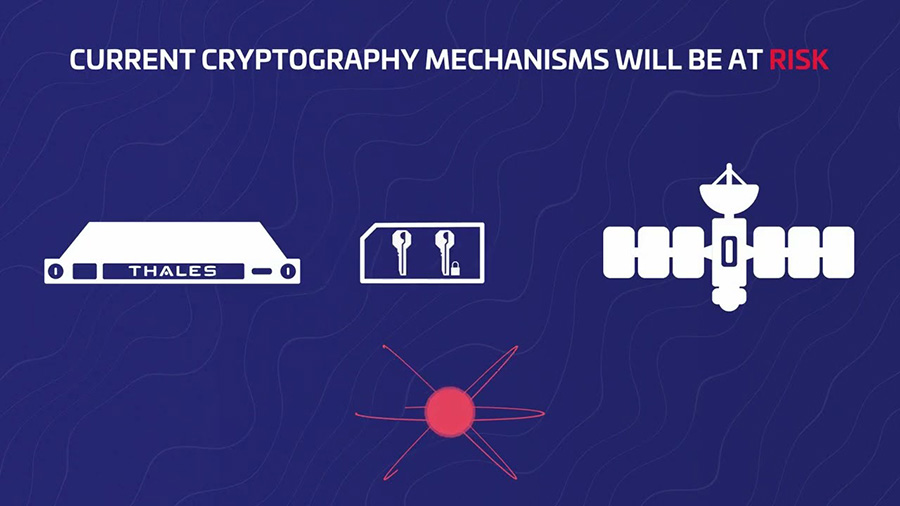
The market is dominated by established players with the resources to handle the computational overhead of new encryption methods. Key contributors include NXP Semiconductor, Thales, and AWS, which are embedding PQC into hardware security modules and cloud services. IBM and Utimaco are also critical, focusing on enterprise-grade key management systems that can handle the larger key sizes required by lattice-based cryptography.
Specialized firms like PQ Shield and Post-Quantum are driving innovation in lightweight PQC solutions, which are essential for IoT devices and blockchain nodes where processing power is limited. Meanwhile, DigiCert and Entrust are adapting certificate authorities to issue hybrid certificates that combine classical and post-quantum signatures, providing a safety net during the transition period.
These companies are moving from research to deployment. Their early adoption of NIST-standardized algorithms like CRYSTALS-Kyber ensures that crypto infrastructure remains secure against both classical and quantum attacks. The competition among these leaders is accelerating the availability of quantum-safe tools for financial institutions and crypto platforms.
Market reaction to quantum narratives
Bitcoin’s price action often reflects broader tech sentiment, but post-quantum cryptography updates introduce a unique volatility layer. When NIST or major infrastructure providers announce PQC milestones, the market sometimes interprets these as early signals of the "Q-Day" threat, causing short-term swings in risk assets.
The correlation is subtle. While PQC adoption is a long-term infrastructure play, immediate price movements are usually driven by speculative fears of wallet vulnerability rather than fundamental changes to Bitcoin’s protocol. Investors should distinguish between hype-driven dips and genuine security concerns.
Common questions about PQC and crypto
Post-quantum cryptography is shifting from theoretical research to active deployment. As the threat of quantum decryption looms, crypto holders and institutions are asking when their assets will be vulnerable and who is building the defenses.
Who are the leaders in PQC?
The post-quantum cryptography market is led by established tech and security giants. Key players include NXP Semiconductor, Thales, AWS, IBM, DigiCert, and Palo Alto Networks. These organizations are developing the standards and infrastructure needed to protect data against future quantum attacks.
When will quantum computers break Bitcoin?
Most experts estimate that cryptographically relevant quantum computers (CRQCs) capable of breaking Bitcoin’s SHA-256 or ECDSA are still 10-15 years away. However, the risk of "harvest now, decrypt later" means sensitive data should be protected now. Bitcoin’s upgradeable protocol allows for a coordinated migration to PQC signatures before quantum threats become immediate.
Is PQC adoption expensive for crypto users?
PQC algorithms often require larger key sizes, which can increase storage and bandwidth costs. However, the transition is largely handled by wallet providers and exchanges. For individual holders, the primary cost is the time required to update software and migrate assets to new PQC-compatible addresses.
No comments yet. Be the first to share your thoughts!