Why quantum computers threaten crypto assets
Current blockchain infrastructure relies on elliptic curve cryptography (ECC) and RSA to secure wallets, verify transactions, and manage digital identities. These systems depend on the mathematical difficulty of factoring large prime numbers or solving discrete logarithm problems. For classical computers, these tasks are computationally infeasible, providing a reliable shield for financial data.
The threat changes fundamentally with Shor’s algorithm. A sufficiently powerful quantum computer running Shor’s algorithm can solve the specific mathematical problems underpinning ECC and RSA in polynomial time. This capability effectively neutralizes the security guarantees that currently protect crypto assets. The time required to break these encryption standards would drop from thousands of years to minutes or seconds.
This vulnerability is not a distant possibility but an engineering reality. As noted by NIST, post-quantum cryptography is defined specifically as a defense against potential cyberattacks from quantum computers. The transition from classical to quantum-resistant algorithms is required to prevent the total collapse of trust in blockchain verification and private key integrity.
The financial implications are severe. If quantum computers achieve the scale needed to run Shor’s algorithm, existing digital signatures could be forged, and private keys derived from public keys. This would allow unauthorized access to wallets and the manipulation of transaction histories. The industry must prepare for this shift by adopting NIST-standardized post-quantum algorithms before quantum hardware reaches the necessary maturity.
nist's final post-quantum cryptography standards
The National Institute of Standards and Technology has moved from proposal to implementation, finalizing the algorithms that will underpin the next generation of digital security. For crypto asset infrastructure, these standards are not suggestions; they are the new baseline for protecting private keys and transaction data against quantum decryption. The shift from classical elliptic-curve cryptography to lattice-based and hash-based systems marks a fundamental engineering pivot, requiring immediate attention from custodians and protocol developers.
NIST has selected three primary algorithms to replace current public-key infrastructure, each serving a distinct cryptographic function. ML-KEM (formerly Kyber) handles key encapsulation, the process of securely exchanging symmetric keys. ML-DSA (formerly Dilithium) provides digital signatures, verifying the authenticity of transactions and account ownership. SLH-DSA (formerly SPHINCS+) offers a hash-based signature scheme designed as a conservative backup, relying on the security of hash functions rather than lattice structures. This multi-algorithm approach ensures redundancy; if one mathematical foundation is compromised, the others remain intact.
| Algorithm | Primary Use | Mathematical Basis |
|---|---|---|
| ML-KEM | Key Encapsulation (Encryption) | Module-Lattice |
| ML-DSA | Digital Signatures | Module-Lattice |
| SLH-DSA | Digital Signatures (Backup) | Hash-Based |
The selection of ML-KEM and ML-DSA reflects a preference for efficiency and performance in high-frequency environments, which is critical for blockchain consensus and rapid settlement. However, the larger key and signature sizes compared to classical algorithms like ECDSA require adjustments in storage and bandwidth. Crypto assets must account for this overhead in smart contract design and wallet infrastructure. The transition is not merely a software update but a structural change to how data is packaged and verified.
ML-DSA and SLH-DSA offer a choice for signature verification. ML-DSA is optimized for speed and smaller signature sizes, making it suitable for everyday transactions. SLH-DSA, while producing larger signatures, provides a different security assumption. If lattice-based cryptography is ever broken by a new quantum algorithm, SLH-DSA remains secure. This layered defense is essential for long-term value preservation in digital assets.
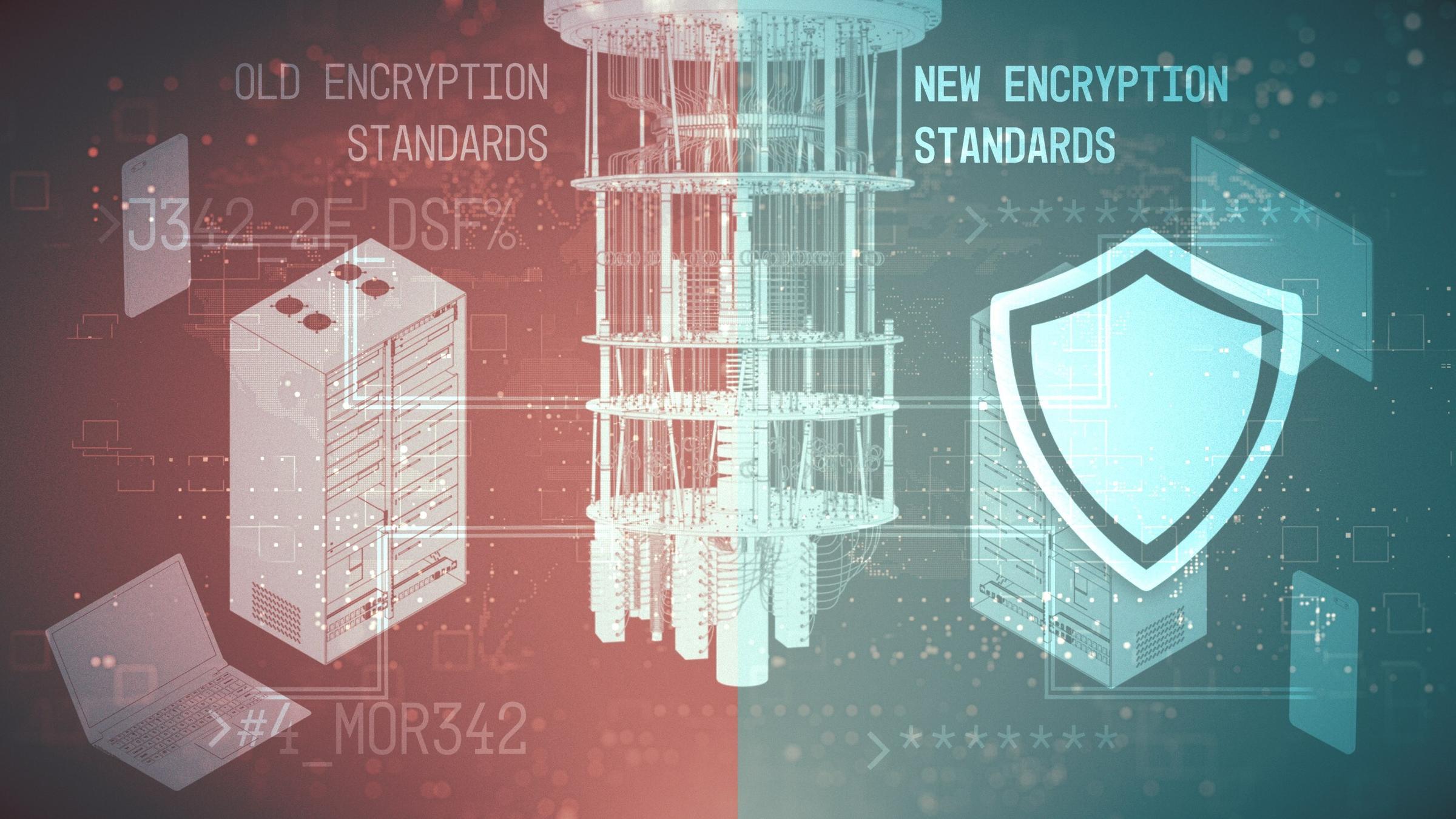
Implementation timelines are tight. NIST’s final standards are now available for integration, and CISA has urged federal agencies to begin migration immediately. For the private sector, particularly those holding significant crypto assets, waiting for industry-wide consensus is a risk. Early adopters of PQC-compliant wallets and custody solutions will demonstrate resilience against future quantum threats. The engineering reality is clear: classical cryptography is no longer sufficient for high-stakes digital finance.
How crypto wallets adopt quantum-resistant encryption
The transition to post-quantum security requires a hybrid approach, combining classical algorithms with NIST-standardized PQC methods. This dual-layer strategy ensures that if one system fails under quantum attack, the other maintains integrity. Hardware wallet manufacturers and software key providers must update their firmware and libraries to support this hybrid model without breaking compatibility with existing blockchain protocols.
Technical migration begins with algorithm selection. NIST has standardized four primary algorithms: ML-KEM (formerly CRYSTALS-Kyber) for key encapsulation, and ML-DSA (formerly CRYSTALS-Dilithium), SLH-DSA, and FALCON for digital signatures. Wallets must integrate these into their key generation and signing processes. For instance, a Bitcoin transaction signature might now use a hybrid of ECDSA and ML-DSA, ensuring that both classical and quantum threats are mitigated simultaneously.
Implementation challenges are significant. Hardware wallets have limited memory and processing power, requiring optimized PQC implementations. Software wallets must update their cryptographic libraries, such as OpenSSL or BoringSSL, to include PQC support. Blockchain protocols themselves must be prepared to accept and verify these new signature formats. This requires coordination across the entire ecosystem, from node operators to wallet developers.
CISA emphasizes that this migration is not optional but a critical security imperative. Their Post-Quantum Cryptography Initiative provides guidelines for integrating PQC into existing systems. Organizations must audit their current cryptographic assets and plan for a phased rollout of hybrid cryptography to ensure seamless transition and sustained security against quantum threats.
Migration timeline for digital asset holders
The transition to post-quantum cryptography (PQC) is not an event but a multi-year engineering process. For crypto asset holders, the immediate threat is not quantum decryption of past transactions, but the risk of "harvest now, decrypt later" attacks on future key exchanges. Exchanges and wallet providers must begin migrating to hybrid cryptographic schemes immediately to protect new deposits and withdrawals.
Immediate phase: hybrid adoption
Current standards require a hybrid approach, combining traditional algorithms (like ECDH) with NIST-approved PQC algorithms (such as ML-KEM). This ensures that if either system is compromised, the asset remains secure. Users should prioritize wallets and exchanges that explicitly advertise "quantum-resistant" or "hybrid" key exchange protocols. CISA recommends that agencies and critical infrastructure partners begin testing these hybrid implementations now to identify integration bottlenecks before widespread deployment is required.
Mid-term phase: algorithm consolidation
As the ecosystem matures, providers will phase out weaker legacy algorithms in favor of the finalized NIST standards. This phase involves updating firmware, smart contracts, and backend infrastructure to support the larger key sizes and signature lengths inherent to PQC. Users must remain vigilant, as older hardware wallets may lack the processing power to handle these increased data loads without significant latency.
Long-term phase: full transition
Full migration to PQC-only standards will likely occur after 2030, once quantum computing capabilities threaten to break current elliptic curve cryptography. Until then, the focus remains on maintaining hybrid security. Asset holders should regularly update their software and verify that their custodians are following NIST’s timeline for standard updates and deprecation of weak cryptographic primitives.
Check if your primary exchange or self-custody wallet provider has published a roadmap for PQC integration. Look for explicit mentions of NIST standards like ML-KEM or ML-DSA in their technical documentation or security whitepapers.

If your wallet offers a "quantum-resistant" or "hybrid" mode for key generation and signing, enable it immediately. This dual-layer approach protects your assets against both classical and emerging quantum threats during the transition period.
Subscribe to updates from CISA’s Post-Quantum Cryptography Initiative and NIST’s PQC program. These agencies provide the official timelines for algorithm deprecation and recommended migration windows that critical infrastructure and financial sectors must follow.
frequently asked questions about pqc and crypto
When will quantum computers break Bitcoin?
Quantum computers capable of breaking Bitcoin’s elliptic curve cryptography (ECC) do not exist today. Experts estimate that such machines require millions of stable qubits, whereas current technology operates in the hundreds. NIST standards are designed to provide a buffer against this future threat, ensuring that assets remain secure well before quantum capabilities reach that scale.
Are current crypto wallets safe from quantum attacks?
Most modern wallets rely on ECC for digital signatures, which is theoretically vulnerable to quantum attacks. However, the immediate risk is low because the necessary computing power is not yet available. Migration to post-quantum standards is a long-term engineering effort. Users should monitor for wallet updates that integrate NIST-approved algorithms rather than panic over near-term threats.
How long does PQC migration take?
Migrating cryptographic infrastructure is a multi-year process. It involves updating protocols, redistributing software, and reissuing keys across the entire network. NIST’s phased approach allows for gradual adoption. Early implementers are testing hybrid schemes that combine classical and post-quantum algorithms to mitigate uncertainty during the transition period.
No comments yet. Be the first to share your thoughts!