The quantum threat to blockchain keys
The foundation of modern crypto wallet security rests on elliptic curve cryptography (ECC). This mathematical framework secures your private keys by making it computationally infeasible for classical computers to reverse-engineer your public key from your address. For years, this barrier has held firm. However, the emergence of cryptographically relevant quantum computers threatens to dismantle this protection entirely.
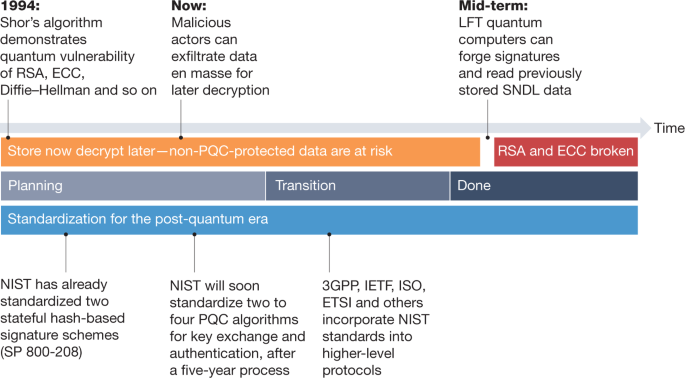
The specific vulnerability lies in Shor’s algorithm. Unlike classical algorithms that require exponential time to solve certain mathematical problems, Shor’s algorithm can factor large integers and solve discrete logarithm problems in polynomial time. For blockchain, this means the discrete logarithm problem underpinning ECC can be solved efficiently. A quantum computer running this algorithm could derive your private key from your public address in minutes, rendering your assets instantly accessible to anyone with access to such hardware.
Warning: Shor's algorithm can factor large numbers exponentially faster than classical computers, breaking RSA and ECC encryption.
This threat is not merely theoretical; it is a timeline issue. The concern is "harvest now, decrypt later," where adversaries steal encrypted data or public keys today, storing them until quantum capabilities mature. By 2026, the window to migrate to quantum-resistant cryptography is closing. NIST has already standardized quantum-resistant algorithms, such as CRYSTALS-Kyber, to replace vulnerable ECC. Securing your wallet against this shift is no longer optional—it is a critical step in ensuring long-term asset preservation.
The transition requires moving from traditional ECC-based key generation to hybrid or fully post-quantum schemes. This involves updating wallet software to support NIST-approved algorithms and potentially migrating existing funds to new addresses that utilize these stronger cryptographic standards. Ignoring this shift leaves your digital assets exposed to a threat that classical security measures cannot mitigate.
NIST standardizes quantum-resistant algorithms
The transition to post-quantum cryptography is no longer theoretical. NIST has finalized the standards that will define the landscape of digital asset protection and beyond. These algorithms replace the mathematical foundations currently protecting your private keys with structures resistant to quantum attacks.
The core of this migration rests on three primary standards: ML-KEM, ML-DSA, and SLH-DSA. Understanding their distinct roles is essential for wallet developers and users alike.
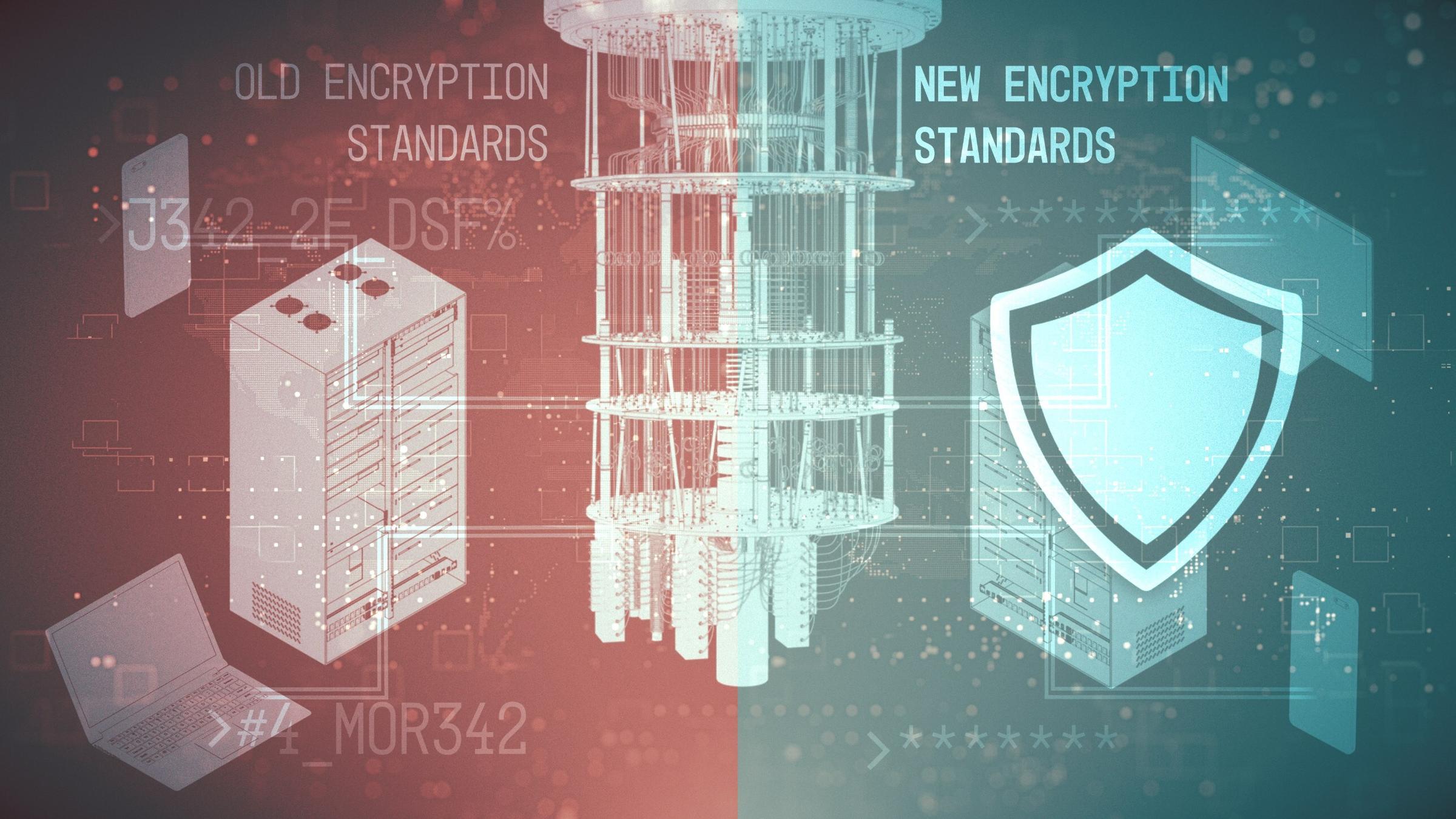
ML-KEM: The New Encryption Standard
Formerly known as CRYSTALS-Kyber, ML-KEM (Module-Lattice-Based Key-Encapsulation Mechanism) handles the encryption side of the handshake. It secures the communication channel between the wallet and the blockchain network. ML-KEM is designed to be efficient, ensuring that transaction signing remains fast even as security parameters increase.
ML-DSA: Digital Signatures
ML-DSA (Module-Lattice-Based Digital Signature Algorithm), previously CRYSTALS-Dilithium, replaces ECDSA for signing transactions. It provides the proof of ownership required to move funds. ML-DSA is the workhorse of the new standard, offering a balance of signature size and computational speed suitable for most daily transactions.
SLH-DSA: Hash-Based Signatures
SLH-DSA (Stateless Hash-Based Digital Signature Algorithm), based on SPHINCS+, offers a different security model. It relies on hash functions rather than lattice problems, providing a robust backup if lattice-based cryptography is ever compromised. SLH-DSA signatures are larger, making it ideal for long-term archival or infrequent high-value transfers rather than high-frequency trading.
Algorithm Comparison
The table below outlines the technical distinctions between the selected NIST quantum-resistant algorithms. Wallet implementations must choose the appropriate algorithm based on the specific security and performance requirements of the use case.
| Algorithm | Primary Role | Typical Key Size | Typical Signature Size |
|---|---|---|---|
| ML-KEM | Key Encapsulation | ~1KB | N/A |
| ML-DSA | Digital Signatures | ~1-2KB | ~3-5KB |
| SLH-DSA | Digital Signatures | ~1KB | ~10-30KB |
Migration steps for 2026 compliance
The transition from Elliptic Curve Cryptography (ECC) to post-quantum cryptography is not a simple software update; it is a fundamental architectural shift. By 2026, compliance standards will require hybrid signing mechanisms that combine classical ECC keys with NIST-approved quantum-resistant algorithms. This dual-layer approach ensures that even if a quantum computer breaks ECC, your assets remain protected by lattice-based signatures like CRYSTALS-Kyber or CRYSTALS-Dilithium.
Before implementing new standards, identify every instance of ECDSA or EdDSA in your wallet’s codebase. Most legacy wallets rely heavily on these algorithms for key generation and transaction signing. Use static analysis tools to map these dependencies against the NIST PQC standards (FIPS 203, 204, and 206). This audit reveals which modules require immediate refactoring and which can remain classical until hybrid support is fully integrated.
Adopt a hybrid key pair structure where a single wallet address derives from both an ECC key and a PQC key. When a user generates a new address, the wallet creates two distinct public keys. The address is then derived from a hash of both keys combined. This ensures backward compatibility with existing blockchain protocols while simultaneously establishing a quantum-resistant anchor. The hybrid approach mitigates the risk of future quantum attacks without breaking current network consensus rules.

Transaction signing is the most critical point of failure. Modify the signing process to produce hybrid signatures: one classical ECDSA signature and one NIST-standard PQC signature (e.g., Dilithium). While this increases transaction size, it is necessary for security. Wallet developers must optimize serialization to keep gas fees manageable. The goal is to ensure that a transaction is only considered valid if both signatures are verified, effectively double-locking the asset against both classical and quantum threats.

Simulation is not enough; you must test against real-world quantum-resistant benchmarks. Use the NIST PQC competition reference implementations to stress-test your wallet’s performance. Measure the latency of hybrid signing operations and the bandwidth required for transaction propagation. If the hybrid signature size causes network congestion or delays, you may need to implement signature compression techniques or batch signing protocols to maintain usability.
A sudden switch to PQC can confuse users and break compatibility with older wallet versions. Implement a phased rollout where hybrid signing is enabled by default for new wallets, while existing wallets receive a mandatory update prompt. Clearly communicate the security benefits without inducing panic. Provide transparent documentation explaining that the upgrade is a proactive measure against future quantum threats, not a response to an immediate breach.
Post-quantum cryptography is still evolving. The NIST standards are finalized, but implementations may require adjustments as new vulnerabilities are discovered. Establish a continuous monitoring process for updates from NIST and other cryptographic bodies. Subscribe to official security advisories and participate in open-source PQC communities to stay ahead of potential issues. Regularly update your cryptographic libraries to incorporate the latest patches and optimizations.
Hybrid schemes balance security and performance
Pure post-quantum cryptography algorithms are often significantly larger and slower than the elliptic curve cryptography they replace. Deploying them exclusively right now would degrade transaction speeds and increase bandwidth costs for infrastructure. Conversely, relying solely on current ECC standards leaves wallets vulnerable to future quantum decryption attacks.
The recommended interim strategy is hybrid cryptography. This approach combines traditional ECC with NIST quantum-resistant algorithms, such as CRYSTALS-Kyber. A hybrid signature or key exchange requires both the classical and post-quantum components to be valid. This ensures that security remains intact even if one algorithm is broken, whether by a classical attacker or a quantum computer.
Hybrid schemes act as a bridge, allowing the industry to adopt NIST standards without sacrificing performance. By running both algorithms in parallel, wallets gain quantum resistance immediately while maintaining compatibility with existing networks. This dual-layer protection is the most pragmatic path forward until quantum computers become cryptographically relevant.
Future-proof blockchain encryption with PQC
The transition to post-quantum cryptography is not a speculative exercise; it is a critical infrastructure upgrade. Blockchain protocols must adopt NIST quantum-resistant algorithms now to prevent "harvest now, decrypt later" attacks. Threat actors are currently storing encrypted transaction data, waiting for quantum computers to break current elliptic curve cryptography. Once those machines arrive, unprotected wallets will be vulnerable to immediate theft.
NIST has standardized the first set of post-quantum algorithms, including CRYSTALS-Kyber for key encapsulation and CRYSTALS-Dilithium for digital signatures. These standards provide the mathematical foundation for securing digital assets against quantum threats. However, adoption is not instantaneous. Protocol developers face the complex task of integrating these larger, more computationally intensive algorithms into existing blockchain architectures without compromising transaction speed or increasing gas fees.
The timeline for widespread adoption is tight. While quantum computers capable of breaking RSA or ECDSA do not yet exist, the development cycle for blockchain upgrades is long. Protocols must test, audit, and implement these changes well before quantum capabilities mature. Delaying migration leaves user funds exposed to a threat that is technically inevitable, not hypothetical.
This shift requires coordinated action across the entire ecosystem. Wallet providers, exchanges, and layer-1 protocols must prioritize PQC integration. Early adopters will mitigate risk, while late movers face potential catastrophic losses as the quantum threat becomes a reality.
Common questions about post-quantum cryptography
As the 2026 deadline for quantum threats approaches, wallet providers and users face urgent decisions regarding migration. Below are the most frequent technical questions regarding the transition to NIST-standardized post-quantum cryptography.
No comments yet. Be the first to share your thoughts!