The quantum threat to blockchain keys
Your Bitcoin wallet, Ethereum address, and other blockchain assets rely on public-key cryptography, specifically ECDSA (Elliptic Curve Digital Signature Algorithm) and RSA. These mathematical systems form the foundation of digital trust by making it computationally infeasible for classical computers to derive a private key from a public address. However, this security model faces an existential threat from quantum computing.
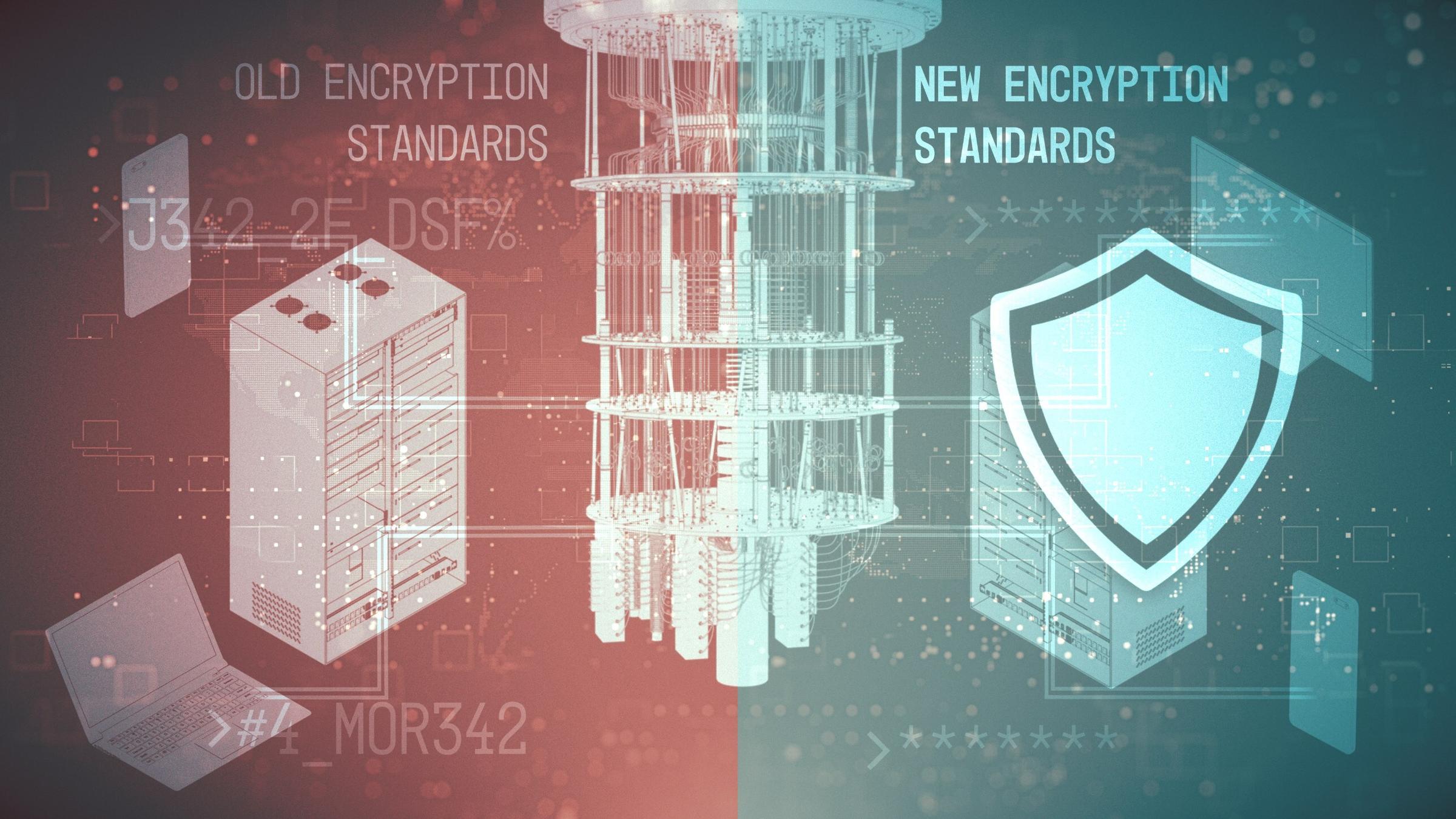
Shor’s algorithm can theoretically solve the mathematical problems underlying ECDSA and RSA in polynomial time. While current quantum computers lack the qubits and coherence stability to break 256-bit elliptic curves today, the timeline for fault-tolerant quantum machines is the primary concern. The National Institute of Standards and Technology (NIST) is leading the global effort to standardize post-quantum cryptography to replace these vulnerable algorithms src-serp-1.
The most immediate danger is not a future brute-force attack, but "harvest now, decrypt later." Adversaries are already collecting encrypted blockchain transactions and storing them. Once a quantum computer capable of running Shor’s algorithm becomes available, these stored datasets can be decrypted, revealing private keys and allowing attackers to steal funds from addresses that have only ever appeared on the public ledger. For long-term holders, this means your current static address is not as secure as you think once quantum capabilities mature.
Warning: Harvest now, decrypt later: Attackers are stealing encrypted data today to decrypt it once quantum computers are powerful enough.
NIST has already published initial standards for post-quantum cryptographic algorithms, signaling that the transition away from ECDSA/RSA is a regulatory and technical imperative, not just a theoretical exercise. Wallet providers and blockchain networks must upgrade their cryptographic stacks before quantum computers reach the necessary scale, or they risk obsolescence and loss of user funds.
NIST’s finalized post-quantum standards
The National Institute of Standards and Technology (NIST) has completed its rigorous selection process for post-quantum cryptography (PQC), establishing the first global standards for securing data against quantum computing threats. For blockchain wallets and financial infrastructure, these standards are not optional recommendations; they are the baseline requirements for future-proofing digital assets. The selected algorithms address two distinct cryptographic needs: key encapsulation for encryption and digital signatures for identity verification.
ML-KEM: Securing the Key Exchange
NIST selected ML-KEM (Module-Lattice-Based Key-Encapsulation Mechanism), formerly known as Kyber, as the primary standard for key establishment. In blockchain transactions, ML-KEM secures the channel through which sensitive data and keys are exchanged between wallets and nodes. It replaces older, quantum-vulnerable methods like ECDH (Elliptic Curve Diffie-Hellman). By using lattice-based mathematics, ML-KEM ensures that even a quantum computer cannot derive the shared secret from the public key exchanged during the handshake process.
ML-DSA: Signing Transactions
For verifying ownership and authorizing transactions, NIST chose ML-DSA (Module-Lattice-Based Digital Signature Algorithm), based on the Dilithium algorithm. ML-DSA replaces ECDSA and EdDSA signatures currently used in Bitcoin and Ethereum. It provides a quantum-resistant way for a wallet to prove it controls the private key without revealing it. While ML-DSA offers strong security and reasonable performance, its signature sizes are larger than traditional elliptic curve signatures, which impacts blockchain storage and bandwidth requirements.
SLH-DSA: The One-Time Alternative
NIST also standardized SLH-DSA (Stateless Hash-Based Digital Signature Algorithm), based on SPHINCS+. Unlike ML-DSA, SLH-DSA relies on hash functions rather than lattice structures. It is designed for scenarios where a single key pair must remain secure for decades, even if the signing process is imperfect. However, SLH-DSA produces significantly larger signatures and is computationally heavier to generate. It is best suited for long-term archival or specific high-security niches rather than high-frequency trading or everyday wallet interactions.
Algorithm Comparison
The table below compares the three finalized NIST standards by their primary use case, key size, and signature size. These metrics directly influence wallet storage, transaction fees, and network bandwidth.
| Algorithm | Primary Use | Key Size | Signature Size |
|---|---|---|---|
| ML-KEM | Key Encapsulation | ~1KB | ~1KB |
| ML-DSA | Digital Signatures | ~1-3KB | ~3-6KB |
| SLH-DSA | Long-Term Signatures | ~32-64KB | ~16-64KB |
Market Impact on Crypto Infrastructure
The transition to PQC standards introduces immediate overhead for blockchain networks. Larger signatures and keys mean higher gas fees and increased node storage demands. As quantum computing capabilities advance, the cost of maintaining legacy systems will rise, making the upgrade to NIST standards a financial imperative for exchanges and wallet providers.
Migration timeline for wallet providers
The window to upgrade digital asset wallets is closing. NIST’s finalization of FIPS 203, 204, and 205 establishes the new baseline for post-quantum cryptography, but the technical debt for wallet providers is massive. This isn’t a simple library swap; it requires re-architecting how keys are generated, stored, and transmitted to prevent "harvest now, decrypt later" attacks.
The 2026 deadline is not arbitrary. It represents the point where legacy elliptic-curve cryptography (ECC) is expected to be vulnerable to sufficiently powerful quantum computers. For custodians and developers, delaying migration invites obsolescence and catastrophic financial risk. The following steps outline the critical path to compliance.
Map every instance of ECC (secp256k1) and RSA in your codebase. Identify where keys are generated, signed, or verified. This includes smart contract wallets, hardware security modules (HSMs), and any third-party SDKs. You cannot migrate what you haven’t inventoried.

Implement hybrid signatures that combine classical ECC with post-quantum algorithms like ML-DSA. This dual-layer approach ensures that if one algorithm is broken, the other still protects the user’s assets. NIST standards mandate this transition to maintain security during the overlap period.

Post-quantum signatures are significantly larger than ECC signatures. A single ML-DSA signature can exceed 2.5 kilobytes, compared to ECC’s ~64 bytes. Wallet providers must optimize transaction serialization and ensure their infrastructure can handle the increased bandwidth and gas costs without breaking user experience or transaction validity.
Replace legacy key generation routines with NIST-approved post-quantum key encapsulation mechanisms (KEMs) like ML-KEM. This involves upgrading HSMs, secure enclaves, and client-side libraries. Ensure backward compatibility with older wallets during the transition phase to prevent loss of access for non-upgraded users.
Before mainnet deployment, subject your hybrid implementation to rigorous security audits. Focus on side-channel attacks and implementation flaws in the lattice-based algorithms. Verify that the hybrid scheme does not degrade performance below acceptable thresholds for mobile and web clients.
The cost of inaction is higher than the cost of migration. Wallets that remain on legacy cryptography will become targets for quantum-enabled attackers and eventually face rejection by exchanges and regulators. Start the audit now.
The Performance Cost of Quantum-Resistant Security
Switching to post-quantum cryptography is not a simple software update; it is a structural overhaul that introduces significant computational and storage overhead. The primary trade-off lies in the sheer size of the cryptographic material. NIST-standardized algorithms like ML-DSA require signatures that are roughly 1 to 2 kilobytes in size, compared to the ~64 bytes used by traditional ECDSA signatures. This fifteen-fold increase in data volume directly impacts transaction fees and network bandwidth, particularly on blockchains with strict block size limits.
For mobile wallets, the implications are equally tangible. Processing these larger keys and signatures demands more CPU cycles and memory, leading to slower transaction signing times and increased battery drain. Users may notice a delay when confirming payments, a friction point that could hinder mainstream adoption if not addressed through optimization. The inefficiency of these new algorithms is the most cited barrier to widespread deployment, as noted by technical communities analyzing the transition challenges.
To mitigate these costs, developers are exploring hybrid approaches and optimized lattice-based implementations. However, the immediate reality is that quantum-resistant security comes at a price: higher fees and slower performance. Wallet providers must balance this security upgrade against user experience, ensuring that the transition to post-quantum standards does not render digital asset management too cumbersome for everyday use.
Secure Your Wallets Before the Deadline
The window to protect your crypto assets from future quantum threats is closing. You cannot rely on wallet providers to issue these updates automatically without your intervention, and waiting until the last minute risks leaving your funds exposed. Start by auditing your current setup immediately.
Audit Your Wallet Versions
Check the software version of every wallet you use daily. Legacy versions relying on ECDSA signatures are vulnerable. Prioritize wallets that have already integrated NIST-approved post-quantum algorithms like CRYSTALS-Kyber. If your current provider has not announced a migration path, consider moving your assets to a compliant alternative before the 2026 deadline.
Prioritize Hardware Wallets
Hardware wallets offer the strongest defense because they sign transactions offline. Look for devices from major manufacturers that explicitly list PQC support in their firmware updates. This ensures your private keys remain isolated from internet-connected threats, even as the underlying cryptographic standards shift.
Monitor NIST Announcements
Stay informed through official channels rather than speculative blogs. The National Institute of Standards and Technology (NIST) publishes the definitive standards and implementation guidelines. Subscribe to their Post-Quantum Cryptography project page at csrc.nist.gov to receive verified updates on which algorithms are approved and when they become mandatory for widespread adoption.
No comments yet. Be the first to share your thoughts!