The quantum threat to wallet security
Current wallet security relies on elliptic curve cryptography (ECC) to generate public and private keys. This mathematical framework is efficient and secure against classical computers, but it is fundamentally vulnerable to quantum machines running Shor's algorithm. A sufficiently powerful quantum computer can reverse the one-way functions that protect your keys, allowing an attacker to derive your private key from your public address and drain your assets.
The danger is not just theoretical. Attackers are already practicing "harvest now, decrypt later" (HNDL). They collect encrypted transactions and stored keys today, waiting for quantum hardware to mature. By the time quantum computers are viable, your "secure" funds will be exposed. This threat model makes immediate migration to post-quantum cryptography essential for high-stakes assets, as the data you hide now is the data they will steal later.
NIST is leading the global effort to standardize post-quantum cryptography to address this looming threat. Their project defines the new algorithms that will replace ECC, ensuring electronic information remains secure against future quantum attacks. Ignoring these standards leaves your wallet exposed to a threat that is mathematically inevitable, not just technically possible.
NIST PQC standards 2026 explained
The National Institute of Standards and Technology (NIST) has finalized the first set of cryptographic algorithms designed to withstand attacks from future quantum computers. These standards, known as post-quantum cryptography (PQC), replace the mathematical foundations currently used to secure digital wallets and blockchain transactions. Without this transition, stored private keys could be exposed once large-scale quantum hardware becomes operational.
The initial standards focus on two primary functions: key encapsulation for encryption and digital signatures for authentication. Each serves a distinct role in protecting user assets.
ML-KEM: Securing Key Exchange
ML-KEM (Module-Lattice-Based Key-Encapsulation Mechanism), formerly known as Kyber, is the standard for key exchange. It allows two parties to securely establish a shared secret over an insecure channel. In the context of crypto wallets, ML-KEM protects the transmission of session keys during transactions. This ensures that even if a quantum computer intercepts the data, it cannot derive the private key used to sign or authorize the transfer of funds.
ML-DSA: Authenticating Transactions
ML-DSA (Module-Lattice-Based Digital Signature Algorithm), based on the previous Falcon and Dilithium designs, handles digital signatures. Every time you sign a transaction on a blockchain, ML-DSA algorithms generate a cryptographic proof that you own the assets without revealing your private key. This standard ensures that wallet signatures remain valid and unforgeable in a post-quantum era, maintaining the integrity of the ledger.
SLH-DSA: Stateless Hash Signatures
SLH-DSA (Stateless Hash-Based Digital Signature Algorithm), derived from SPHINCS+, offers an alternative approach based on hash functions rather than lattices. While ML-DSA is the primary recommendation for most general-purpose applications, SLH-DSA provides a highly secure fallback for specific use cases where lattice-based assumptions might be questioned. Its stateless nature means it does not require tracking the number of times a key has been used, reducing the risk of catastrophic failure due to implementation errors.
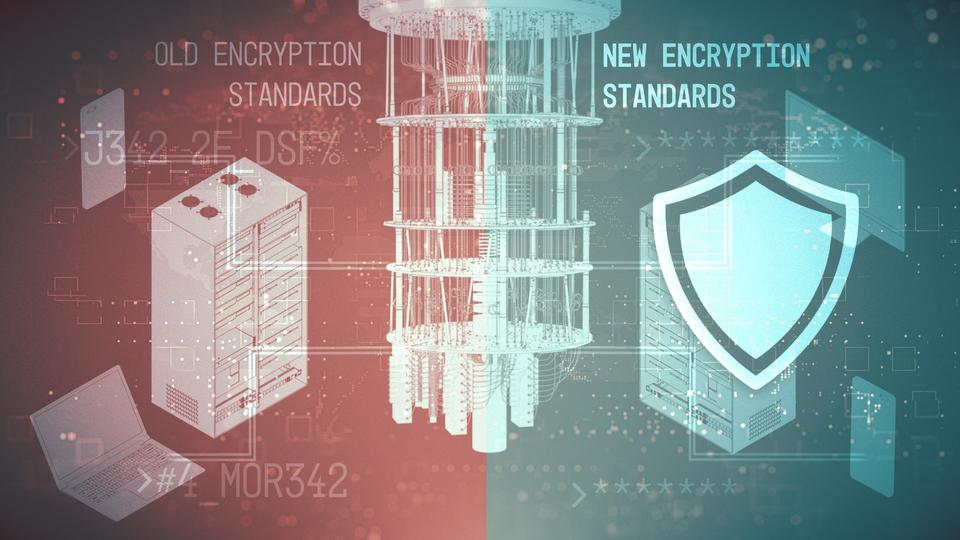
Comparison of Traditional and Post-Quantum Standards
The shift from traditional elliptic curve cryptography (ECC) to NIST PQC standards introduces significant changes in data size and processing requirements. The table below highlights the practical differences wallet developers must account for.
| Feature | Traditional (ECC/secp256k1) | NIST PQC (ML-DSA/ML-KEM) |
|---|---|---|
| Key Size | ~32 bytes | ~1-3 KB |
| Signature Size | ~64 bytes | ~2-4 KB |
| Computational Overhead | Low | Moderate to High |
| Quantum Resistance | No | Yes |
Wallet infrastructure must now accommodate these larger payloads. While the increase in data size is negligible for a single transaction, it impacts storage requirements and network bandwidth. Developers are advised to test wallet compatibility with these new standards well before the 2026 enforcement deadlines to ensure seamless user experiences.
Crypto wallet security migration steps
Post-Quantum Cryptography works best as a clear sequence: define the constraint, compare the realistic options, test the tradeoff, and choose the path with the fewest hidden costs. That order keeps the advice usable instead of decorative. After each step, pause long enough to check whether the recommendation still fits the reader's actual situation. If it depends on perfect timing, unusual access, or a best-case budget, include a simpler fallback.

Securing blockchain networks against quantum threats
Blockchain protocols must adapt their consensus mechanisms and transaction signing processes to remain secure against quantum adversaries. The transition to post-quantum cryptography is not merely a software update; it requires network-wide coordination to ensure that legacy nodes and quantum-resistant nodes can interoperate during the migration period.
Upgrading consensus and signing algorithms
Current blockchain security relies heavily on elliptic curve cryptography for digital signatures. A sufficiently powerful quantum computer could break these signatures, allowing attackers to forge transactions and drain wallets. Protocols must integrate lattice-based or hash-based post-quantum cryptographic algorithms into their signature schemes. This change must be implemented across the entire network, from core developers to node operators, to maintain consensus integrity.
Network-wide coordination and hard forks
Implementing these changes typically requires a coordinated hard fork. Unlike standard upgrades, this fork must ensure that all participants adopt the new cryptographic standards simultaneously. If even a small percentage of nodes remain on legacy algorithms, the network becomes vulnerable to double-spending attacks or chain splits. Governance models must facilitate this consensus, ensuring that the migration to post-quantum cryptography is viewed as a critical infrastructure necessity rather than an optional feature.
| Component | Current | Post-Quantum |
|---|---|---|
| Digital Signatures | ECDSA / Ed25519 | Dilithium / SPHINCS+ |
| Key Exchange | ECDH | Kyber / NTRU |
| Consensus Impact | Low latency | Increased signature size |
Market impact and wallet provider updates
The transition to post-quantum cryptography is no longer a theoretical exercise; it is becoming a competitive differentiator for wallet providers. As quantum computing capabilities advance, the risk of "harvest now, decrypt later" attacks—where adversaries steal encrypted private keys today to unlock them once quantum computers are powerful enough—has pushed major platforms to act.
Several leading custodians and non-custodial wallet providers have already begun piloting lattice-based cryptographic schemes. These early adopters are testing NIST-standardized algorithms like CRYSTALS-Kyber to secure key exchanges without disrupting user experience. This proactive stance is critical for maintaining user trust, as a single quantum break in a major wallet could result in irreversible asset loss and widespread panic.
The market impact is visible in the volatility surrounding crypto assets sensitive to security upgrades. Investors are closely monitoring which providers can implement these complex cryptographic shifts without introducing bugs or liquidity issues. The following chart contextualizes the market value at risk during this transition period.
No comments yet. Be the first to share your thoughts!