The quantum threat to crypto assets
Use this section to make the Post-Quantum Cryptography decision easier to compare in real life, not just on paper. Start with the reader's actual constraint, then separate must-have requirements from details that are merely nice to have. A practical choice should survive normal use, maintenance, timing, and budget. If a recommendation only works in an ideal situation, call that out plainly and give the reader a fallback path.
The simplest way to use this section is to write down the must-have criteria first, then compare each option against those criteria before weighing nice-to-have features.
NIST Post-Quantum Cryptography Standards
The National Institute of Standards and Technology (NIST) has finalized the core algorithms that will define cryptographic security in 2026. These standards replace vulnerable legacy systems with lattice-based and hash-based methods designed to resist attacks from both classical and quantum computers. For crypto wallets, aligning with these specifications is no longer optional; it is the baseline for asset preservation.
The finalized suite consists of three primary algorithms, each assigned a specific role in securing digital identities and transactions. Understanding their distinct functions is critical for developers integrating new security layers into wallet infrastructure.
| Algorithm | Primary Role | Security Level | Mathematical Basis |
|---|---|---|---|
| ML-KEM | Key Encapsulation (Key Exchange) | ML-KEM-768, ML-KEM-1024 | Lattice-based (Module Lattice) |
| ML-DSA | Digital Signatures | ML-DSA-44, ML-DSA-65, ML-DSA-87 | Lattice-based (Module Lattice) |
| SLH-DSA | Digital Signatures | SLH-DSA-SHA2-128f, SLH-DSA-SHA2-192s | Hash-based (Stateless) |
ML-KEM (formerly known as CRYSTALS-Kyber) handles key establishment, ensuring that the communication channel between the wallet and the blockchain or exchange remains encrypted. ML-DSA (formerly CRYSTALS-Dilithium) provides the digital signatures required to authorize transactions, verifying ownership without exposing private keys. SLH-DSA (formerly SPHINCS+) offers a hash-based alternative for signatures, providing a different mathematical foundation that serves as a robust backup if lattice-based assumptions are ever compromised.
Major cloud providers, including AWS and Microsoft, have already begun integrating these standards into their security infrastructure. This widespread adoption signals that the transition period is ending. Wallet developers must prioritize these NIST-approved algorithms to ensure their products remain compliant and secure against emerging quantum threats.
Crypto wallet security 2026 readiness
The race to secure digital assets against quantum decryption has moved from theoretical research to urgent implementation. Major exchanges and wallet providers are currently navigating a complex transition, balancing the need for immediate security with the lag in standardized protocols. As of 2026, the landscape is fragmented: while some platforms have begun integrating hybrid models, others remain vulnerable to "harvest now, decrypt later" attacks.
Microsoft Research and NIST have been pivotal in defining these standards, yet adoption across the crypto wallet ecosystem varies significantly. Some providers have implemented lattice-based cryptography for specific high-value transactions, while others are still in the testing phase. This inconsistency creates a risk profile that users must actively manage, as not all platforms are equally prepared for the quantum threat.
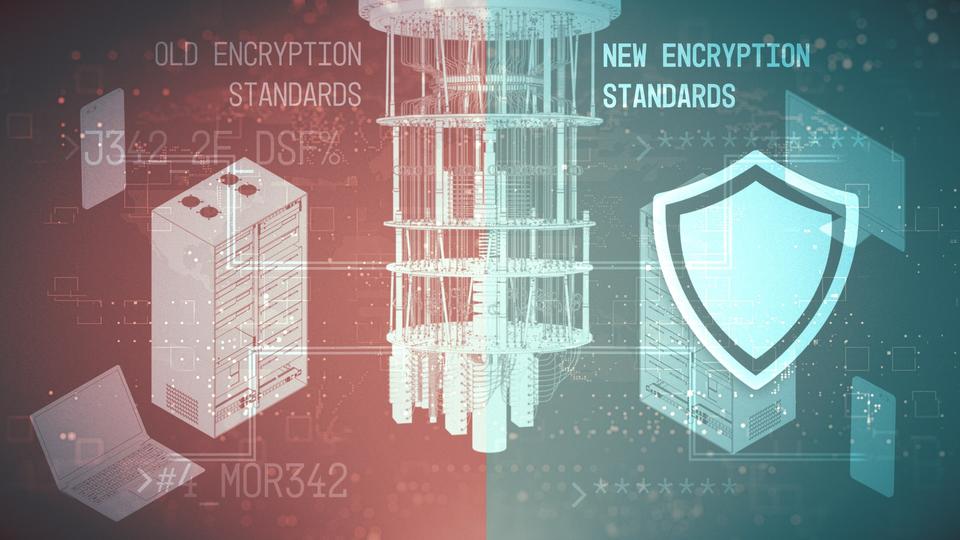
To assess your current safety, you must evaluate two critical factors: the underlying cryptographic algorithms in use and the provider's migration timeline. Look for explicit mentions of NIST-approved Post-Quantum Cryptography (PQC) algorithms, such as CRYSTALS-Kyber or CRYSTALS-Dilithium, rather than vague claims of "quantum resistance." Wallets that rely solely on traditional ECC or RSA signatures are at immediate risk if they have not announced a concrete migration plan to hybrid or pure PQC signatures.
The market value at stake makes this transition non-negotiable for long-term holders. The following chart contextualizes the scale of assets that could be compromised without proper quantum-resistant safeguards.
Secure Your Assets: A Post-Quantum Checklist
The transition to post-quantum cryptography (PQC) is not a future scenario; it is an active migration underway. NIST has finalized the first set of PQC standards, and major infrastructure providers are already integrating these algorithms to protect against "harvest now, decrypt later" attacks. For crypto holders, this means your current wallet security may be insufficient against future quantum capabilities. You must verify your wallet version and understand the hybrid cryptography models that bridge traditional and quantum-resistant security.
This section provides a concrete, ordered action plan to assess and harden your crypto asset protection. Follow these steps to ensure your keys remain secure as the cryptographic landscape shifts.
Check your wallet software version immediately. Most legacy wallets do not support PQC algorithms like CRYSTALS-Kyber. If you are using an outdated desktop or mobile app, update it to the latest release or switch to a provider that explicitly advertises PQC readiness. Look for announcements from wallet developers regarding NIST standard compliance.
Ensure your wallet or exchange uses hybrid cryptography. This approach combines traditional algorithms (like ECDSA) with post-quantum algorithms (like ML-KEM). Hybrid schemes provide a safety net: if one algorithm is broken, the other still protects your assets. Do not rely on pure PQC implementations until they have undergone extensive peer review and widespread adoption.
Quantum computers threaten the mathematical difficulty of factoring and discrete logarithms, not the physical security of your seed phrase. Your 12 or 24-word recovery phrase remains your ultimate backup. Store it offline in a fireproof, secure location. No amount of cryptographic software can replace the need for secure, offline storage of your private key material.
Subscribe to security updates from your wallet provider and exchange. NIST and major cloud providers like AWS and Microsoft are rolling out PQC support at different paces. Stay informed about when your specific service provider plans to enable quantum-resistant signatures for withdrawals and account access. Proactive monitoring prevents you from being caught off guard by mandatory migration deadlines.
The shift to PQC is a technical necessity, not a marketing trend. By following this checklist, you align your personal security practices with the evolving standards set by NIST and the broader cybersecurity community. Your assets are only as secure as the weakest link in your chain—start with your wallet software.
No comments yet. Be the first to share your thoughts!