The quantum threat to blockchain keys
Bitcoin and Ethereum wallets rely on elliptic curve cryptography (ECDSA) to generate public keys from private ones. This mathematical relationship allows users to sign transactions without revealing their private keys. It is a system that has held up against classical computers for decades. However, it is not built to withstand quantum computing.
Shor’s algorithm, a quantum computing method, can efficiently factor large numbers and solve discrete logarithm problems. In practical terms, this means a sufficiently powerful quantum computer could derive a user’s private key from their public address. Once the public key is revealed on the blockchain during a transaction, the wallet becomes vulnerable. An attacker with quantum capabilities could theoretically steal assets before the legitimate owner can react.
The timeline for this threat is converging with regulatory deadlines. The National Institute of Standards and Technology (NIST) is finalizing its first set of post-quantum cryptography standards in 2026. These standards will define the new cryptographic algorithms that will replace current methods. For crypto wallets, this deadline is not just a technical update; it is a security necessity. Waiting until after 2026 to migrate to post-quantum cryptography could leave assets exposed during the transition period.
Note: Current elliptic curve signatures (ECDSA) can be broken by sufficiently powerful quantum computers. Post-quantum cryptography (PQC) algorithms are designed to resist these attacks.
NIST’s post-quantum cryptography project is leading the global effort to secure electronic information against this future threat. The agency’s work ensures that the transition to quantum-resistant standards is coordinated and rigorous. Wallet providers must begin planning their migration strategies now to ensure they are ready when these standards are finalized.
NIST's 2026 PQC standard selection
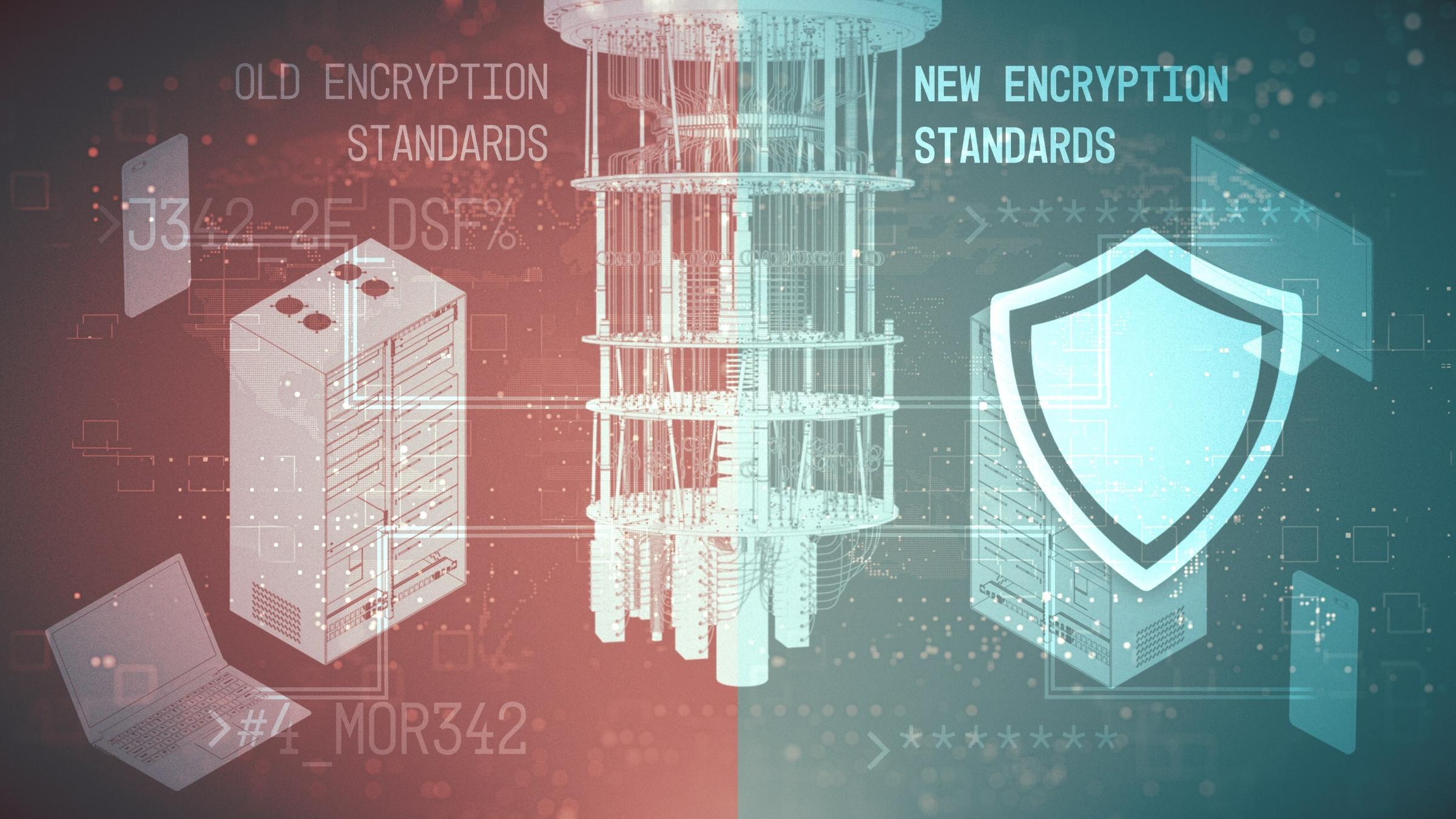
NIST has finalized the cryptographic algorithms that will replace current standards in crypto wallets and blockchain infrastructure. The selection focuses on lattice-based and hash-based systems designed to withstand attacks from future quantum computers. These standards form the backbone of post-quantum cryptography, ensuring long-term security for digital assets.
The primary standard for key encapsulation is ML-KEM (Module-Lattice-Based Key-Encapsulation Mechanism), formerly known as Kyber. ML-KEM replaces RSA and ECDSA for establishing secure connections. It enables wallets to securely exchange symmetric keys without exposing them to quantum decryption attacks. This mechanism is critical for protecting the initial handshake in any transaction or wallet interaction.
For digital signatures, NIST selected two standards to cover different use cases. ML-DSA (Module-Lattice-Based Digital Signature Algorithm), or Dilithium, is the primary choice for most general-purpose applications. It offers a strong balance of speed and compact signature sizes. SLH-DSA (Stateless Hash-Based Digital Signature Algorithm), or SPHINCS+, serves as a backup for environments where lattice-based assumptions might eventually be compromised. It relies on hash functions, which are already resistant to quantum attacks.
The table below compares these new post-quantum cryptography standards against legacy algorithms. The shift involves significantly larger key and signature sizes, which wallet developers must account for in transaction payloads.
| Algorithm | Type | Key Size (approx) | Sig Size (approx) |
|---|---|---|---|
| ML-KEM (Kyber) | Lattice | 1,184 bytes | N/A |
| ML-DSA (Dilithium) | Lattice | 2,620 bytes | 4,296 bytes |
| SLH-DSA (SPHINCS+) | Hash | 48 bytes | 32,256 bytes |
| ECDSA (P-256) | Elliptic Curve | 64 bytes | 64 bytes |
| RSA-2048 | Integer Factorization | 512 bytes | 256 bytes |
Implementing these algorithms requires careful integration. Wallet providers must update their libraries to support ML-KEM and ML-DSA before the 2026 deadline. Delaying this migration leaves user funds vulnerable to "harvest now, decrypt later" attacks, where adversaries store encrypted transactions today to unlock them once quantum computers become powerful enough.
Migrating Wallet Infrastructure to Post-Quantum Cryptography
The transition to post-quantum cryptography (PQC) is not a simple software patch; it is a structural overhaul of how crypto wallets generate, store, and sign transactions. Wallet providers, exchanges, and blockchain protocols must adopt quantum-resistant signatures without breaking existing user experiences or locking users out of their assets. This migration requires a coordinated shift from elliptic curve cryptography (ECC) to lattice-based or hash-based schemes standardized by NIST.
The technical path forward involves a phased approach that prioritizes backward compatibility and user safety. Wallets cannot simply swap algorithms overnight because legacy transactions must remain valid, and new keys must be generated securely. The following steps outline the migration path for infrastructure providers.
Before implementing new standards, providers must map every instance of ECC (e.g., secp256k1) and RSA in their codebase. This includes smart contracts, signing libraries, and key derivation functions. Understanding the scope of legacy cryptography is essential to identifying which components are vulnerable to Shor’s algorithm and require immediate replacement.
Rather than replacing ECC immediately, wallets should adopt hybrid signatures that combine classical algorithms with post-quantum algorithms like CRYSTALS-Dilithium. This approach ensures security against both classical and quantum attacks during the transition period. If a quantum computer breaks ECC, the PQC layer still protects the signature, and if PQC standards evolve, the classical layer provides a fallback. This dual-layer strategy minimizes the risk of total key compromise.

Post-quantum signatures are significantly larger than ECC signatures. For example, a Dilithium signature can be several kilobytes, compared to roughly 64 bytes for a standard Bitcoin signature. Wallets must optimize data structures to handle this increased payload without causing network congestion or excessive gas fees. This may involve implementing signature compression techniques or adjusting block space allocation protocols.
Users need a seamless way to migrate funds from legacy addresses to quantum-resistant ones. Wallets should introduce dual-key storage, allowing users to hold both ECC and PQC keys. Migration tools can then facilitate the transfer of assets to new addresses secured by post-quantum algorithms. This process must be user-friendly, requiring minimal technical knowledge to ensure widespread adoption and prevent users from losing access to their funds due to complexity.
Finally, all implementations must be rigorously tested against the final NIST PQC standards. Providers should participate in bug bounties and peer reviews to identify vulnerabilities in their hybrid implementations. Continuous monitoring of quantum computing advancements is also necessary to adjust parameters and algorithms as the threat landscape evolves.
This migration is a critical component of post-quantum cryptography readiness in the financial sector. By following these steps, wallet providers can ensure their infrastructure remains secure and functional in a post-quantum world.
Preparing your assets before the deadline
The transition to post-quantum cryptography is not a distant theoretical exercise; it is an immediate infrastructure requirement. NIST has published its first set of standardized algorithms, and the finalization of the remaining standards is expected by 2026. For crypto wallet users and developers, this timeline creates a narrow window to verify compatibility and migrate assets without risking loss of access.
The most critical step is verifying your wallet's support for hybrid signatures. Hybrid schemes combine classical algorithms (like ECDSA or Ed25519) with post-quantum algorithms (such as CRYSTALS-Kyber). This approach ensures that if one system is compromised—either by a future quantum computer or a classical breakthrough—the other still protects your keys. Before making any moves, check your wallet provider’s official documentation or support channels to see if they have already integrated these hybrid standards.
If your wallet does not yet support post-quantum cryptography, you must plan for key migration. This involves generating new post-quantum key pairs and transferring your assets to a wallet that can securely store and manage them. Do not wait until the last minute. Network congestion during a sudden migration period could lead to failed transactions or lost funds. Start the process early, test with small amounts, and ensure you have secure backups of your new seed phrases.
Developers should prioritize integrating NIST-standardized algorithms into their codebases. The NIST Post-Quantum Cryptography project provides the official specifications and reference implementations. Using these standards ensures that your applications are interoperable with other secure wallets and services. Avoid proprietary or experimental algorithms that may not survive the final standardization process.
Remember that post-quantum cryptography is about long-term security. The data you protect today may be valuable for years to come. By preparing now, you ensure that your assets remain secure against the evolving threat landscape. The deadline is approaching, but with careful planning, you can make the transition smoothly and securely.
No comments yet. Be the first to share your thoughts!