
In 2025, the landscape of decentralized finance (DeFi) is being fundamentally reshaped by the rapid adoption of fully encrypted smart contracts. The drive toward privacy-centric protocols is no longer just an aspiration but a necessity, as institutional capital and privacy-conscious users demand transaction confidentiality without sacrificing composability or security. This shift is powered by breakthroughs in cryptography, particularly Fully Homomorphic Encryption (FHE), and a new generation of privacy-first developer toolkits.
The Confidentiality Imperative in DeFi
Blockchain’s radical transparency has long been both its strength and Achilles heel. In sectors like DeFi, where sensitive trading strategies, loan terms, or portfolio exposures are at stake, public ledgers threaten competitive advantage and user privacy. The answer lies in encrypted smart contracts, which allow for computation on encrypted data directly on-chain. This innovation ensures that only authorized parties can access transaction details, while the contract logic remains verifiable by all network participants.
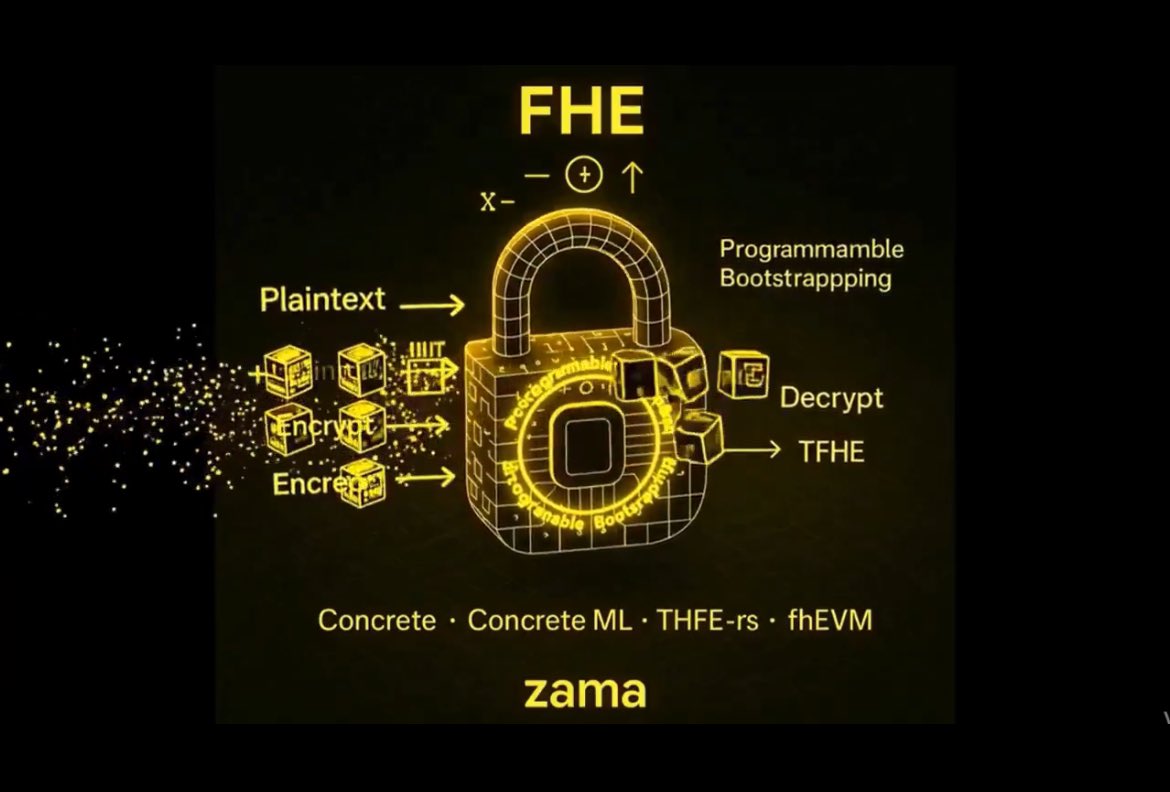
Recent advancements have made this vision practical. Notably, Zama’s TFHE-based Encryption Toolkit for Solidity Smart Contracts empowers developers to build confidentiality-first applications on Ethereum and other EVM chains using familiar programming paradigms. By leveraging TFHE (a performant FHE scheme), developers can now create encrypted tokens and lending protocols where balances and transaction values are opaque to everyone except permissioned parties.
Chainlink Confidential Compute: Redefining Oracle Privacy
Confidentiality in DeFi does not stop at contract logic; it extends to the data that feeds these contracts. Oracles have historically been a weak link for privacy, often exposing sensitive off-chain data when bridging real-world information onto blockchains. In response, Chainlink Confidential Compute (CCC) has emerged as a cornerstone technology for secure oracle integration.
CCC leverages confidential computing environments to process oracle queries off-chain while keeping both the request and response fully encrypted until they reach the intended smart contract. This architecture ensures that market data feeds or identity attestations remain private throughout their lifecycle, critical for use cases like confidential lending or private derivatives markets.
This paradigm shift enables developers to create truly private DeFi protocols without relying on trusted hardware enclaves or sidechains, addressing longstanding scalability and trust concerns.
End-to-End Encrypted State Management and Key Rotation Protocols
The journey toward robust confidential DeFi transactions does not end with computation and data input. Maintaining an encrypted contract state throughout its lifecycle is paramount for preventing accidental leaks or targeted attacks. Here, end-to-end encrypted state management frameworks come into play, ensuring that every variable inside a smart contract remains shielded from public view unless explicitly decrypted by authorized actors.
A critical security layer within this paradigm is the implementation of resilient key rotation protocols. By automating periodic key changes (and supporting emergency rotations after suspected breaches), these protocols ensure forward secrecy: even if an encryption key is compromised today, past transactions remain indecipherable. Modern solutions incorporate multi-party computation (MPC) schemes to distribute trust among several entities or validators, eliminating single points of failure.
- Zama’s TFHE toolkit: Integrates seamless state encryption with Solidity contracts.
- Automated key rotation: Reduces operational risk across composable DeFi applications.
- MPC-powered management: Ensures no single entity can decrypt contract states unilaterally.
Paving the Way for Institutional-Grade Privacy Smart Contracts in 2025
The convergence of these technologies marks a strategic inflection point for DeFi adoption among enterprises and institutional investors. As regulatory clarity around blockchain data privacy evolves, projects implementing these tools are positioned to capture significant market share, and unlock entirely new financial primitives previously impossible on transparent ledgers.
Critical Tools for Confidential DeFi Transactions in 2025
- Chainlink Confidential Compute (CCC) delivers secure oracle integration by leveraging confidential computing to protect sensitive data feeds for smart contracts. CCC ensures that off-chain data is transmitted and processed privately, enabling DeFi protocols to access real-world information without exposing transaction details or user data on-chain.

- Zama's TFHE-based Encryption Toolkit empowers Solidity smart contract developers to implement fully homomorphic encryption (FHE) directly in their decentralized applications. This toolkit allows computations on encrypted data, enabling confidential DeFi transactions on Ethereum and other EVM-compatible blockchains without sacrificing composability or developer experience.

- End-to-End Encrypted State Management and Key Rotation Protocols are crucial security strategies for maintaining confidentiality in smart contract operations. These protocols ensure that all contract states remain encrypted throughout their lifecycle and support robust cryptographic key rotation, protecting against both present and future threats, including potential breaches of trusted execution environments (TEEs).
This wave of innovation is not theoretical; it is already powering confidential lending markets and private asset issuance across leading Layer 1 and Layer 2 networks. For developers seeking practical guidance on deploying these solutions today, resources such as our step-by-step guide to implementing end-to-end encrypted smart contracts provide essential frameworks for secure deployment (read more here). As we approach the midpoint of this transformation, understanding, and correctly integrating, these core technologies will define success in next-generation financial infrastructure.
Looking ahead, the path to mainstream adoption of privacy smart contracts in 2025 will depend on more than just technological breakthroughs. Strategic deployment and operational security practices must evolve in tandem with cryptographic innovation. For instance, integrating Zama’s TFHE-based Encryption Toolkit for Solidity Smart Contracts into existing DeFi protocols demands rigorous auditing and continuous monitoring of encrypted state transitions. Developers are now expected to architect contracts with modular privacy layers, allowing for granular access control and selective disclosure as regulatory or business needs dictate.
The role of Chainlink Confidential Compute (CCC) cannot be overstated when it comes to bridging off-chain and on-chain confidentiality. As DeFi platforms increasingly rely on external data feeds for pricing, settlement, or compliance checks, CCC ensures these interactions remain shielded from adversarial actors. Its confidential compute layer not only preserves the privacy of sensitive oracle data but also enables new classes of financial products such as private options markets and confidential insurance payouts, products that were previously infeasible due to data exposure risks.
Strategic Security Considerations: End-to-End Encrypted State and Key Management
Robust end-to-end encrypted state management is now considered table stakes for any serious DeFi protocol handling sensitive user balances or positions. The most forward-thinking teams are leveraging automated key rotation protocols, which serve as a dynamic defense against evolving threats. By rotating encryption keys at predefined intervals or in response to anomaly detection triggers, these protocols guarantee that even if a compromise occurs, historical contract data remains protected, a critical requirement for institutional compliance and user trust.
Key rotation is further enhanced by multi-party computation (MPC), distributing decryption authority across multiple stakeholders. This approach not only mitigates single-point-of-failure risk but also aligns with decentralized governance models prevalent in leading DeFi ecosystems.
From Technical Foundation to Competitive Differentiator
The competitive landscape in DeFi is already shifting toward those who can offer verifiable privacy without sacrificing interoperability or composability. Protocols equipped with CCC-powered secure oracle integration, Zama’s TFHE toolkit for Solidity smart contracts, and resilient encrypted state/key management are rapidly becoming the gold standard for confidential DeFi transactions.
This momentum is catalyzing a broader ecosystem response: privacy-first standards are being discussed at major industry consortia, while leading audit firms are developing new methodologies specific to encrypted contract verification. As a result, users can soon expect seamless experiences where confidentiality is the default, not an exception, across lending pools, decentralized exchanges, and bespoke institutional products.
The Roadmap Ahead: Building with Privacy as a Core Principle
For developers and enterprises looking to future-proof their DeFi offerings, adopting these critical tools and protocols is no longer optional, it’s imperative. The integration of Zama’s TFHE-based toolkit, Chainlink Confidential Compute, and robust end-to-end encrypted state management will define the next wave of competitive advantage in blockchain finance.
Key Tools & Protocols for Encrypted DeFi Smart Contracts
- Chainlink Confidential Compute (CCC) for Secure Oracle Integration: CCC is a breakthrough oracle solution enabling private data feeds for smart contracts on any blockchain. By leveraging confidential computing, CCC ensures that sensitive off-chain data—such as financial rates or identity information—remains encrypted end-to-end during transmission and computation. This is critical for DeFi applications requiring both data integrity and transaction privacy without sacrificing decentralization.
- Zama's TFHE-based Encryption Toolkit for Solidity Smart Contracts: Zama’s open-source toolkit brings Fully Homomorphic Encryption (FHE) to Solidity, empowering developers to build smart contracts that process encrypted inputs, outputs, and state directly on EVM-compatible blockchains. This enables confidential lending, private auctions, and other DeFi use cases where user and transaction data must remain hidden—even from validators. The toolkit is rapidly gaining adoption thanks to its developer-friendly APIs and compatibility with existing Ethereum infrastructure.

- End-to-End Encrypted State Management and Key Rotation Protocols: Robust management of encrypted contract state and cryptographic keys is essential for maintaining confidentiality and forward secrecy. Best practices now include automated key rotation schemes (such as those used in RaceTEE) and secure enclave-based storage, which minimize the risk of key compromise. These protocols ensure that even if a node or TEE is breached, past and future contract data remain protected, supporting institutional-grade privacy in DeFi.

The market signals are clear: privacy-centric infrastructure is unlocking new capital inflows from both traditional finance institutions and privacy-conscious users alike. As regulatory frameworks continue to mature alongside technical standards, those building today with confidentiality at their core will be positioned as leaders in tomorrow’s decentralized economy.
If you’re ready to deepen your expertise or deploy your own confidential protocol stack, explore our comprehensive developer resources on implementing encrypted smart contracts for confidential DeFi transactions. The era of transparent-by-default finance is ending, the future belongs to those who build trust through cryptographic privacy.




No comments yet. Be the first to share your thoughts!