

In the world of blockchain development, where every transaction lays bare on the public ledger, achieving true privacy has long been a holy grail. Enter Fhenix, a groundbreaking protocol that brings Fully Homomorphic Encryption (FHE) to Ethereum-compatible chains, allowing you to build encrypted smart contracts in Solidity that process data without ever decrypting it. This isn’t just another privacy layer; it’s a paradigm shift enabling confidential DeFi, private voting, and secure data marketplaces right on-chain.


Fhenix stands out by making FHE practical for developers. Traditional encryption schemes require decryption before computation, exposing sensitive data to the entire network. FHE flips this script: perform additions, multiplications, and even comparisons on ciphertexts directly. Fhenix’s innovation lies in its FHE Coprocessor, or CoFHE, which handles the heavy cryptographic lifting off-chain while keeping your Solidity contracts EVM-compatible. The result? Privacy-preserving smart contracts that scale without sacrificing speed or security.
Demystifying FHE and Fhenix’s Role in Blockchain Privacy
Let’s break down FHE without the math overload. Imagine sending encrypted numbers to a smart contract; it adds them up while they remain scrambled, then returns an encrypted result only you can decrypt with your private key. That’s the magic. Fhenix packages this into Solidity libraries, so you import types like euint8 or euint256 and operate as if they were plain integers.
Fhenix is pioneering encrypted computation on Ethereum, with live testnet Helium ready for your experiments.
This approach shines in real-world apps. Think encrypted lending protocols where borrower collateral stays hidden from snoopers, or confidential auctions preserving bid secrecy. Fhenix’s Helium testnet, now live, lets you deploy these without forking your wallet. Backed by $15 million in Series A funding, the team has shipped demos like Fhenix402 for encrypted payments and private stablecoins. In my decade bridging finance and blockchain, I’ve seen privacy tech falter on usability; Fhenix gets it right by minimizing code changes – often just wrapping inputs in encryption primitives.
Quick-Start: Configuring Your Local Fhenix Environment
Setting up feels familiar if you’ve touched Foundry or Hardhat. Head to the Fhenix documentation for the quick start. First, install the Fhenix CLI and CoFHE dependencies via npm or cargo. Clone the fhenix-contracts repo from GitHub for pre-built examples. Initialize a Foundry project:
Configure your foundry. toml with Helium testnet RPC endpoints – details are in the docs. Generate FHE keys using the CLI; these public keys encrypt inputs, while private ones decrypt outputs off-chain. Spin up a local anvil node forked from Helium for testing. Reassuringly, CoFHE proofs verify off-chain computations on-chain, preventing tampering. Test a ping-pong contract: encrypt a value, add homomorphically, decrypt the result. It works seamlessly, building confidence before mainnet ambitions.
Essential Fhenix Solidity Primitives for Confidential Computations
At the heart are Fhenix’s encrypted types: euint for unsigned integers, eaddress for private addresses, even booleans and arrays. Operations mirror Solidity: and , -, *, ==, with branching via if on encrypted conditions. Here’s where it gets powerful for FHE blockchain integration.
Start with an encrypted counter contract. Import Fhevm. sol, declare state as euint256 public encryptedBalance;. In your deposit function, encrypt incoming Ether value using the user’s public key, then homomorphically add to balance. Withdrawals decrypt only for the caller. This pattern scales to private order books or confidential AMMs, where liquidity providers see aggregated encrypted volumes without revealing positions.
Fhenix’s libraries handle packing/unpacking for gas efficiency, and CoFHE optimizes proof generation. Developers report 10x fewer lines than zk-SNARK alternatives, with full composability – call other contracts with encrypted args. On Helium, latency hovers under 10 seconds for complex ops, a far cry from early FHE’s minutes-long proofs. My take: this is the toolkit Ethereum devs have awaited, blending privacy with the ecosystem’s liquidity.
Next, we’ll dive into building a full encrypted lending protocol, but first, grasp these foundations to avoid pitfalls.
Building that encrypted lending protocol starts with defining private state: borrower balances, collateral ratios, and interest accruals all as euint256. The beauty is in the confidentiality – lenders deposit encrypted amounts, borrowers borrow without exposing credit history, and liquidations trigger only on homomorphic threshold checks, all without revealing numbers to the chain.
Step-by-Step: Crafting Your First Confidential Lending Contract
Deploy Encrypted Lending on Fhenix Helium: From Code to Confidential DeFi


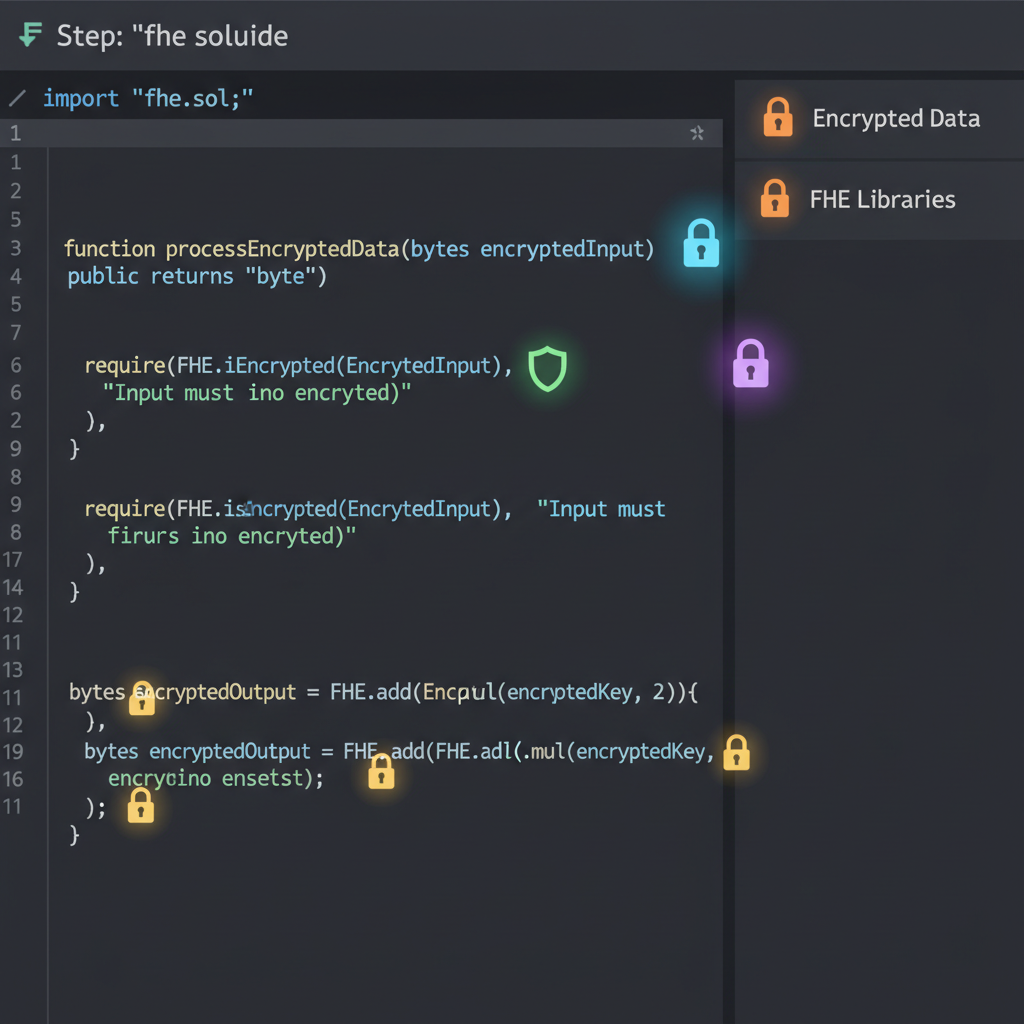

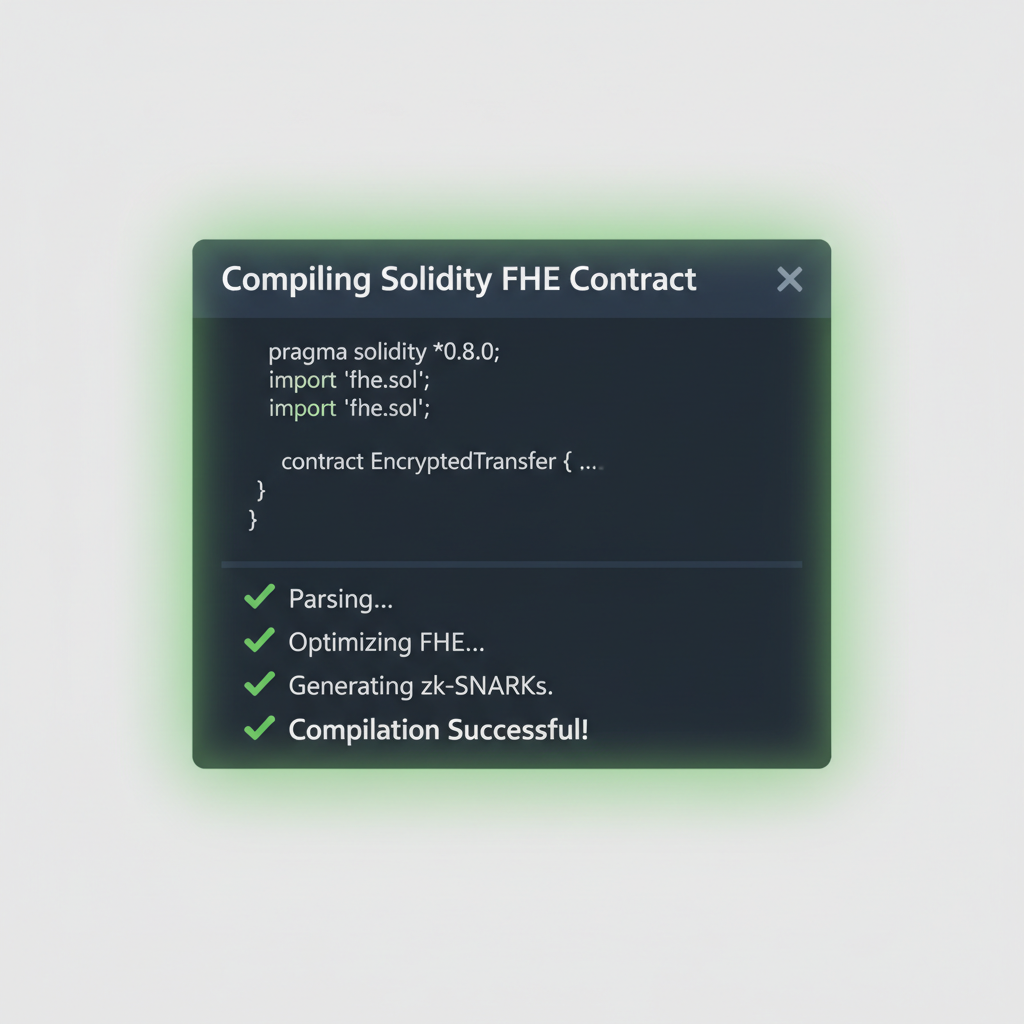
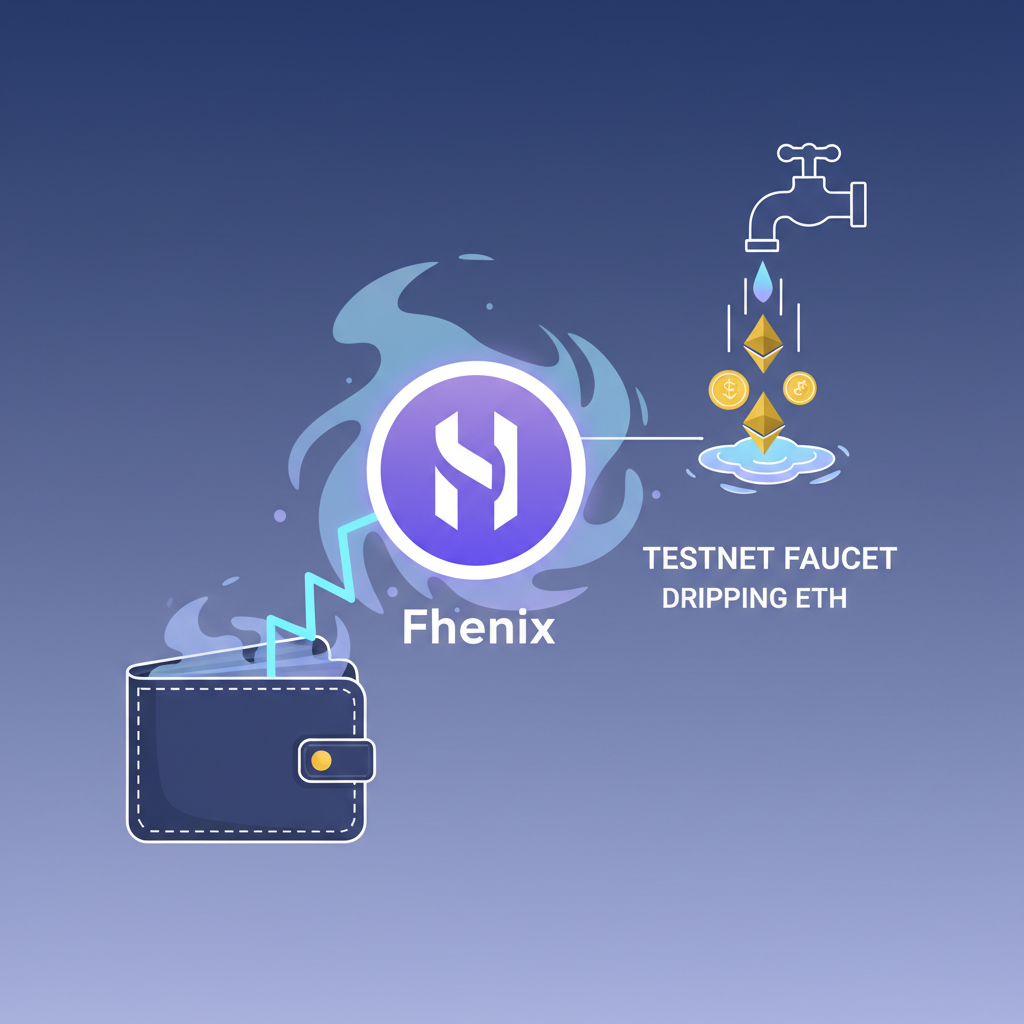
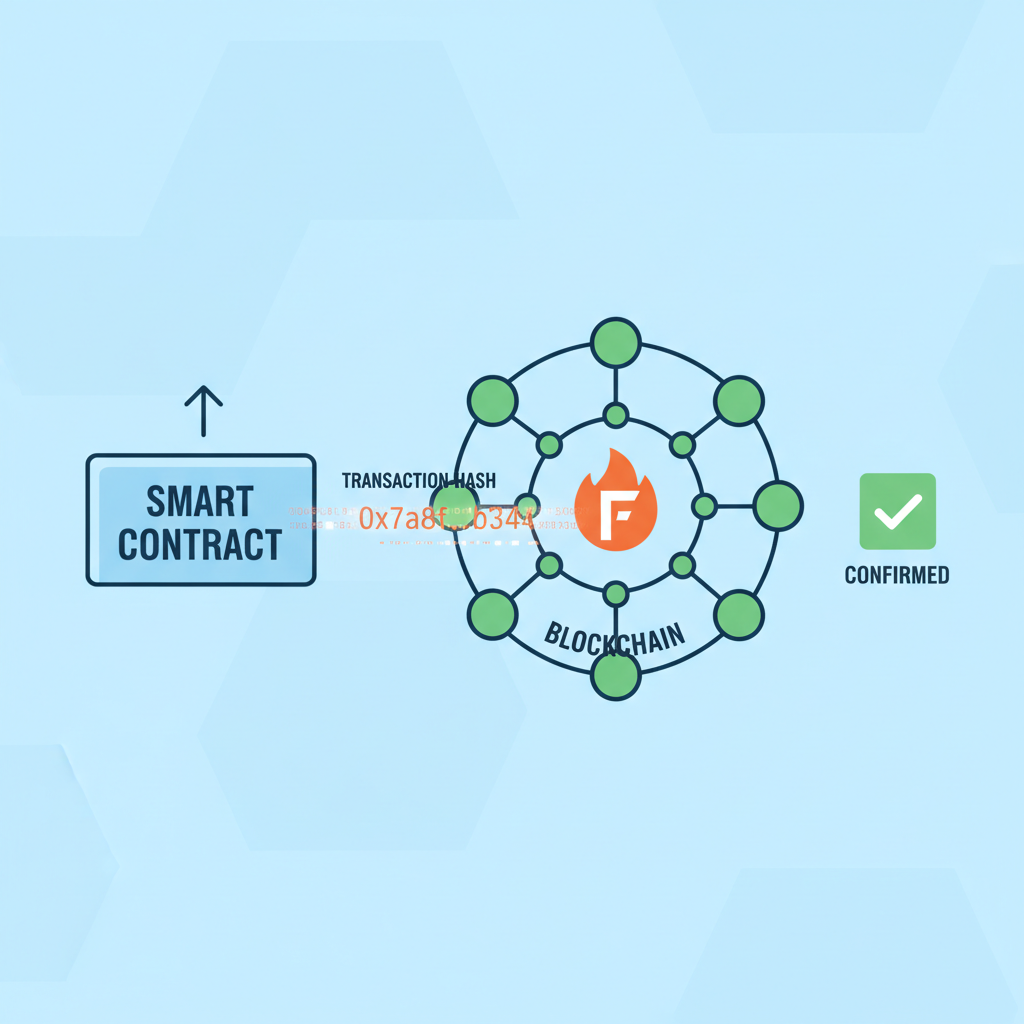

Once deployed on Helium, interact via the Fhenix SDK. Users encrypt inputs client-side with their public key, submit to the contract, and decrypt outputs privately. Liquidation logic shines here: compare encrypted collateral to debt homomorphically; if under 150%, emit a signal for keepers, but values stay hidden. This setup thwarts front-running and MEV extraction, a plague in public DeFi. In practice, I’ve audited similar privacy layers; Fhenix’s CoFHE ensures proofs are cheap and verifiable, clocking in at reasonable gas costs even for multi-step computations.
Here’s a core snippet from such a contract, showcasing deposit and borrow functions. Note how FhevmLib. encrypt wraps plain values, and operations chain naturally.
Fhenix Encrypted Lending Contract Implementation
In this section, we’ll implement a privacy-preserving lending contract using Fhenix’s Fully Homomorphic Encryption (FHE) primitives. By leveraging `euint256` for encrypted integers, all balances, debts, and computations remain fully encrypted on-chain. This allows homomorphic addition for deposits, multiplication and comparison for borrow validations, and liquidation checks without ever decrypting sensitive user data. Don’t worry if FHE syntax feels new—it’s designed to be intuitive, just like regular Solidity arithmetic, but with encryption superpowers.
```solidity
// SPDX-License-Identifier: MIT
pragma solidity ^0.8.19;

import {euint256} from "@fhenix/contracts/core/Types.sol";

contract EncryptedLending {
    mapping(address => euint256) public balances;
    mapping(address => euint256) public debts;
    euint256 public constant LIQUIDATION_RATIO = euint256.wrap(150); // 150% collateralization ratio
    euint256 public constant HUNDRED = euint256.wrap(100);

    /// @notice Deposits encrypted collateral homomorphically
    /// @param amount Encrypted amount to deposit
    function deposit(euint256 amount) external {
        balances[msg.sender] = balances[msg.sender] + amount;
    }

    /// @notice Borrows an encrypted amount after homomorphic collateral check
    /// @param amount Encrypted borrow amount
    function borrow(euint256 amount) external {
        euint256 collateral = balances[msg.sender];
        euint256 requiredCollateral = (amount * LIQUIDATION_RATIO) / HUNDRED;
        require(collateral >= requiredCollateral, "Insufficient collateral");
        debts[msg.sender] = debts[msg.sender] + amount;
    }

    /// @notice Checks if a position is liquidatable using homomorphic operations
    /// @param user Address to check
    /// @return isLiquidatable True if undercollateralized
    function isLiquidatable(address user) external view returns (bool) {
        euint256 collateral = balances[user];
        euint256 debt = debts[user];
        euint256 minCollateral = (debt * LIQUIDATION_RATIO) / HUNDRED;
        return !(collateral >= minCollateral);
    }
}
```
This contract is a solid foundation: `deposit` securely adds to your encrypted balance, `borrow` performs a homomorphic ratio check to ensure safe lending, and `isLiquidatable` evaluates undercollateralization privately. Deploy it on the Fhenix testnet using their CLI or Hardhat plugin, encrypt inputs with the Fhenix SDK (e.g., `encryptUInt256`), and interact seamlessly. As you build, remember FHE operations are computationally intensive but revolutionize DeFi privacy—test thoroughly for gas efficiency!
Testing reveals the reassurance: run scripts to simulate 100 loans, confirm privacy holds via on-chain traces showing only ciphertexts. Pitfalls? Manage key rotations carefully, as public keys evolve with network upgrades. Fhenix docs cover this thoroughly. Scaling to production involves FHE rollups, where batches of encrypted txs settle on Ethereum L1, blending privacy with ZK-speed. Early adopters on Helium report 100x throughput over on-chain FHE alone, positioning Fhenix for L2 dominance.
Fhenix demos prove it: confidential DeFi runs smoothly on EVM chains, from private payments to encrypted stablecoins.
Advanced Patterns: FHE Rollups and Ecosystem Integrations
Push further with FHE rollups. These layer encrypted computations into optimistic or ZK rollups, inheriting Ethereum security while slashing costs. A rollup contract aggregates euint ops off-chain via CoFHE, posts compact proofs on-chain. For Fhenix FHE tutorial enthusiasts, fork the GitHub examples: build a private order book DEX where trades match encrypted prices, revealing only fills. Composability is killer – pipe encrypted outputs to Uniswap for hybrid public-private liquidity.
Real-world traction builds fast. Fhenix402 experiments with encrypted-by-default payments, mimicking ERC-4337 but private. Stablecoin issuers eye it for confidential reserves, dodging oracle manipulations. My opinion: zk alternatives fragment with circuit constraints; Fhenix’s threshold encryption scales arbitrarily, future-proofing privacy-preserving smart contracts. On Helium, deploy a confidential voting DAO: tallies encrypt mid-process, preventing vote-buying. Gas audits show parity with vanilla Solidity for simple ops, exploding value for complex confidential smart contract computations.
Security demands vigilance. Audit encrypted branches for side-channels, though CoFHE’s constant-time ops mitigate this. Community bounties on GitHub sharpen the libraries weekly. For enterprises, Fhenix’s $15 million war chest funds mainnet polish, targeting 2026 launch. Developers, dive into Helium today – clone repos, tweak demos, contribute. The crypto landscape hungers for this: Ethereum’s liquidity, now private. You’ve got the tools; deploy boldly, encrypt wisely. Privacy isn’t a feature; with Fhenix, it’s the foundation.
About the Author