

In the evolving landscape of decentralized finance, where transparency clashes with the need for discretion, encrypted smart contracts on Ethereum emerge as a pivotal innovation. Aztec Protocol stands at the forefront, offering a privacy-first zkRollup that empowers developers to deploy privacy-preserving contracts on Aztec without compromising Ethereum’s scalability. This Layer 2 solution marries public execution with confidential state, enabling applications from private DeFi to shielded gaming, all while settling on Ethereum every 12 seconds via zero-knowledge proofs.

Aztec’s recent Alpha Network launch marks a milestone, introducing the first Ethereum L2 dedicated to private smart contract execution. Developers now have tools for confidential transactions, selective identity disclosure for compliance, and hidden computation behaviors. Yet, this alpha stage carries risks; known vulnerabilities mean users should only risk funds they can afford to lose. For those venturing into Aztec protocol smart contracts, the payoff lies in robust privacy that traditional rollups cannot match.
Aztec’s Architecture: Blending Public and Private Worlds
At its core, Aztec operates as a hybrid zkRollup, distinct from pure optimistic or ZK rollups. It supports both public and private smart contract functions, allowing selective privacy. Contracts leverage encrypted state through zero-knowledge proofs generated client-side, ensuring no sensitive data touches the chain unshielded. This setup facilitates Aztec confidential transactions, where balances and logic remain opaque even as proofs verify correctness.
Privacy manifests at three levels: data for asset transfers, identity for regulated use cases, and computation for behavioral anonymity. Built on Ethereum, Aztec inherits its security model while slashing costs through batching. Noir, its Rust-inspired language, lets developers write privacy logic natively, compiling to circuits for proof generation. This developer-friendly stack positions Aztec as ideal for Ethereum L2 privacy rollups, outpacing rivals in programmable confidentiality.
Aztec’s Key Privacy Levels
-

Private Data: Enables confidential transactions and real-world asset (RWA) transfers, safeguarding sensitive financial details from public exposure while maintaining Ethereum compatibility.
-
Private Identity: Allows selective disclosure of attributes via zero-knowledge proofs, enabling regulatory compliance without revealing full user identities.
-
Private Computation: Conceals on-chain logic and behavior, supporting privacy-focused DeFi and gaming apps through encrypted execution.
Crafting Contracts in Noir: From Code to Confidential Proofs
Transitioning to Aztec requires mastering Noir, a domain-specific language optimized for zero-knowledge. Unlike Solidity’s gas-bound world, Noir focuses on provable computations. A basic private transfer contract might define encrypted balances, compute deltas privately, and output a validity proof. Here’s the elegance: execution happens off-chain in the user’s browser or node, generating succinct proofs settled on L2.
Consider a confidential lending protocol. Borrowers reveal credit scores selectively via zero-knowledge predicates, lenders see risk-adjusted rates without full exposure. This granular control fosters trustless yet private DeFi, a leap beyond mixers or shielded pools. Aztec. nr documentation provides templates, urging developers to test rigorously given alpha instabilities.
Aztec brings encrypted logic to Ethereum, enabling smart contracts that hide what they should while proving what matters.
[tweet: Aztec Network’s announcement of Alpha Network launch highlighting private smart contract capabilities]
Development Setup: Scaffolding Your Aztec Environment
Begin with Node. js and Yarn, then install the Aztec CLI via npm. Spin up a local sandbox with npx @aztec/cli sandbox, mimicking the Alpha Network. Integrate the Aztec packages: @aztec/noir-contracts for contract scaffolding, @aztec/accounts for key management. Configure your project to target testnet endpoints, funding via faucets.
Security first: audit proofs with Aztec’s verifier contracts. Simulate private state transitions using the JavaScript SDK, ensuring proofs verify before L2 submission. This workflow streamlines iteration, vital for complex encrypted smart contracts Ethereum deployments. As alpha evolves, expect refinements, but current tooling suffices for prototypes demonstrating Aztec’s edge in privacy rollups.
With your Aztec sandbox running and packages installed, the next phase shifts to compiling and deploying a Noir contract. This process transforms privacy logic into verifiable proofs, ready for the Alpha Network. Developers benefit from Aztec’s client-side execution model, where sensitive computations stay off-chain until proven, minimizing exposure in ethereum l2 privacy rollups.
Deployment Workflow: From Noir to L2 Settlement
The deployment hinges on Aztec’s CLI commands. First, scaffold a contract using npx @aztec/cli create contract my-private-token, which generates boilerplate in Noir. Edit the source to encode your logic, such as encrypted token minting or transfers. Compile with npx @aztec/cli compile, producing circuits and artifacts.
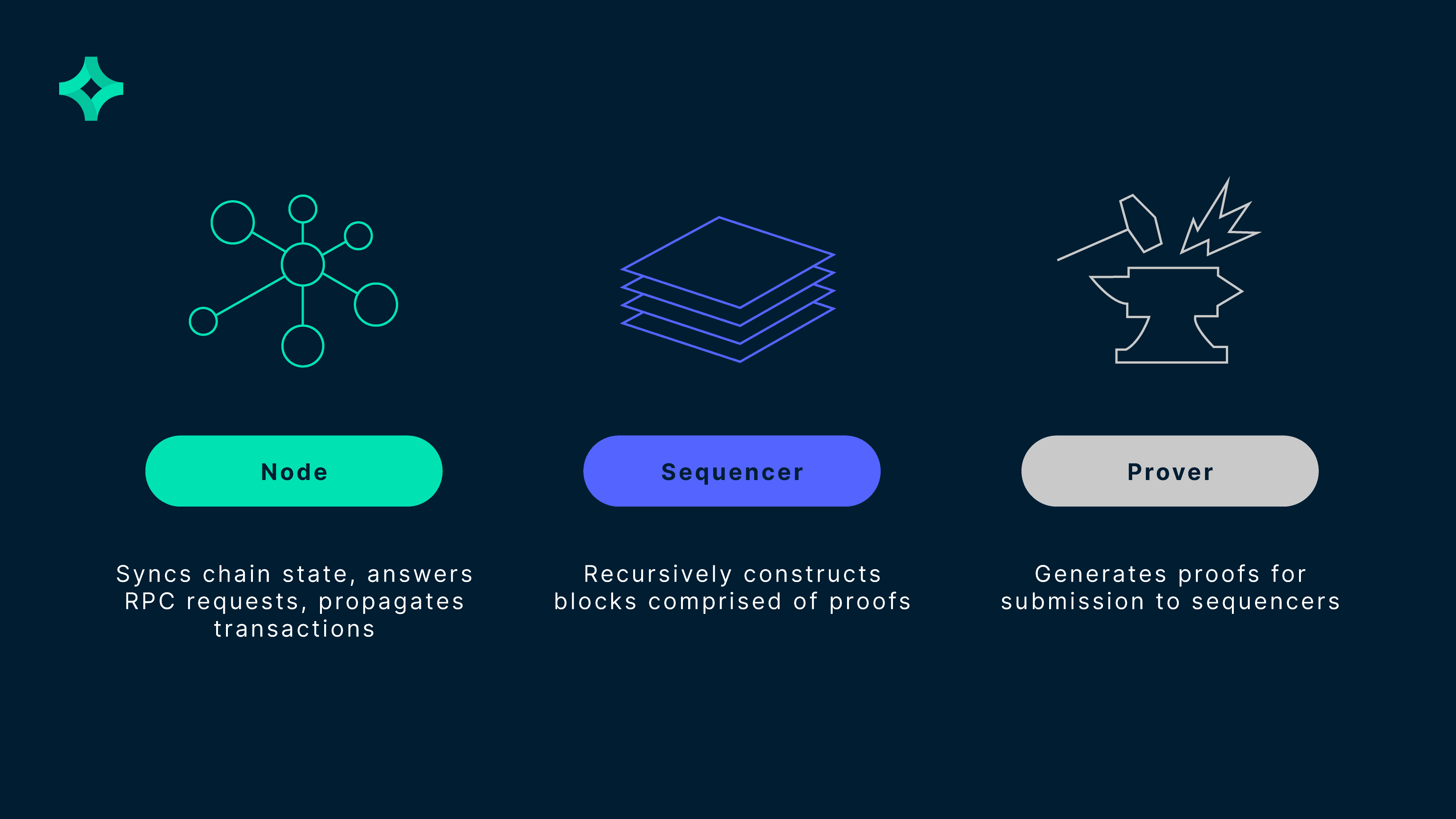
Private deployment requires funding an account via the faucet, then initializing keys with the accounts package. Submit transactions through the JavaScript SDK: craft a private call, compute the proof locally, and batch it into an L2 block. Aztec’s sequencer aggregates proofs, settling on Ethereum roughly every 12 seconds. This cadence ensures low latency for aztec protocol smart contracts, rivaling public L2s while shielding state.
Simple Private Token Contract in Noir
This Noir contract exemplifies a private token with encrypted balances. The `transfer` function employs zero-knowledge proofs to validate sufficient funds and updates state privately, while a public nullifier—derived from a user-provided secret—prevents double-spending by ensuring each transfer is unique and verifiable on-chain.
```noir
use dep::std;

contract PrivateToken {
    /// Encrypted user balances
    balances: PrivateMap,
    /// Public nullifiers for double-spend prevention
    nullifiers: PublicMap,

    #[aztec(private)]
    fn transfer(
        recipient: aztec::auth::Address,
        amount: Field,
        secret: Field
    ) {
        // Compute nullifier from secret (viewable for verification)
        let nullifier = std::hash::pedersen([secret]);

        // Ensure nullifier hasn't been used (prevents double-spend)
        self.nullifiers(nullifier).assert_empty();
        self.nullifiers(nullifier).emit();

        // Prove sufficient balance without revealing it
        let sender_balance = self.balances(msg_sender()).read();
        std::assert(sender_balance >= amount);

        // Update balances privately
        self.balances(msg_sender()).write(sender_balance - amount);
        let recip_balance = self.balances(recipient).read();
        self.balances(recipient).write(recip_balance + amount);
    }
}
```
Note the use of `PrivateMap` for encrypted storage, assertions within the private context for ZK validation, and `emit` for committing the nullifier publicly. This design balances privacy with security, deployable directly on Aztec’s Ethereum L2 rollup.
Testing Private States: Ensuring Proof Integrity
Rigorous testing separates viable prototypes from vulnerabilities. Use Aztec’s simulator to replay private executions: input encrypted notes, advance state, and assert proof validity without revealing payloads. The PXE (Private Execution Environment) handles note encryption and nullifiers, preventing doublespends inherent in confidential ledgers.
Integrate fuzzing tools adapted for Noir circuits, probing edge cases like overflow in private arithmetic. Cross-verify with public counterparts; for instance, aggregate private balances should match disclosed proofs. Given Alpha Network’s known issues, such as potential sequencer centralization or proof malleability, simulate adversarial conditions. This diligence uncovers flaws before mainnet, safeguarding aztec confidential transactions in production.
Aztec’s tooling shines here, with built-in assertions and debuggers that expose circuit constraints without decryption. Developers transitioning from Solidity appreciate Noir’s type safety, reducing proof generation failures by design.
Real-World Applications: Unlocking Private DeFi and Beyond
Deployed contracts unlock transformative use cases. In DeFi, confidential lending protocols compute interest privately, revealing only solvency proofs to liquidators. Gaming platforms shield player inventories, enabling fair play without meta-strategies based on visible holdings. Compliance-friendly features, like selective disclosure of KYC via ZK predicates, bridge regulated finance with blockchain anonymity.
Enterprises eyeing privacy preserving contracts aztec find value in supply chain tracking: encrypt provenance data, prove authenticity without exposing trade secrets. As Aztec matures, expect integrations with oracles for private price feeds, fueling prediction markets or options vaults unseen on public chains.
- Private DeFi: Hidden order books and leveraged positions.
- Gaming: Opaque economies resisting exploits.
- Identity: ZK credentials for on-ramps.
Risks and Best Practices: Alpha Caution in Production
Alpha status demands restraint. Documented vulnerabilities, including incomplete audit coverage and nascent recursion limits, underscore the need for canary deployments. Only commit testnet funds; mainnet awaits beta stability. Mitigate by diversifying: hybrid contracts blending public views with private cores offer fallback transparency.
Best practices include multi-signature for sequencers, formal verification of Noir circuits, and community bounties for audits. Monitor Aztec’s GitHub for patches, as rapid iteration defines zkRollups. This measured approach tempers enthusiasm with realism, positioning early adopters ahead when privacy becomes table stakes.
Aztec redefines Ethereum’s privacy frontier, delivering encrypted execution that scales. As tools refine and networks harden, deploying here equips developers to lead in a surveillance-resistant DeFi era.
About the Author