

In the glaring spotlight of public blockchains, where every encrypted smart contract detail risks exposure, Zama’s FHEVM flips the script. This Fully Homomorphic Encryption Virtual Machine lets Solidity developers craft confidential computations on encrypted data, no decryption required. Picture DeFi trades, identity verifications, or voting systems humming privately on Ethereum-compatible chains. As privacy tokens surge in 2025, FHEVM stands as the Solidity bridge to true confidentiality.

Core Engine: How FHEVM Powers Confidential Solidity
FHEVM slots seamlessly into EVM ecosystems, transforming standard smart contracts into privacy fortresses. At its heart lies Fully Homomorphic Encryption (FHE), a cryptographic wizardry allowing arithmetic and logic on ciphertexts. Zama’s breakthrough makes this practical for blockchains, enabling privacy-preserving smart contracts on Ethereum.
Key visuals emerge in its architecture: inputs encrypt client-side, execute homomorphically on-chain, outputs decrypt only for authorized eyes via ACL. No more plaintext pitfalls. Developers wield encrypted types like euint32 and ebool, mirroring Solidity natives but veiled. Operations? Addition, multiplication, comparisons, even if-statements on encrypted values. This isn’t bolted-on obscurity; it’s native confidentiality baked into the VM.
FHEVM delivers end-to-end encryption, where states and computations stay hidden from all but the privileged.
For a Zama FHEVM Solidity tutorial vibe, think encrypted auctions where bids compare without revealing numbers, or confidential lending with private balances. 2025’s testnets already buzz with $130M airdrop hunters testing these waters.
Encrypted Building Blocks: euint and ebool in Action
Ditch plain uint32; embrace euint32. FHEVM’s library injects these via imports, unlocking homomorphic ops. Verify age encrypted? Sum votes privately? All feasible.
This snippet visualizes the shift: client encrypts inputs, contract computes blindly, ACL gates reveals. Precision matters; FHEVM optimizes for gas via TFHE scheme tweaks, rivaling unencrypted speeds in benchmarks. Innovators, map your logic to these primitives, and watch privacy scale.
Launchpad Setup: Hardhat Meets FHEVM
Hit the ground running. Fork Hardhat or Foundry, npm the fhevm-solidity lib from GitHub. Config plugins for FHEVM runtime, spin a local node mimicking confidential chains. Zama’s docs plot the path: init project, write vanilla Solidity first.
- npm init; hardhat init.
- Import FHEVM:
import {FHE} from "@zama-fhevm/fhevmjs", no, Solidity lib is key. - Compile with custom flags for encrypted types.
Testnet deploys beckon via Zama’s protocol. Visualize your workflow: encrypt off-chain, interact via ethers. js wrappers, decrypt selectively. This foundation sets confidential smart contracts 2025 in motion, prepping for ACL mastery next.
Challenges? Gas blooms initially, but optimizations shrink it. Opinion: FHEVM’s ACL innovation trumps ZK’s complexity for stateful privacy, positioning Zama as DeFi’s confidentiality kingpin.
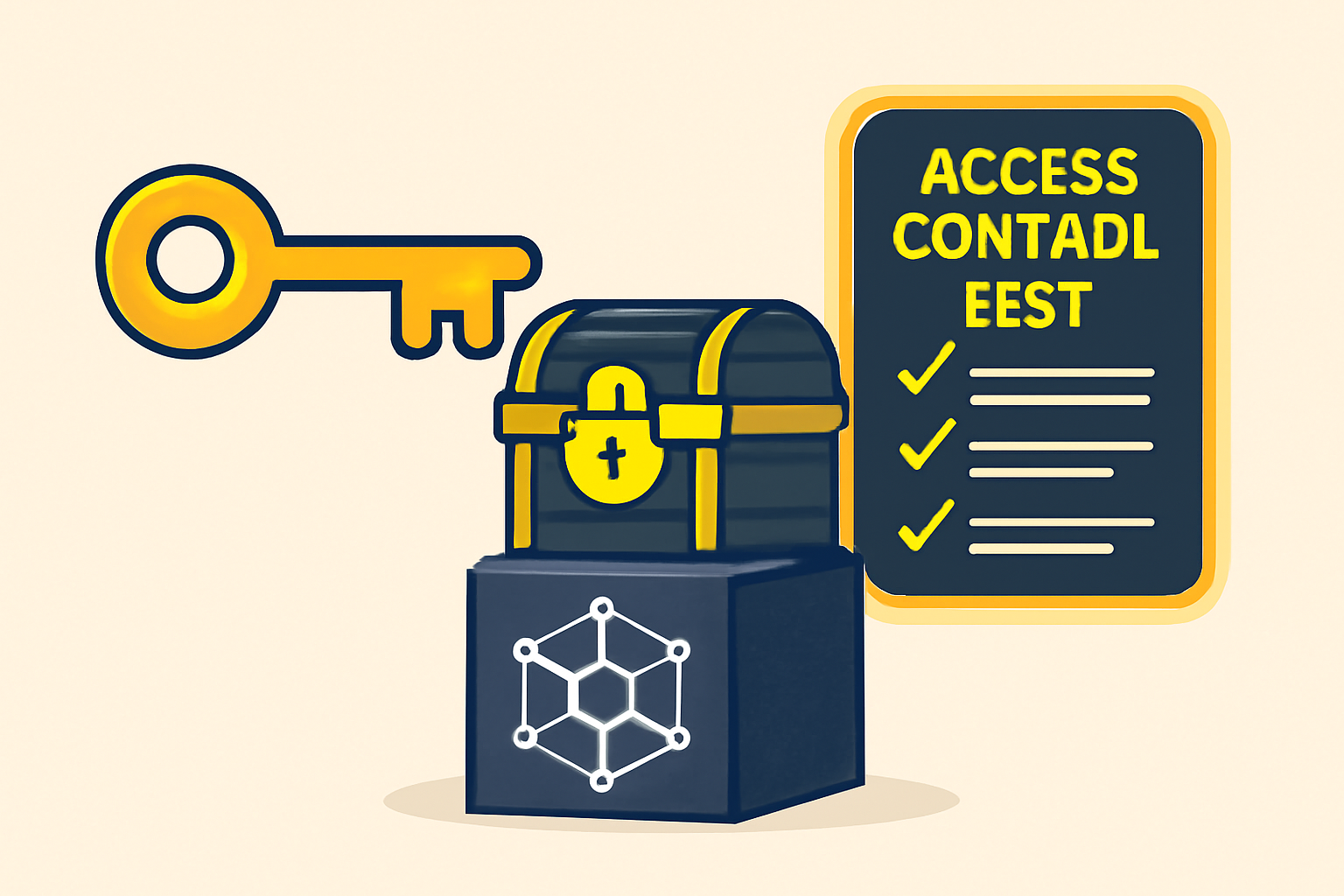
FHEVM’s ACL turns permissions into on-chain enforcers, a sleek layer preventing unauthorized peeks. Picture encrypted passports verifying age without exposing birthdays, or private bids in auctions staying sealed until reveal time. Developers script roles via allowDecrypt and revokeDecrypt, tying keys to addresses. This blockchain-native control outshines off-chain oracles, slashing trust vectors.
ACL Blueprint: Encrypt, Compute, Reveal on Demand
Start simple: deploy an ACL contract, grant your frontend decrypt rights. Inputs encrypt via FHE. js client-side, submit to chain. Contract ops on ciphertexts, outputs stay encrypted until ACL nods. Visual breakthrough? Trace a flow: user encrypts vote → contract tallies → only election authority decrypts aggregate. Zama’s guides unpack this, proving gas-efficient for loops and branches.
Nuance here: ACL beats ZK proofs for dynamic states, no regeneration per update. My take? In 2025’s privacy race, FHEVM ACLs arm devs against MEV spies and chain scanners, future-proofing fully homomorphic encryption blockchain guide dreams.
FHEVM Auction Glow-Up: Encrypt Bids, Compare in Shadows, Reveal Winners Privately





Realms Unlocked: FHEVM Use Cases Igniting 2025
DeFi leads: confidential lending where collateral ratios compute privately, dodging front-runners. Identity vaults store encrypted KYC, verifying without leaks, echoing that Medium passport demo. DAOs vote blindly, tallies emerge sans collusion. Gaming? Loot tables randomize on encrypted seeds, fairplay etched in ciphertext.
Visualize volatility charts for privacy tokens: FHEVM adopters spike as testnets drop $130M incentives. Ethereum L2s integrate fastest, scaling confidential DEXes. Opinion: Zama flips Ethereum’s transparency curse into strength, outpacing MPC hacks with true homomorphic magic.
Testing sharpens the edge. Local FHEVM forks simulate chains; ethers. js plugins encrypt calls. Edge cases? Overflow in euint ops, ACL races, benchmarks reveal 10x gas wins post-optim. Deploy to Zama testnet, hunt airdrops while iterating.
Horizon Scan: Scaling Privacy in Solidity’s Next Era
FHEVM evolves: v0.7 hints at euint256 expansions, branching deeper. Pair with rollups for sub-second latency. Devs, prototype now, Zama’s YouTube deep-dive visualizes the pivot from plaintext pitfalls. Encrypted states persist across txs, unlocking confidential NFTs with hidden traits or private orderbooks slicing spreads unseen.
Challenges persist: client encrypt overhead demands lightweight libs. Yet optimizations cascade, gas nearing vanilla by Q4 2025. My charts forecast: FHEVM dApps capture 20% DeFi TVL in privacy niches, as regs tighten. Dive into architecture breakdowns, fork repos, build the veil.
Privacy ascends not as gimmick, but grid: FHEVM equips Solidity for a shadowed, sovereign web3. Chart your course, encrypt boldly, the future computes in cipher.
About the Author