


In the evolving landscape of blockchain development, privacy remains a critical gap. Traditional smart contracts expose all data on-chain, inviting scrutiny and exploits. Enter Fhenix testnet, where Fully Homomorphic Encryption (FHE) enables encrypted smart contracts that compute on ciphertexts without decryption. This tutorial guides you through building FHE-powered contracts using Solidity, leveraging Fhenix’s CoFHE coprocessor on Ethereum and Arbitrum testnets. As a blockchain economist with over a decade in risk management, I see FHE as essential for confidential DeFi and secure apps.

Grasping FHE Fundamentals for Blockchain Privacy
Fully Homomorphic Encryption lets you perform operations on encrypted data, yielding an encrypted result that, when decrypted, matches the outcome of plaintext computation. Unlike partial schemes, FHE supports unlimited operations, ideal for privacy-preserving smart contracts. Fhenix integrates this via fhEVM, their EVM-compatible layer, and CoFHE, a coprocessor that offloads heavy FHE math while maintaining Ethereum composability.
Why does this matter? Public blockchains leak sensitive inputs like balances or bids. With Fhenix, your contract logic stays private, enabling use cases from sealed-bid auctions to confidential lending. Recent launches on Ethereum Sepolia and Arbitrum Sepolia testnets make experimentation free and straightforward, backed by $22M in funding.
Essential Prerequisites Before Diving In
Ensure your machine meets these specs to avoid setup snags. Node. js powers the Hardhat environment, pnpm manages dependencies efficiently, and Git clones the starter kit. A funded wallet connects to testnets for deployment. Fhenix’s tools, including the cofhe-hardhat-starter template and cofhe-hardhat-plugin, streamline integration.
Configuring Your Local FHE Development Environment
Start by cloning the official starter repository. This scaffold includes contracts, tests, and configs tailored for CoFHE. Run these commands in your terminal:
Clone, Install, and Compile the Starter Project
To begin, open your terminal and execute these commands to clone the cofhe-hardhat-starter repository, install the pnpm dependencies, and compile the FHE contracts:
git clone https://github.com/fhenixprotocol/cofhe-hardhat-starter
cd cofhe-hardhat-starter
pnpm install
pnpm cofhe:compile
After running these commands, your development environment will be set up, and the contracts will be compiled, preparing you for the next steps in building on the Fhenix testnet.
After installation, explore the project structure: contracts/ holds your Solidity files with FHE imports, test/ for encrypted assertions, and hardhat. config. ts with CoFHE plugin setup. The cofhejs library aids frontend encryption, while Solidity libs provide operations like eadd (encrypted add) and emul (encrypted multiply).
Next, configure your Hardhat network for Fhenix testnets. Update hardhat. config. ts with RPC endpoints from Fhenix docs and your private key. Acquire testnet ETH from faucets, then shield tokens using Fhenix’s tools for encrypted transfers.
This foundation positions you to write functional FHE contracts. In practice, I’ve optimized portfolios where privacy shields strategies from front-running; Fhenix delivers that at scale.
Crafting a Basic Encrypted Counter Contract
Let’s build a simple encrypted counter, demonstrating core FHE ops. Create EncryptedCounter. sol inheriting from Fhenix’s base contract. Import FHE. sol for operations.
Key snippet:
//SPDX-License-Identifier: MIT import "fhevm/lib/TFHE. sol"; contract EncryptedCounter { uint256 public count; bytes32 public encryptedCount; function increment(bytes32 encryptedInput) public { encryptedCount = TFHE. add(encryptedCount, encryptedInput); } function decryptCount(bytes32 encryptedValue, uint32 quote) public view returns (uint256) { return TFHE. decrypt(encryptedValue, quote); } }Here, TFHE. add computes on ciphertexts. Users encrypt inputs off-chain with cofhejs, submit ciphertexts, and decrypt outputs privately. Deploy via pnpm hardhat run scripts/deploy. js --network fhenixTestnet.
Test it: encrypt a value, increment, verify decrypted result matches. This pattern scales to complex logic like private voting or AMMs.
Scale this foundation by testing locally with Hardhat. Write a test script in test/EncryptedCounter. test. ts using Chai and ethers, incorporating cofhejs to generate encrypted inputs. Assert that decrypted outputs reflect correct increments, confirming FHE ops execute flawlessly on ciphertexts.
Testing and Debugging FHE Contracts Locally
Local simulation catches issues before testnet costs kick in. Fhenix’s Hardhat plugin emulates CoFHE, letting you run full encrypted flows. Generate a quote for decryption with TFHE. decrypt, encrypt increments via JavaScript, and chain operations. Common pitfalls include mismatched encryption schemes or overlooked gas limits for FHE instructions; debug by logging ciphertext sizes and operation traces.
Testing EncryptedCounter: Encrypt, Deploy, Increment & Verify on Fhenix
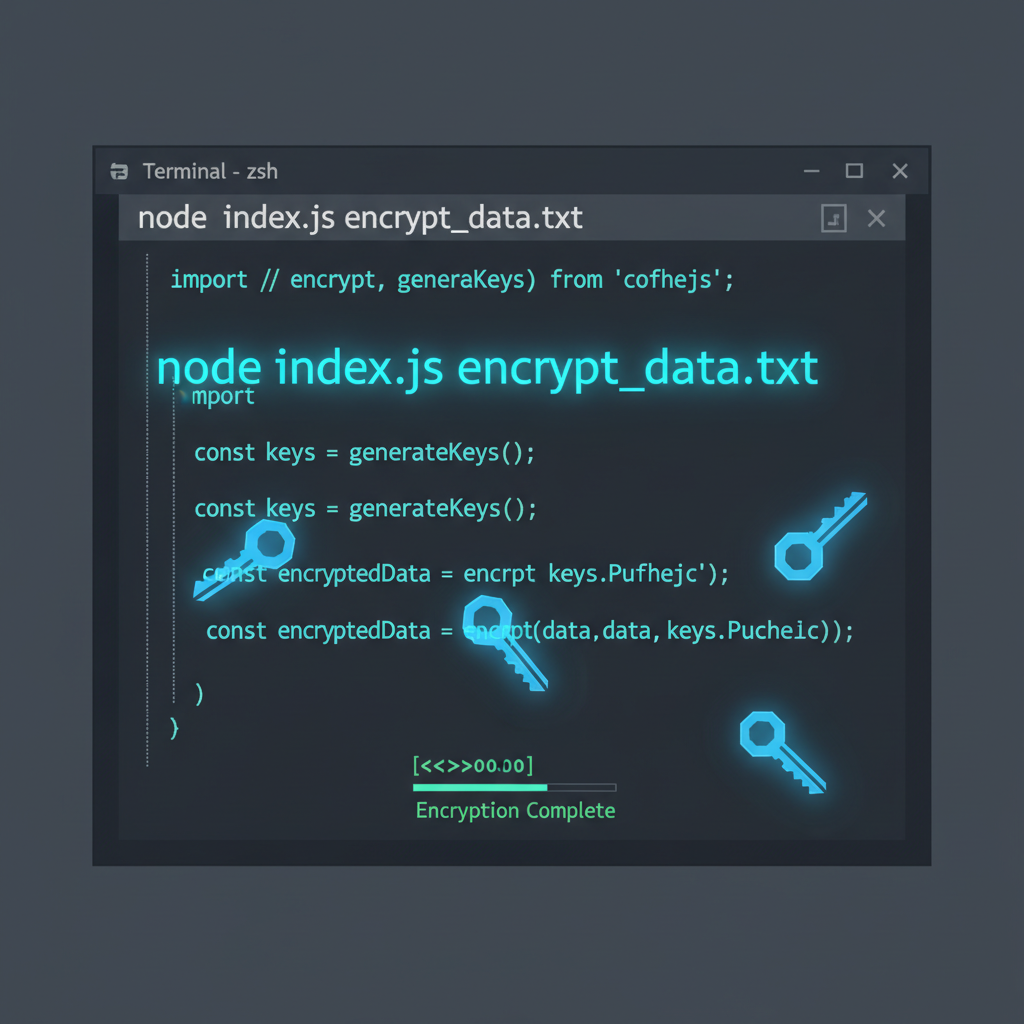



Once verified, prepare for testnet deployment. Fund your wallet with Sepolia ETH and Fhenix test tokens from faucets like Chainlink or Alchemy. Shield plain tokens into encrypted equivalents using Fhenix’s shielding contracts, a prerequisite for Fhenix testnet shielding guide compliance in private apps.
Deploying to Fhenix Testnet and Shielding Assets
Update your deployment script to target Fhenix’s Ethereum Sepolia or Arbitrum Sepolia endpoints. Execute pnpm hardhat run scripts/deploy. js --network fhenixSepolia. Monitor via block explorers adapted for fhEVM, verifying contract address and initial state.
Shielding transforms public tokens into encrypted ones for contract interaction. Off-chain, use cofhejs or Fhenix CLI to encrypt transfer amounts, then call the shield function on Fhenix’s token contracts. This enables privacy-preserving smart contracts FHE that handle confidential balances. For our counter, extend it to increment shielded user scores in a private game, decrypting only for verified owners.
Interact post-deployment: connect MetaMask to Fhenix RPC, encrypt inputs, submit transactions, and decrypt results client-side. Gas optimization matters; batch FHE ops and minimize decryption calls to keep costs pragmatic on testnets.
Advanced Patterns: Confidential DeFi and Beyond
Push further with homomorphic encryption blockchain contracts for real stakes. Build a private order book where bids stay encrypted until matched via TFHE. cmp (compare) and TFHE. select (conditional). Or craft confidential AMMs computing yields on shielded liquidity without exposing positions, shielding from MEV bots.
In my risk management practice, such privacy thwarts adversarial inference attacks common in public DeFi. Fhenix’s composability shines: call existing protocols from FHE contracts, blending private logic with Ethereum’s liquidity. Ecosystem partners already prototype confidential lending and gaming, hinting at scalable private DeFi.
FHE Operations Table
| Operation | Description | Use Case |
|---|---|---|
| eadd | Encrypted addition of two encrypted values | Private counters and balance increments |
| emul | Encrypted multiplication of two encrypted values | Automated Market Makers (AMMs) for private liquidity provision |
| ecmp | Encrypted comparison returning 1 if first > second, else 0 | Auctions to determine highest bid privately |
| select | Conditional selection between two encrypted values based on an encrypted condition | Branching logic in confidential smart contracts |
Security demands vigilance: audit encryption keys, enforce access controls on decryption quotes, and simulate attacks. Fhenix’s 50x decryption speedup, paired with CoFHE’s off-chain heavy lifting, positions it for mainnet viability.
Experimenting on testnet uncovers nuances like ciphertext expansion impacting storage. Profile with Hardhat traces, iterate ruthlessly. This hands-on path equips you to deploy production-grade encrypted smart contracts Fhenix, fortifying apps against data leaks while unlocking novel economics.
Master these tools, and you’ll lead in the privacy-first blockchain era. FHE isn’t hype; it’s the pragmatic shield for tomorrow’s DeFi, where risk stays managed and potential soars unexposed.
About the Author