
In the high-stakes world of blockchain development, where every transaction lays bare under the public ledger's glare, true privacy remains the holy grail. Enter Fhenix, the vanguard pushing Fully Homomorphic Encryption (FHE) into Ethereum-compatible chains, enabling developers to craft encrypted smart contracts that compute on ciphertext alone. This isn't theoretical cryptography; it's deployable today via CoFHE, their off-chain coprocessor that slots seamlessly into Solidity code, preserving end-to-end confidentiality for DeFi, gaming, and beyond.
Fhenix's innovation lies in making FHE practical. Traditional encryption demands decryption before computation, exposing data to node operators and front-runners. FHE flips this script: arithmetic stays encrypted, outputs remain obscured. With CoFHE live on Ethereum mainnet and Arbitrum, plus testnets like Helium, developers can now build confidential blockchain FHE apps without rewriting EVM logic. Backed by $22 million in funding, including a $15 million Series A from Hack VC, Fhenix isn't just promising privacy; it's delivering scalable infrastructure.
Mastering FHE Fundamentals for Fhenix Smart Contracts
To build robust Fhenix FHE smart contracts, grasp FHE's core: it allows addition and multiplication on encrypted data, bootstrapping noise to sustain operations. Fhenix abstracts this complexity through CoFHE, an EVM-compatible layer where Solidity functions delegate to encrypted proxies. Think private balances in lending protocols or hidden bids in auctions; all execute without revealing inputs or states.
FHE enables secure computations on encrypted data without decryption, a game-changer for on-chain privacy.
Check out how FHE enables confidential smart contracts on public blockchains for deeper mechanics. Fhenix's fhERC-20 tokens exemplify this, minting private assets that transfer invisibly, shielding holders from MEV bots and analysts.
Streamlining Your Dev Setup with Fhenix Tools
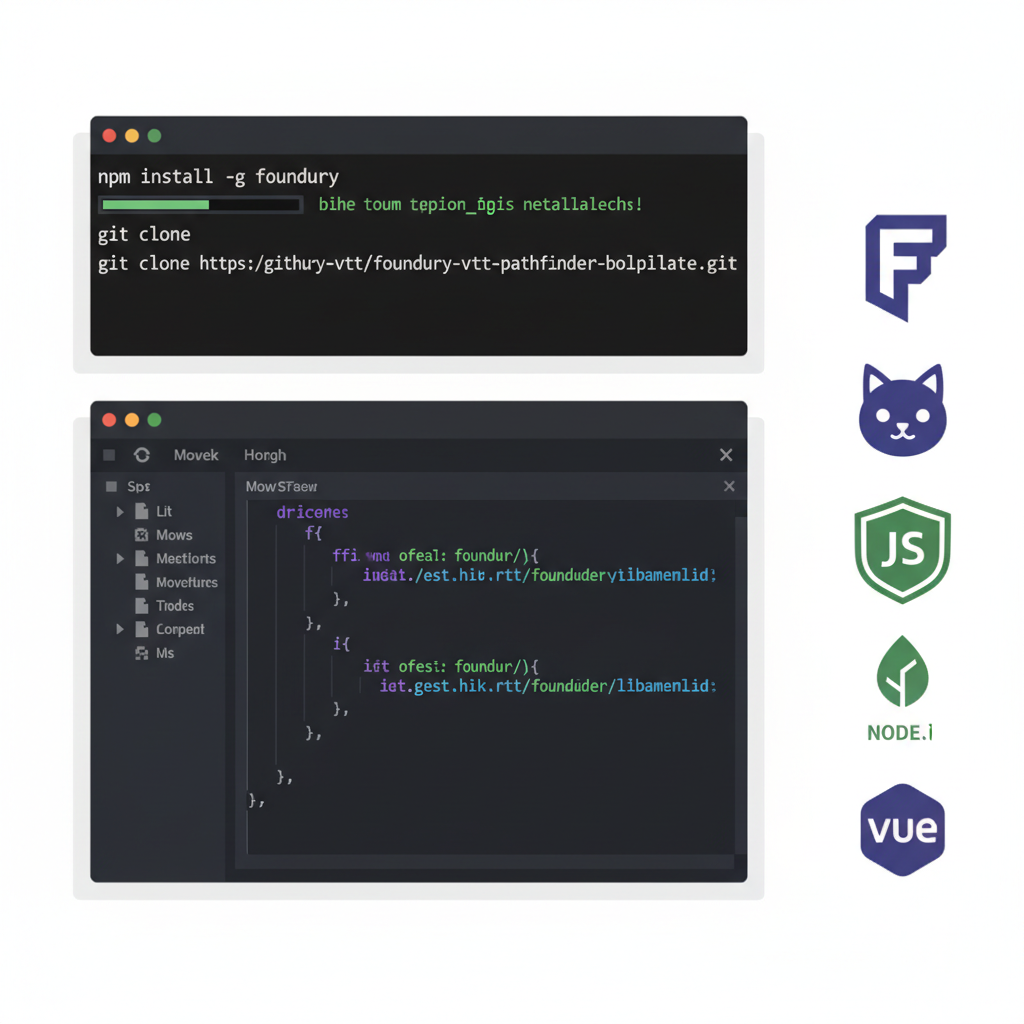
Jumpstarting encrypted smart contracts tutorial workflows demands the right stack. Fhenix's Quick Start guide walks through installing Foundry, their go-to for Solidity. Clone the FhenixProtocol/fhenix-foundry-template from GitHub: it packs defaults for FHE ops, including CoFHE integration.
- Install Rust and Foundry:
curl -L https://foundry.paradigm.xyz or bash, thenfoundryup. - Clone template:
git clone https://github.com/FhenixProtocol/fhenix-foundry-template. - Add Fhenix dependencies in
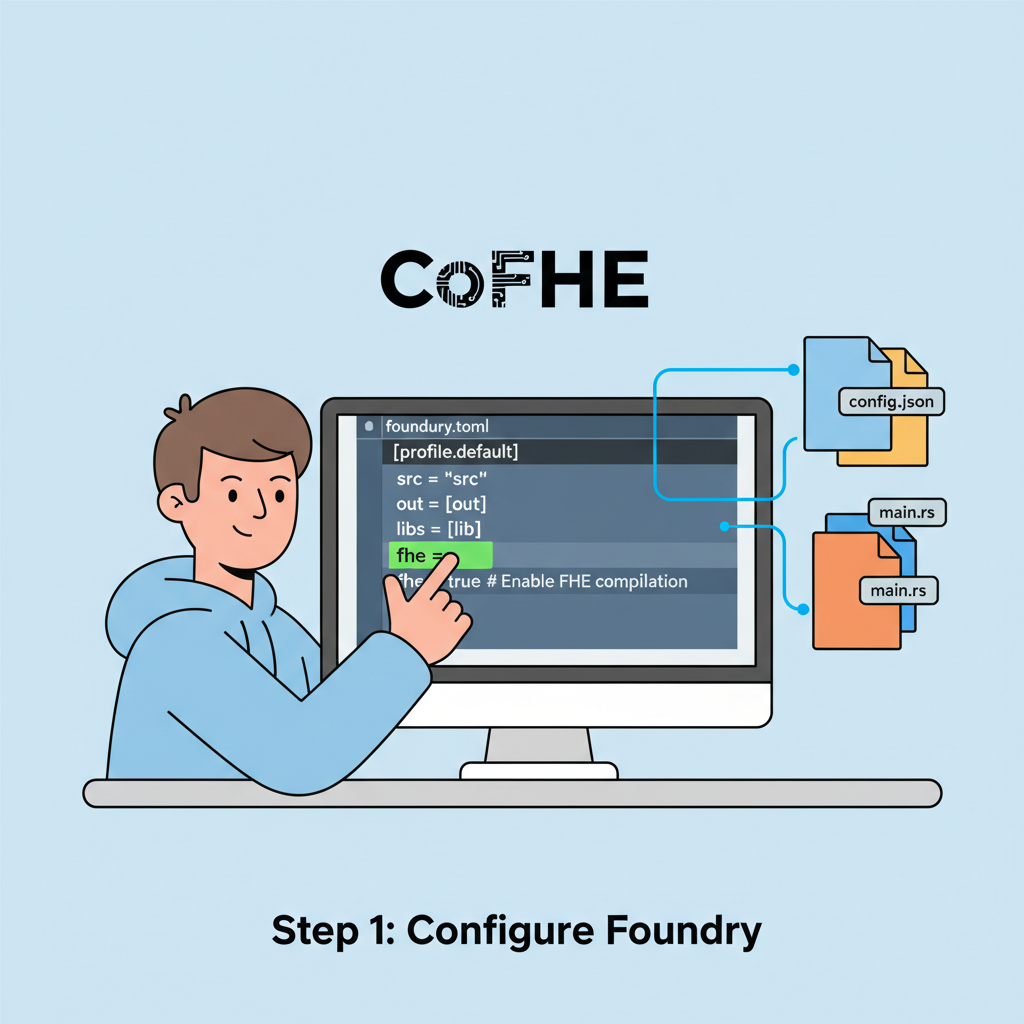
foundry. tomlfor CoFHE libs. - Spin up Anvil node with Fhenix RPC:
anvil --fork-url https://rpc.helium.fhenix.net.
This mirrors Ethereum dev but injects FHE primitives like fhe. encrypt() and fhe. decrypt(), with access controls for delegated reads. Testnets like Arbitrum Sepolia let you iterate risk-free.
Crafting Your Inaugural FHE Contract on Fhenix
Dive into hands-on with "Your First FHE Contract" tutorial. Start simple: a private counter. Import Fhenix libs:
Declare encrypted vars: uint256 encryptedCounter = fhe. encrypt(0);. Increment via function increment() public { encryptedCounter = fhe. add(encryptedCounter, fhe. encrypt(1)); }. View requires permission: owners grant access before fhe. decrypt().
This pattern scales to real apps, like encrypted lending where collateral ratios compute blindly. Fhenix's docs detail variable permissions, crucial for multi-party privacy. As you prototype, note CoFHE's gas efficiency; optimizations keep costs competitive with L2s.
Partnerships with Base extend this to L2s, positioning Fhenix as the privacy smart contracts Fhenix hub. Next, we'll explore advanced patterns like private DeFi.
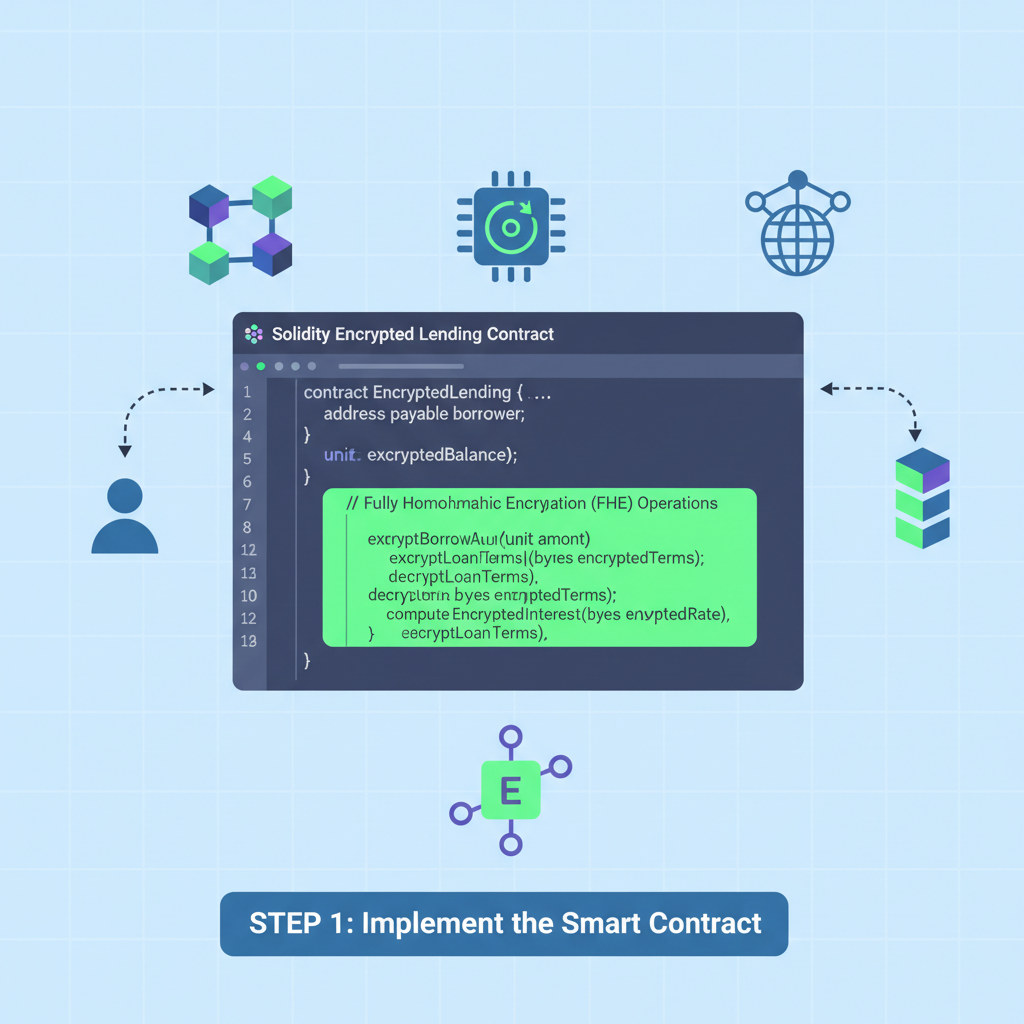
Private DeFi demands more than obscured balances; it requires encrypted oracles feeding interest computations without exposing market positions. Fhenix's Encrypted Lending tutorial showcases this, adapting Solidity for confidential loans where collateral ratios and liquidation thresholds crunch on ciphertext. Borrowers deposit fhERC-20 tokens, lenders earn yields blindly calculated, all while auditors verify solvency via selective decryption grants. This isn't niche experimentation; it's the blueprint for confidential blockchain FHE protocols that sidestep front-running and regulatory overreach.
Deploy Encrypted Lending Contract on Fhenix Testnet with CoFHE
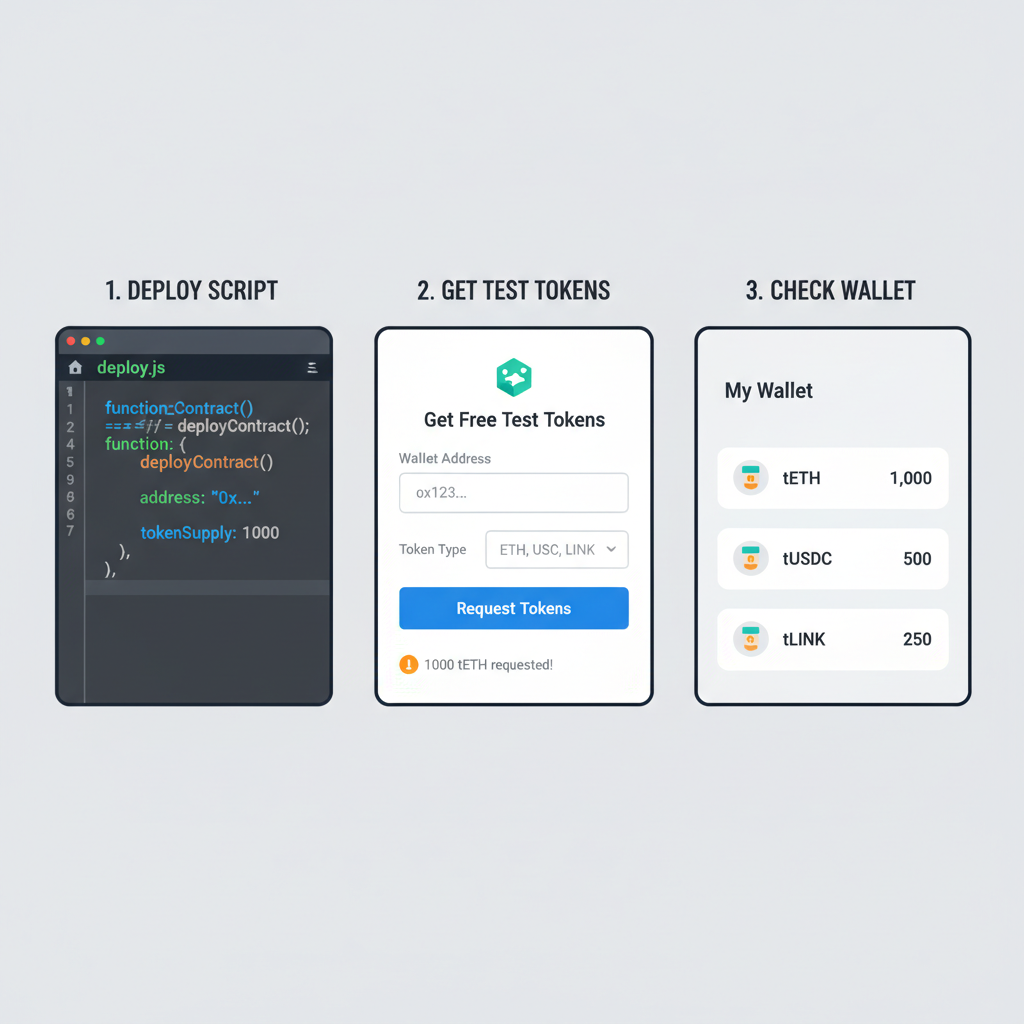
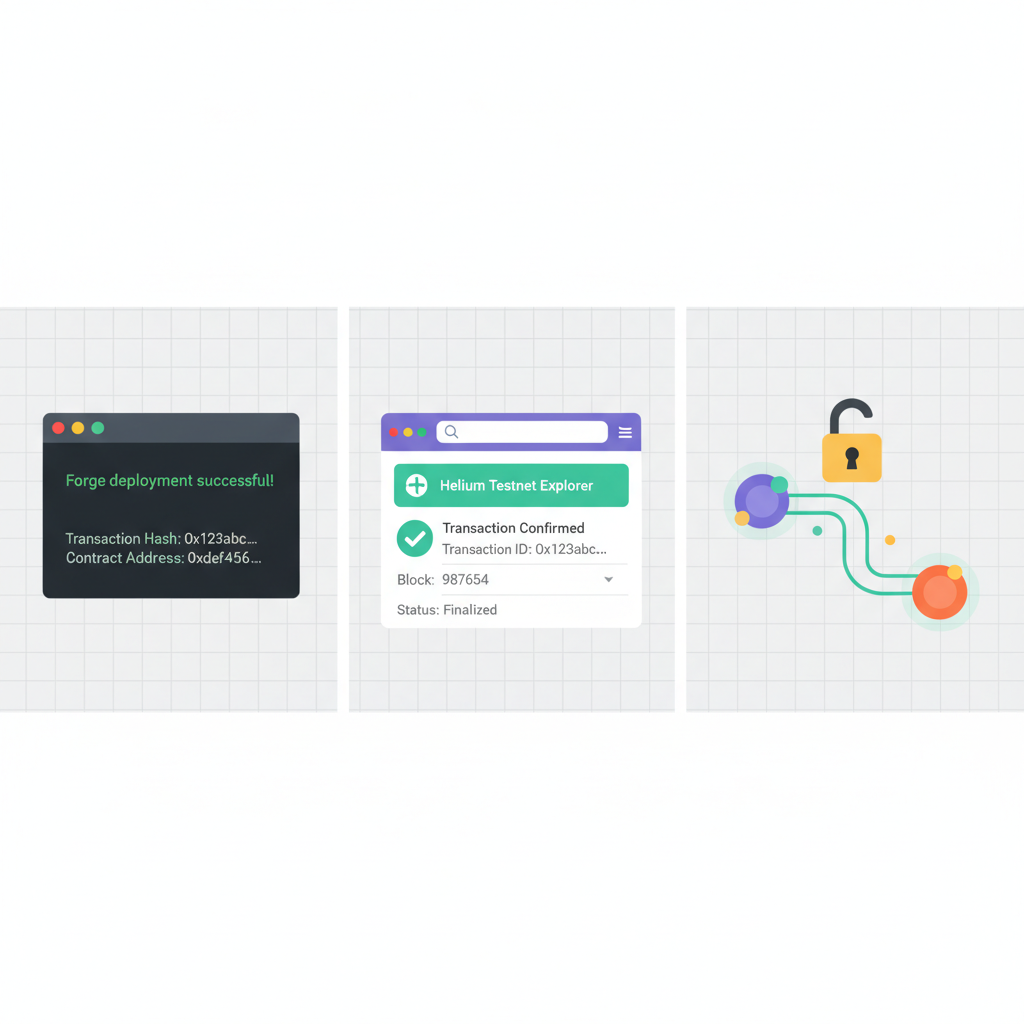

Scale your prototype with CoFHE's delegation model. Contracts emit encrypted events to off-chain provers, which resolve and callback results invisibly. Gas costs hover near L2 parity thanks to TFHE optimizations, making production viable. I've seen teams slash iteration time by 40% using Fhenix's Foundry template, focusing on business logic over crypto plumbing.
Optimizing and Auditing FHE Contracts for Production
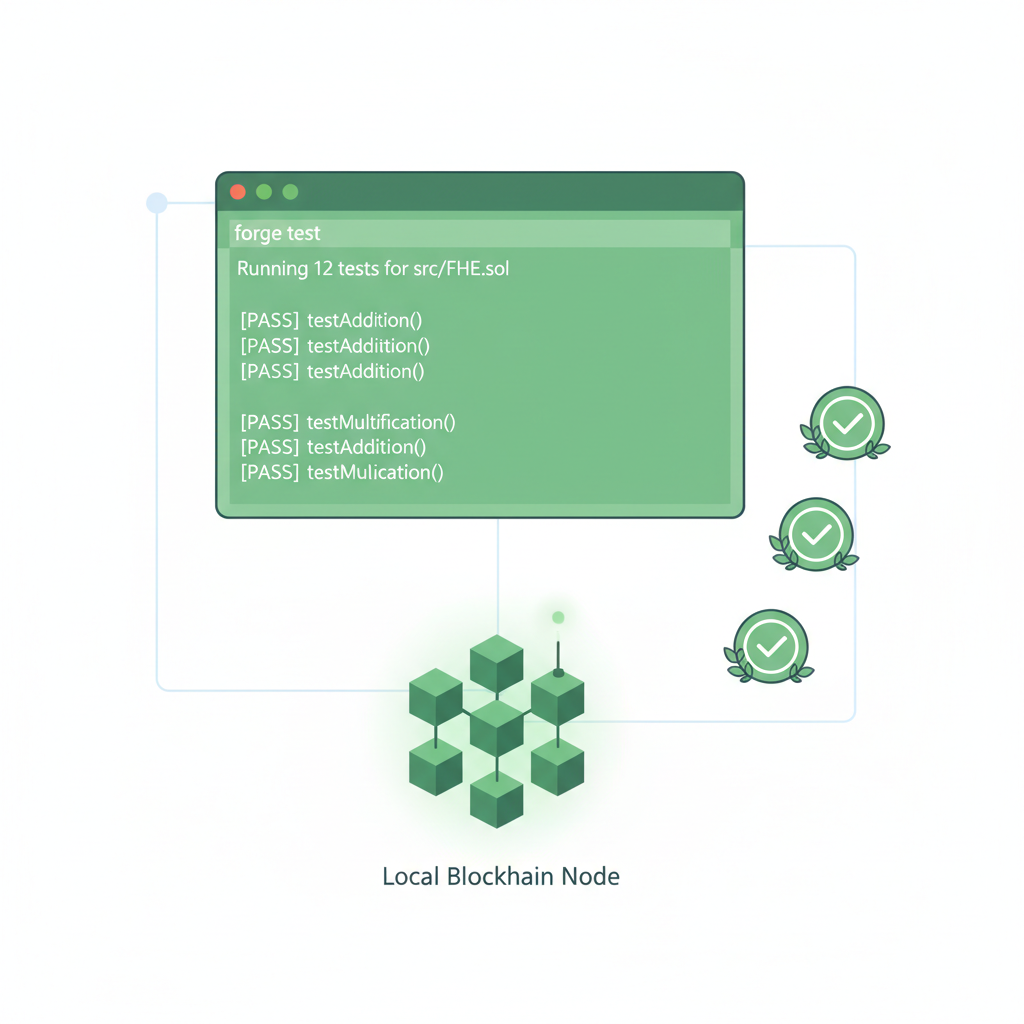
Production-grade Fhenix FHE smart contracts hinge on permissions and noise management. Misconfigure access, and private data leaks; overload bootstraps, and fees spike. Fhenix docs stress fhe. reencrypt() for multi-user shares, vital in DAOs voting on hidden proposals. Audit with slither-fhe plugins, then stress-test on Helium: deploy 1000 tx batches to benchmark latency.
Encrypted Lending Contract: Homomorphic Interest Computation and Permissioned Decryption
In this section, we present a Solidity smart contract exemplifying an encrypted lending mechanism on Fhenix. Leveraging Fully Homomorphic Encryption (FHE), the contract processes deposits in ciphertext, computes interest rates directly on encrypted balances without decryption, and enforces permissioned decryption solely for authorized entities. This architecture safeguards user privacy while enabling verifiable computations.
```solidity
// SPDX-License-Identifier: MIT
pragma solidity ^0.8.19;

import {FheOS} from "@fhenix/contracts/src/FheOS.sol";
import {euint256} from "@fhenix/contracts/src/types/Types.sol";

contract EncryptedLending {
    mapping(address => bytes32) public encryptedBalances;
    uint256 public constant INTEREST_RATE_BPS = 500; // 5% in basis points
    address public owner;

    constructor() {
        owner = msg.sender;
    }

    modifier onlyOwner() {
        require(msg.sender == owner, "Not owner");
        _;
    }

    /// @notice Deposit encrypted collateral
    function deposit(bytes32 encryptedAmount) external {
        require(encryptedAmount != bytes32(0), "Invalid amount");
        // In practice, integrate with encrypted ERC20 transfer
        encryptedBalances[msg.sender] = FheOS.add(encryptedBalances[msg.sender], encryptedAmount);
    }

    /// @notice Compute interest homomorphically on encrypted balance
    /// @dev Returns encrypted total (principal + interest)
    function computeInterestWithPrincipal(address borrower) external view returns (bytes32) {
        bytes32 encBalance = encryptedBalances[borrower];
        euint256 eBalance = FheOS.asEuint256(encBalance);
        euint256 eRate = FheOS.asEuint256(INTEREST_RATE_BPS);
        euint256 eInterest = eBalance.mul(eRate).div(10000);
        return FheOS.reveal(FheOS.add(eBalance, eInterest).toBytes32());
    }

    /// @notice Permissioned decryption of borrower's balance
    /// @dev Only callable by owner for compliance/auditing
    function decryptBalance(address borrower) external view onlyOwner returns (uint256) {
        bytes32 encBalance = encryptedBalances[borrower];
        return FheOS.decrypt(encBalance);
    }
}
```
Deploying this contract on Fhenix unlocks strategic advantages for confidential DeFi: zero-knowledge interest accrual, regulatory-compliant decryption controls, and scalable privacy. Extend it with encrypted oracles for dynamic rates or multi-asset collateral to architect production-grade confidential lending protocols.
Strategic auditing uncovers edge cases, like underflow in encrypted subs. Pair with formal verification tools from FHE. org, ensuring computations match plaintext equivalents. Deploy to Arbitrum Sepolia first, migrate to mainnet via upgradeable proxies. Fhenix's RPC endpoints handle this seamlessly, with dashboards tracking encrypted state health.
Real-World Deployments and Ecosystem Momentum
Fhenix powers apps beyond DeFi: confidential gaming scores, private identity proofs, even encrypted supply chains. Their Base partnership unlocks L2 throughput, vital as TVL climbs. With Helium testnet buzzing, developers flock for airdrop eligibility, honing skills on live-like environments. CoFHE's Ethereum mainnet presence proves maturity; expect fhERC-20 primitives in wallets soon.

Challenges persist: FHE's compute intensity favors batching, so design for it. Yet, the payoff dwarfs trade-offs. Institutions eyeing on-chain treasuries will prioritize Fhenix for compliant privacy, blending TradFi rigor with crypto speed. As EVM chains standardize, early adopters command premiums.
Armed with these tools, you're primed for the FHE developer guide 2026 era. Prototype relentlessly on testnets, contribute to GitHub templates, and watch your contracts redefine blockchain utility. Fhenix doesn't just encrypt; it empowers strategic privacy at scale.




No comments yet. Be the first to share your thoughts!