
Programmable privacy is fundamentally reshaping the landscape of decentralized finance (DeFi), offering a paradigm shift from radical transparency to nuanced, compliance-ready confidentiality. Traditionally, deploying DeFi protocols on blockchains like Ethereum has meant every transaction, wallet rebalance, and payroll disbursement remains visible forever, a double-edged sword for both innovation and institutional adoption. As we move into 2025, this is no longer a technical inevitability. Pioneers such as 0xMiden are demonstrating how programmable privacy can deliver both robust confidentiality and regulatory alignment, setting the stage for compliant confidential transactions that don’t sacrifice usability or security.

The Transparency-Privacy Dilemma in DeFi
Public blockchains have long been lauded for their transparency, but this very feature has become a stumbling block for mainstream adoption, especially among enterprises and institutions. Every on-chain action is exposed to public scrutiny: competitor intelligence, salary payments, trading strategies, and even user balances are permanently accessible. As noted by industry observers (see more on confidential transactions in DeFi), this level of openness deters participation from sectors with strict data protection requirements or competitive sensitivities.
Programmable privacy flips this dynamic by making privacy the default or configurable state of blockchain interactions. Instead of an all-or-nothing approach to secrecy or openness, users and developers can now determine what data remains confidential versus what is published transparently, a critical distinction as regulatory expectations evolve.
Zero-Knowledge Proofs and FHE: The Engine Room of Confidentiality
The technology stack powering programmable privacy is rapidly maturing. Zero-knowledge proofs (ZKPs) allow one party to prove the validity of a statement without revealing any underlying data. In practice, this means users can demonstrate regulatory compliance, such as AML checks or transaction limits, without exposing their entire financial history. Ripple’s 2026 roadmap for the XRP Ledger exemplifies this trend by integrating ZKPs for private yet compliant transactions.
Fully Homomorphic Encryption (FHE), meanwhile, enables computations directly on encrypted data without needing decryption at any stage. Projects like Zama’s Confidential Blockchain Protocol make it possible to build smart contracts that process sensitive information while maintaining end-to-end confidentiality, no deep cryptographic expertise required from developers.
- ZKPs: Prove compliance without revealing sensitive details
- FHE: Confidential computation on-chain without exposing raw data
- Calyx Rollups: Multi-token optimistic rollups ensuring payment privacy across L2s
This convergence of cryptographic primitives forms the backbone of next-generation DeFi protocols that are both private and verifiable, a necessity for institutional-grade adoption.
0xMiden: Edge Blockchain for Programmable Privacy
0xMiden’s vision goes beyond incremental improvements. As an “edge blockchain, ” Miden enables applications to choose between public transparency and granular confidentiality at the protocol level. This flexibility empowers developers to construct systems where user account states remain hidden unless disclosure is required by policy or regulation.
Miden’s architecture leverages ZK-powered edge execution, enabling safer wallets where balances and transaction histories remain private, and supports Web2-style confidentiality while preserving composability with existing DeFi infrastructure. The recent $25 million investment led by a16z signals strong market confidence in Miden’s ability to deliver scalable privacy solutions ready for real-world financial use cases.
- Selectively shielded transactions: Users control what stays private vs what becomes public record
- Sustainable fee models: Privacy features designed not just for tech demos but scalable economic activity
- Ahead-of-the-curve compliance: Enabling auditability where legally required without undermining core user privacy promises
This programmable approach unlocks new possibilities, from confidential payroll dApps to institution-friendly lending protocols, and positions Miden as a foundational layer in the next era of regulation-ready DeFi privacy.
As programmable privacy protocols like 0xMiden mature, the DeFi landscape is witnessing a marked shift in both user expectations and regulatory engagement. The ability to tailor privacy budgets, granting granular control over what data is shared, when, and with whom, means that compliance is no longer at odds with confidentiality. Instead, we see the emergence of regulation-ready DeFi privacy, where auditability and secrecy can coexist within a single protocol design.
Compliant Confidential Transactions: The Institutional Onramp
Perhaps the most transformative aspect of programmable privacy is its role in enabling compliant confidential transactions. Protocols such as DevvDigital Privacy illustrate how transaction details can be shielded from public view while still providing selective access for regulators or auditors. This dual capability is pivotal for institutional adoption, as it satisfies both operational confidentiality and evolving legal mandates.
For example, confidential Multi-Purpose Tokens (MPTs) on Ripple’s roadmap are engineered to support private collateral management, an essential feature for enterprises seeking to tokenize real-world assets without exposing sensitive financial arrangements. Similarly, Zama’s FHE-powered contracts allow for confidential governance, giving DAOs and enterprises alike the tools to enact policies privately while maintaining provable integrity on-chain.
Major Programmable Privacy Use Cases in DeFi (2025)
- Confidential DeFi Transactions with Zero-Knowledge Proofs (ZKPs): ZKPs enable users to transact on DeFi platforms without exposing sensitive details, ensuring both privacy and regulatory compliance. Example: Ripple's 2026 privacy roadmap for the XRP Ledger integrates ZKPs for private, compliant transactions.
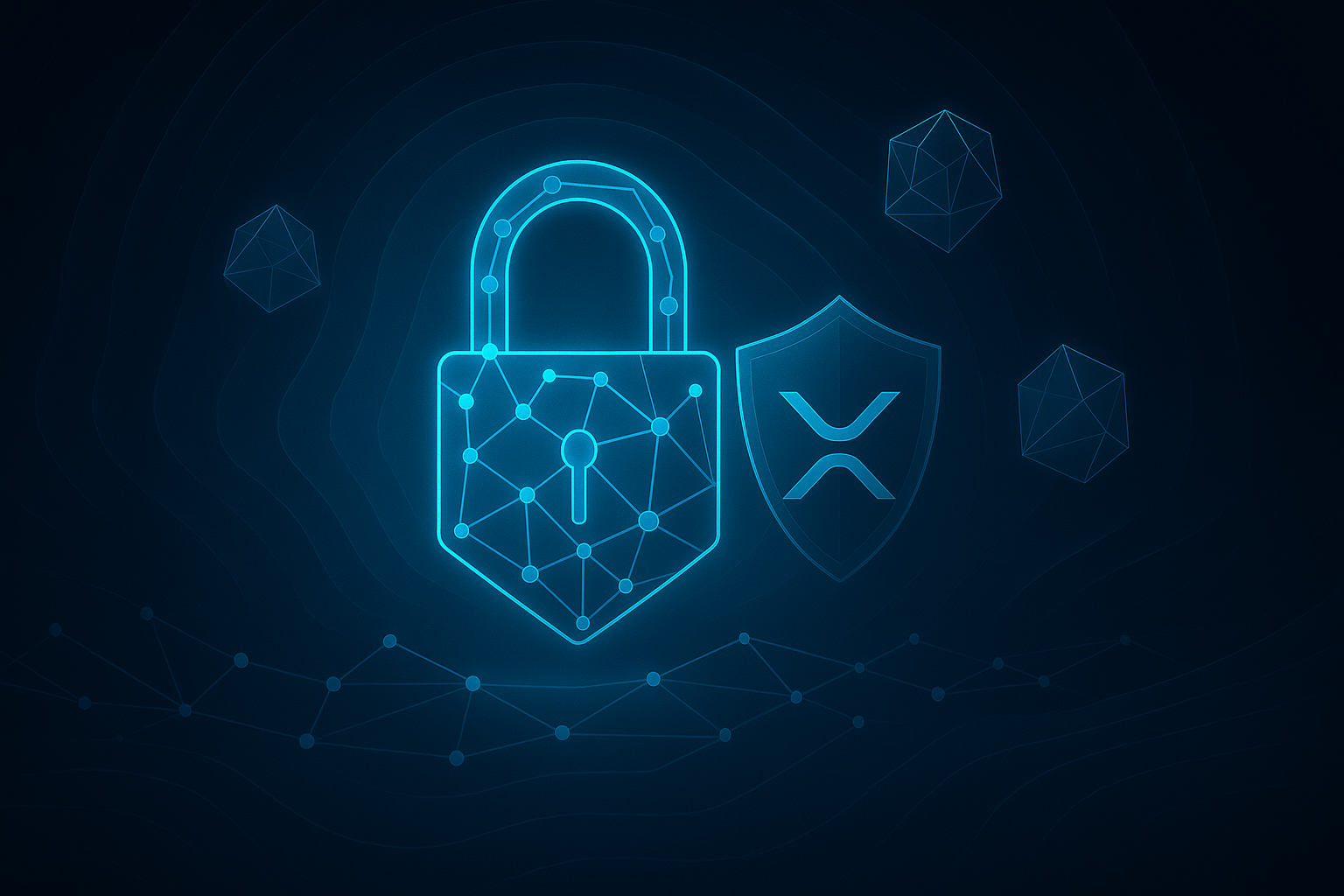
- Private Smart Contracts via Fully Homomorphic Encryption (FHE): FHE allows computations on encrypted data, making it possible to execute smart contracts without revealing underlying information. Zama Confidential Blockchain Protocol brings FHE-powered confidential DeFi to any Layer 1 or Layer 2 blockchain.

- Privacy-Preserving Rollups for Layer 2 Transactions: Privacy rollups like Calyx ensure that sender, recipient, amount, and token type remain confidential in multi-token transactions, while supporting atomic execution and sustainable fee models.

- Compliant Confidential Transactions for Institutional Adoption: Protocols such as DevvDigital Privacy provide transaction confidentiality alongside auditability, meeting regulatory standards for secure digital asset transfers.

- Seamless Privacy Integration via Middleware Solutions: Middleware like zkFi enables developers to add privacy features to DeFi, gaming, DAOs, and more, using ZKPs without requiring deep cryptographic expertise.

The momentum behind these innovations is underscored by significant capital inflows: Miden’s $25 million raise and growing developer mindshare signal that programmable privacy is not a niche concern but a foundational requirement for the next generation of DeFi applications. As noted by industry commentators, "the real money will be made in compliant, programmable, and client-side privacy": a sentiment now echoed across institutional desks worldwide.
Programmable Privacy in Practice: What Developers Need to Know
For developers building on top of protocols like 0xMiden or integrating middleware solutions such as zkFi, several best practices are emerging:
- Define clear privacy budgets: Specify which contract functions require confidentiality versus transparency from the outset.
- Leverage modular cryptography: Use ZKP libraries or FHE frameworks that abstract away complexity while ensuring robust security guarantees.
- Plan for compliance hooks: Build selective disclosure mechanisms into smart contracts to facilitate audits or regulatory reporting when necessary.
- Prioritize UX: Ensure users understand their privacy options through intuitive interfaces and transparent documentation.
This approach not only accelerates development cycles but also futureproofs applications against shifting regulatory standards, a key consideration as jurisdictions race to define rules around digital asset confidentiality (see further exploration here).
The Road Ahead: From Transparency Maximalism to Privacy-First Finance
The rise of ZK-powered edge execution, FHE-enabled contracts, and regulation-ready rollups signals a decisive break from transparency maximalism. As programmable privacy becomes integral to DeFi's core architecture, not just an optional add-on, the sector stands poised for mainstream adoption by both retail users and institutional investors.
This evolution will not be without challenges. Developers must navigate new trade-offs between composability and confidentiality; policymakers must grapple with how much secrecy is compatible with systemic risk oversight. Yet if early results from pioneers like 0xMiden are any indication, the synthesis of private computation with verifiable audit trails offers a credible path forward, a future where secure growth truly starts with informed diligence.



No comments yet. Be the first to share your thoughts!